Everyone feels sad sometimes.
Sadness is a normal human emotion.
People may feel sad after a disappointment, the loss of a loved one, relationship difficulties, work-related stress, financial challenges, or other difficult life events.
In most situations, sadness gradually improves as time passes.
Depression, however, is different.
While sadness can be part of depression, depression is a complex mental health condition that affects how a person thinks, feels, and functions in daily life.
Unfortunately, many people assume depression is simply “being sad.”
This misunderstanding can prevent individuals from recognizing symptoms and seeking professional support when needed.
Understanding the difference between sadness and depression is an important step toward improving mental health awareness and encouraging early intervention.
Why Understanding The Difference Matters
Many people dismiss their symptoms because they believe they are simply going through a difficult period.
Others may not realize that persistent emotional struggles could indicate something more significant.
Recognizing the distinction between normal sadness and depression can help individuals:
- Better understand their emotional health
- Identify warning signs earlier
- Seek appropriate support
- Improve overall well-being
Mental health concerns are often easier to address when they are recognized early.
What Is Sadness?
Sadness is a natural emotional response.
It is a normal reaction to life’s challenges and disappointments.
Everyone experiences sadness at some point.
Common causes of sadness may include:
- Relationship problems
- Losing a job
- Academic challenges
- Financial stress
- Family conflicts
- Major life transitions
Sadness can feel uncomfortable, but it is generally considered a healthy emotional response.
In many cases, people continue functioning despite feeling sad.
They may still enjoy certain activities, spend time with loved ones, and maintain daily responsibilities.
Over time, sadness often becomes less intense as circumstances improve or individuals adapt to the situation.
What Is Depression?
Depression is a mental health condition that involves more than temporary emotional distress.
It can affect:
- Mood
- Energy
- Motivation
- Concentration
- Sleep
- Daily functioning
Depression often persists for extended periods and may interfere with many aspects of life.
Unlike temporary sadness, depression does not always have an obvious cause.
Some individuals experience depression even when life circumstances appear stable.
Because depression affects people differently, symptoms can vary significantly from person to person.
Key Differences Between Sadness And Depression
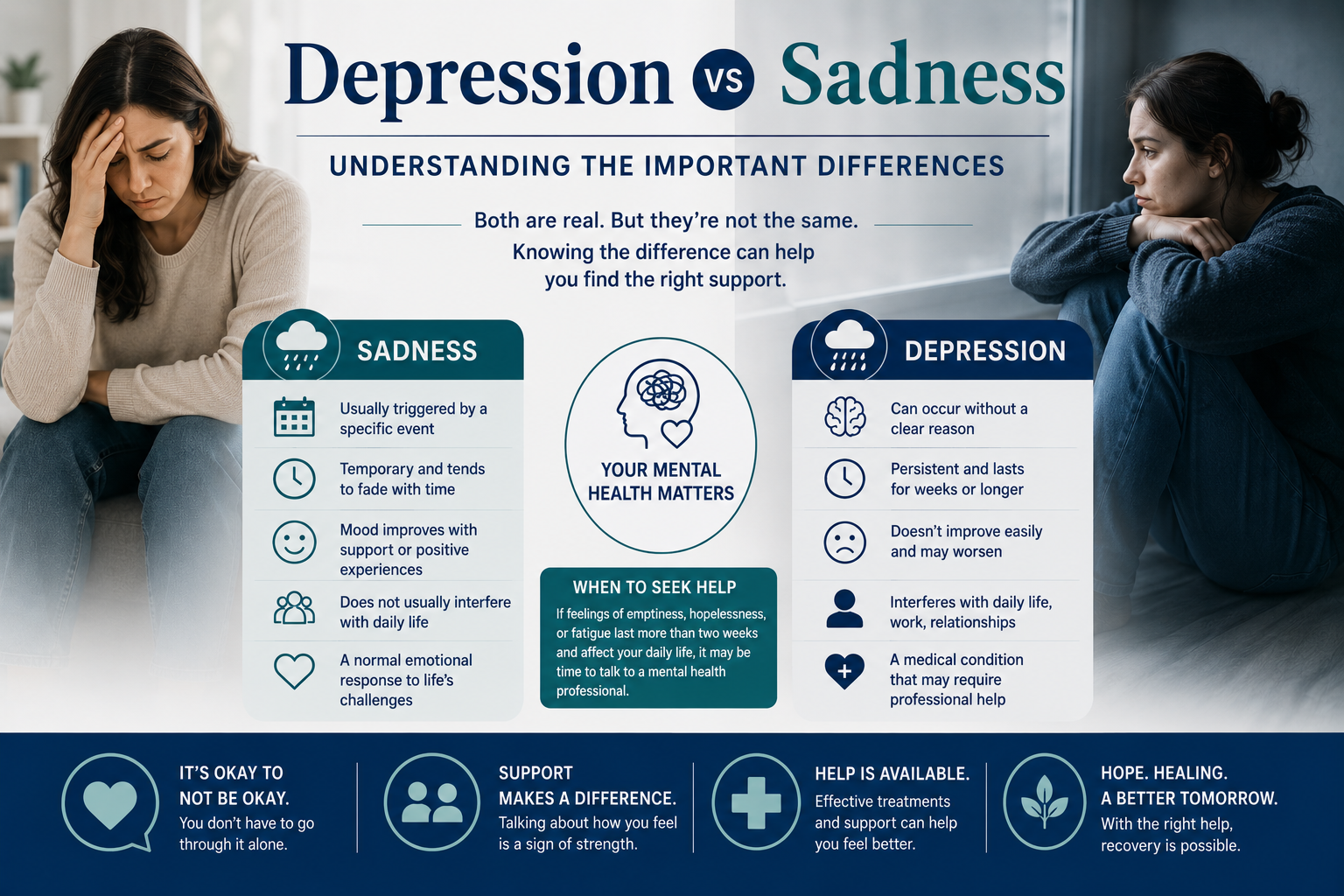
Although sadness and depression may share certain emotional characteristics, several important differences exist.
Duration
Sadness often improves over time.
Depression may continue for weeks, months, or longer without significant improvement.
Intensity
Depression often feels more persistent and overwhelming than normal sadness.
Daily Functioning
Sadness may cause emotional discomfort, but depression frequently interferes with work, relationships, school, and daily responsibilities.
Enjoyment
People experiencing sadness can usually still find enjoyment in certain activities.
Individuals with depression often lose interest in activities they once enjoyed.
Common Symptoms Of Sadness
Sadness can affect emotions in various ways.
Common experiences include:
- Feeling disappointed
- Temporary emotional pain
- Crying
- Feeling discouraged
- Reflecting on difficult situations
Although these feelings can be intense, they often improve as circumstances change.
Most people continue engaging in daily life despite experiencing sadness.
Common Symptoms Of Depression
Depression often involves a broader range of symptoms.
These may include:
Persistent Low Mood
Feeling sad, empty, or emotionally numb for extended periods.
Loss Of Interest
No longer enjoying hobbies, social activities, or favorite pastimes.
Fatigue
Feeling tired even after adequate rest.
Difficulty Concentrating
Challenges with focus, memory, or decision-making.
Sleep Changes
Sleeping too much or too little.
Appetite Changes
Noticeable changes in eating habits.
Feelings Of Hopelessness
Negative thoughts about the future.
These symptoms often extend beyond emotional distress and begin affecting everyday functioning.
Why Depression Is Sometimes Difficult To Recognize
Many individuals do not immediately recognize depression.
Some assume they are simply stressed or going through a rough period.
Others continue functioning at work or school and therefore believe their symptoms are not serious.
Depression does not always appear the same for everyone.
Some individuals experience obvious sadness.
Others may primarily notice:
- Fatigue
- Irritability
- Sleep problems
- Difficulty concentrating
- Loss of motivation
Because symptoms can vary, professional evaluation can be valuable when concerns persist.
How Depression Affects Daily Life
One major difference between sadness and depression is the impact on daily functioning.
Depression can affect:
Work Performance
Difficulty focusing, completing tasks, or maintaining productivity.
Relationships
Social withdrawal and communication challenges.
Physical Health
Changes in sleep, energy levels, and overall wellness.
Personal Responsibilities
Difficulty maintaining routines and completing everyday activities.
When symptoms begin interfering with multiple areas of life, professional support may be beneficial.
The Emotional Experience Of Depression
Many people describe depression as more than sadness.
Some individuals report:
- Feeling emotionally disconnected
- Losing motivation
- Feeling stuck
- Experiencing persistent emptiness
These experiences can make it difficult to maintain normal routines and relationships.
Understanding these emotional patterns can help individuals recognize when additional support may be needed.
Depression And Anxiety Often Occur Together
Depression and anxiety frequently overlap.
Many individuals experiencing depression also report symptoms such as:
- Excessive worry
- Restlessness
- Nervousness
- Difficulty relaxing
Because mental health conditions can interact with one another, comprehensive evaluation is often important.
Why Early Recognition Is Important
Recognizing symptoms early can make a significant difference.
When concerns are addressed sooner, individuals may have access to:
- Earlier support
- More treatment options
- Better symptom management
- Improved quality of life
Seeking help early does not mean symptoms are severe.
It means taking mental health seriously and addressing concerns proactively.
What Causes Depression?
Depression is a complex mental health condition.
There is rarely a single cause.
Instead, depression often develops as a result of multiple contributing factors.
These may include:
Biological Factors
Brain chemistry and biological processes can influence mood and emotional regulation.
Family History
Some individuals may have a greater risk due to family mental health history.
Major Life Events
Experiences such as grief, divorce, job loss, or traumatic events can contribute to depressive symptoms.
Chronic Stress
Long-term stress may affect emotional well-being and increase vulnerability to depression.
Physical Health Conditions
Certain medical conditions can also influence mental health.
Because every person’s situation is unique, understanding the underlying causes often requires professional evaluation.
When Should Someone Seek Professional Help?
Many people wonder whether their symptoms are serious enough to discuss with a mental health professional.
While every situation is different, it may be beneficial to seek support when symptoms:
- Persist for several weeks or longer
- Interfere with work or school
- Affect relationships
- Cause ongoing emotional distress
- Reduce quality of life
Seeking help early can often make it easier to manage symptoms and improve overall well-being.
What Happens During A Mental Health Evaluation?
For individuals concerned about depression, a psychiatric evaluation can provide valuable insight.
The evaluation typically involves discussing:
Current Symptoms
How a person has been feeling emotionally and physically.
Medical History
Past health conditions and treatments.
Mental Health History
Previous experiences with emotional or psychological concerns.
Daily Functioning
How symptoms are affecting work, relationships, sleep, and other responsibilities.
The goal is to gain a clear understanding of the individual’s experiences and identify appropriate next steps.
Treatment Options For Depression
Treatment plans vary depending on individual needs.
Mental health professionals often develop personalized approaches based on symptoms, goals, and overall circumstances.
Potential treatment options may include:
Therapy
Working with a mental health professional to develop coping strategies and improve emotional well-being.
Lifestyle Modifications
Changes in sleep habits, stress management, and daily routines may support mental health.
Medication Management
In some cases, medication may be discussed as part of a treatment plan.
Advanced Treatment Options
For certain individuals, specialized treatments may be considered when appropriate.
The most effective treatment plan is the one that addresses the individual’s unique situation.
Can Depression Improve?
One of the most important things people should know is that depression is treatable.
Many individuals experience meaningful improvement when they receive appropriate support.
Treatment may help people:
- Improve mood
- Increase energy
- Restore motivation
- Improve daily functioning
- Strengthen relationships
The journey looks different for everyone, but improvement is possible.
Why People Delay Seeking Help
Even when symptoms are present, many people hesitate to seek support.
Common reasons include:
Misunderstanding Symptoms
Believing depression is simply sadness.
Stigma
Worrying about how others may respond.
Uncertainty
Not knowing where to begin.
Hope That Symptoms Will Go Away
Waiting for improvement without professional guidance.
These concerns are common, but delaying treatment may allow symptoms to become more disruptive over time.
Supporting A Loved One With Depression
Friends and family members often play an important role.
If someone you care about appears to be struggling, supportive actions may include:
- Listening without judgment
- Encouraging professional support
- Being patient
- Staying connected
While loved ones can provide valuable encouragement, professional mental health care is often an important part of recovery.
Depression Is Not A Personal Failure
One of the most harmful misconceptions about depression is the belief that it reflects weakness or lack of effort.
Depression is a mental health condition.
It is not a character flaw.
Seeking help demonstrates strength, self-awareness, and a commitment to well-being.
Just as individuals seek medical care for physical health concerns, seeking mental health support is a normal and healthy decision.
Building Long-Term Emotional Wellness
Mental health care is not only about reducing symptoms.
It is also about building long-term wellness.
Healthy habits that may support emotional well-being include:
- Consistent sleep schedules
- Regular physical activity
- Stress management techniques
- Strong social connections
- Professional support when needed
These habits can contribute to better emotional resilience and overall quality of life.
Frequently Asked Questions
Is depression the same as sadness?
No. Sadness is a normal emotion, while depression is a mental health condition that affects mood, energy, motivation, and daily functioning.
How long does sadness usually last?
Sadness often improves as circumstances change or over time.
How long can depression last?
Depression may persist for weeks, months, or longer without treatment.
Can depression affect physical health?
Yes. Depression may influence sleep, energy levels, appetite, and overall well-being.
Can anxiety and depression occur together?
Yes. Many individuals experience symptoms of both conditions.
When should I seek professional help?
If symptoms persist or interfere with daily life, professional evaluation may be beneficial.
Can depression be treated?
Yes. Many people experience significant improvement through appropriate treatment and support.
What happens during a psychiatric evaluation?
Providers discuss symptoms, medical history, mental health history, and daily functioning.
Is it normal to feel nervous about seeking help?
Absolutely. Many individuals feel uncertain before their first appointment.
Why is early intervention important?
Early support often improves outcomes and helps prevent symptoms from becoming more disruptive.
Conclusion
Although sadness and depression may seem similar, they are not the same.
Sadness is a normal emotional response to life’s challenges, while depression is a mental health condition that can significantly affect mood, motivation, energy, and daily functioning.
Recognizing the difference is important because it helps individuals identify when professional support may be beneficial.
Depression is common, treatable, and nothing to be ashamed of.
If symptoms persist or begin interfering with everyday life, seeking help from a qualified mental health professional can be an important step toward recovery and improved well-being.
Understanding mental health is the first step.
Taking action when needed is the next.