
Transcranial Magnetic Stimulation is generally considered a well-tolerated, noninvasive treatment when it is prescribed appropriately and delivered according to established safety procedures. However, “noninvasive” does not mean “risk-free.”
The most commonly reported TMS side effects include temporary scalp discomfort and headache during or shortly after treatment. Some patients may also notice tapping pressure, facial or jaw-muscle movement, tingling, or brief lightheadedness.
Serious complications are uncommon, but they can occur. The most important known serious risk is a seizure. Hearing-related problems, mood elevation or mania, worsening psychiatric symptoms, and other adverse events also require appropriate screening and monitoring.
Your personal risk depends on your medical history, seizure history, medications, implanted devices, treatment protocol, sleep, alcohol or substance use, and other clinical factors. That is why TMS should begin with a formal evaluation rather than an online self-qualification.
Sunny Skies Healthcare provides BrainsWay Deep TMS® eligibility and safety evaluations in Chicago’s West Loop. The care team reviews the proposed diagnosis, treatment history, medications, medical conditions, implants, seizure risk, and individual concerns before recommending treatment.
Common or expected TMS experiences may include:
The most commonly reported TMS side effects include temporary scalp discomfort and headache during or shortly after treatment. Some patients may also notice tapping pressure, facial or jaw-muscle movement, tingling, or brief lightheadedness.
These effects are often mild to moderate and temporary. Some patients notice that discomfort becomes less pronounced as they become familiar with the treatment.
That does not mean every symptom should be ignored. Tell the TMS team about discomfort during or after treatment. The operator may be able to evaluate helmet or coil positioning, review the stimulation settings, or involve the prescribing clinician.
Do not attempt to change treatment settings yourself or take medication for side effects without confirming that it is appropriate for you.
Transcranial Magnetic Stimulation uses magnetic pulses to stimulate targeted brain areas involved in the condition being treated.
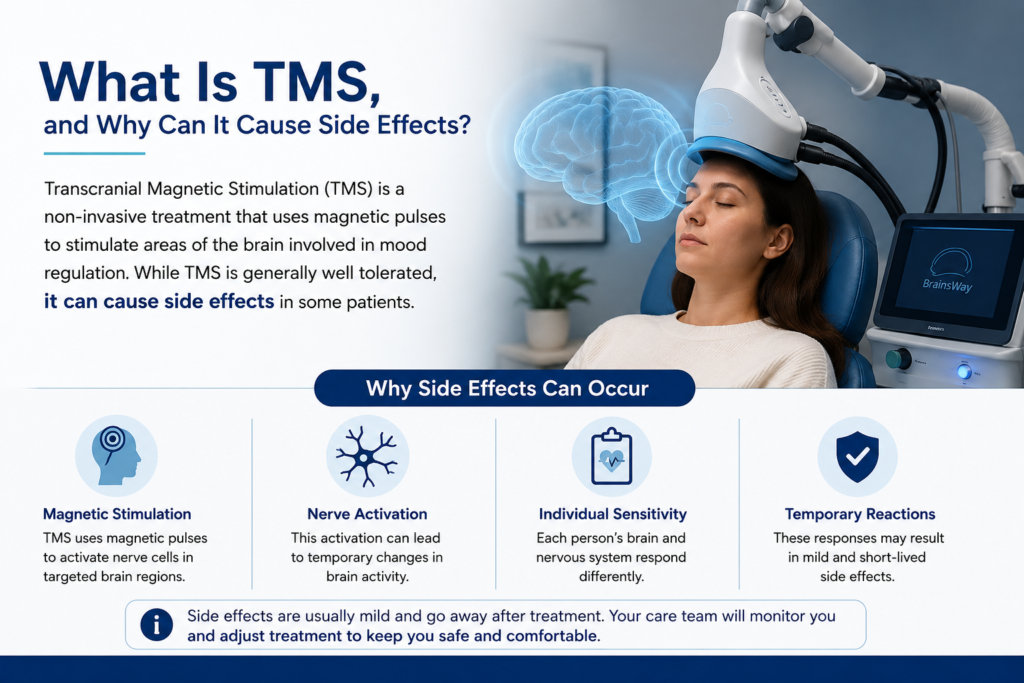
Many common TMS side effects occur because the pulses also stimulate muscles and nerves near the treatment area. This may cause localized discomfort, twitching, tingling, or a tension-type headache.
Different TMS devices, coils, diagnoses, and protocols may produce somewhat different sensations. One patient’s experience should not be treated as a prediction of how every other patient will feel.
This table provides general information. Your TMS provider should give you instructions specific to the device and protocol being used.
Headache is one of the most commonly discussed TMS side effects.
A sudden severe headache, especially with weakness, numbness, confusion, vision changes, fainting, fever, or difficulty speaking, requires urgent medical evaluation.
Some people can use nonprescription pain medication, but it may not be safe for everyone. Ask the treating clinician what is appropriate given your health history and other medications.
Patients commonly describe a tapping sensation where the device rests against the head. For some, it feels unusual but manageable. For others, it may be uncomfortable or painful.


Magnetic stimulation can activate nearby nerves or muscles, resulting in:
These effects usually occur during active stimulation and may stop during pauses between pulse trains.
Some patients may experience brief dizziness or lightheadedness. Anxiety, dehydration, missed meals, medications, and changes in blood pressure can also contribute.

Fainting is not something to dismiss. The treatment team should assess any loss of consciousness, even if it appears related to anxiety or a vasovagal response.
Call 911 for fainting accompanied by chest pain, severe shortness of breath, injury, prolonged confusion, seizure-like activity, or other concerning symptoms.

Mood elevation, sometimes described as mania or hypomania, is an uncommon but important potential risk, particularly for people with bipolar disorder or bipolar-spectrum symptoms.
TMS is not generally associated with the type of memory loss or post-procedure confusion that can occur with electroconvulsive therapy.
This does not mean that every concentration or memory concern during treatment should be dismissed. Depression, anxiety, poor sleep, medication changes, substance use, medical conditions, and other factors can affect cognition.
TMS and medication work differently.
Medication travels through the body and may cause systemic effects. Depending on the medication, these can include gastrointestinal symptoms, sexual side effects, weight changes, sleep changes, sedation, activation, sweating, or other effects.
TMS delivers magnetic stimulation to targeted brain areas and does not circulate through the bloodstream. Its commonly reported side effects are more often localized to the treatment area, such as scalp discomfort or headache.
This does not mean TMS has no side effects or that medication is an inferior treatment. Medication helps many people, and TMS is not appropriate for everyone.
Never stop psychiatric medication simply because you are beginning TMS. Some patients continue medication during treatment under their prescriber’s direction.