
Depression Symptoms and Self-Check
Depression Symptoms and Self-Check: When Should You Seek Help?
Depression does not always look like constant sadness. It can feel like exhaustion, numbness, irritability, low motivation, or losing interest in people and activities that once mattered to you. Some people cry often. Others continue working, parenting, socializing, and meeting responsibilities while privately feeling empty or overwhelmed.
If you have been searching “am I depressed?” or looking for an online depression test, this page can help you recognize common symptoms, complete a brief PHQ-9 self-check, and understand when professional support may be appropriate.
The self-check is educational. It cannot diagnose depression, identify every possible cause of your symptoms, or replace an evaluation by a qualified healthcare professional.
Quick Answer: What Are the Most Common Signs of Depression?
Common depression symptoms include a persistent low, sad, or empty mood; loss of interest or pleasure; hopelessness; low energy; changes in sleep or appetite; difficulty concentrating; guilt or worthlessness; irritability; restlessness or unusually slowed movement; withdrawal from other people; and thoughts of death or self-harm.
Having one difficult day does not necessarily mean you have depression. It may be time to seek help when several symptoms continue for two weeks or longer, keep returning, become more intense, or interfere with work, relationships, school, parenting, sleep, self-care, or your sense of safety.
You do not need to wait until your symptoms become unbearable. A meaningful change from your usual mood, energy, motivation, or functioning is enough reason to start a conversation with a mental health professional.
Depression Symptoms Can Affect the Mind and Body
Depression can look different from one person to another. Symptoms may be emotional, cognitive, physical, or behavioral, and they can change over time.
Emotional symptoms
Emotional signs may include sadness, emptiness, hopelessness, guilt, worthlessness, emotional numbness, irritability, or feeling disconnected from yourself. You may feel as though you are going through the motions rather than participating in your own life. Some people describe feeling unable to access positive emotions even when something good happens.

Not everyone with depression appears visibly sad. Irritability, anger, frustration, or feeling emotionally flat may be more noticeable than tearfulness. You may also become more sensitive to criticism, feel unusually discouraged by small problems, or believe that nothing will improve.
Changes in interest and motivation
Loss of interest or pleasure is an important sign of depression. Activities that once felt enjoyable may begin to feel like obligations. You might stop looking forward to seeing friends, exercising, cooking, hobbies, intimacy, or time with family. Even when you complete these activities, they may not feel rewarding.
Motivation can also become difficult. Starting routine tasks may require much more effort than usual. Laundry, emails, showering, preparing food, or returning a phone call can feel overwhelming. This is not simply laziness or a lack of willpower. It can be part of a broader change in mood, energy, and thinking.
Thinking and concentration changes
Depression may make it harder to concentrate, remember information, organize tasks, or make decisions. You may read the same paragraph repeatedly, lose track of conversations, miss deadlines, or feel mentally slowed down. Negative thoughts can become repetitive and convincing, especially thoughts about failure, guilt, rejection, or the future.
Some people become indecisive because every choice feels exhausting. Others notice that ordinary setbacks trigger harsh self-criticism. When these thinking patterns are persistent, they can affect confidence, work performance, relationships, and the ability to solve problems.
Physical symptoms
Depression can affect sleep, appetite, movement, and energy. You may have trouble falling asleep, wake frequently, wake very early, or sleep much more than usual. Appetite may decrease or increase. Weight can change, although not everyone experiences a noticeable change.
Fatigue may continue even after a full night of sleep. Some people feel physically heavy or slowed down, while others feel restless and unable to sit still. Headaches, digestive discomfort, body aches, tension, and other physical complaints can occur alongside mood symptoms. A medical evaluation may be important because physical symptoms can also have non-psychiatric causes.
Behavioral and social changes
Behavioral signs can include cancelling plans, responding less often to messages, spending more time alone, missing responsibilities, neglecting personal care, or relying on alcohol or other substances to cope. You may still appear productive while using most of your energy to maintain that appearance.
People who continue functioning are sometimes overlooked by others and may question whether they are “depressed enough” to deserve help. Your ability to work or care for other people does not make your symptoms less real. If daily life feels persistently heavy, disconnected, or joyless, support may still be appropriate.
Am I Depressed or Just Going Through a Difficult Time?
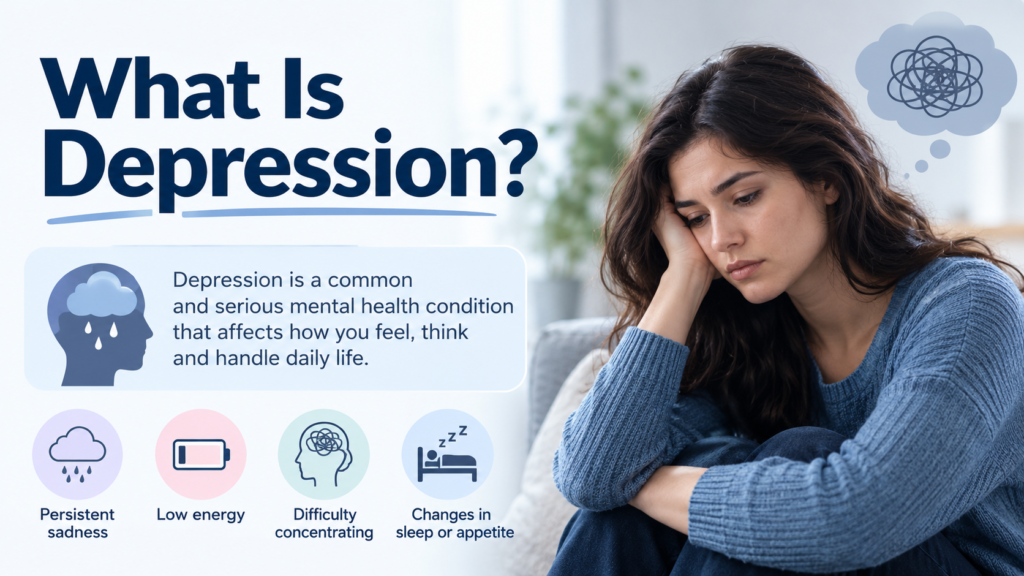
Sadness is a normal human emotion. It may follow disappointment, conflict, loss, stress, or a major life transition, and it often changes as the situation changes. Depression usually involves a broader pattern of symptoms that persists and affects several areas of life.
Grief, burnout, anxiety, trauma, sleep loss, hormonal changes, medication effects, substance use, and medical conditions can produce symptoms that resemble depression. These experiences can also occur at the same time as a depressive disorder. For example, a person may be grieving and depressed, or may feel anxious and depressed together.
This is why a checklist cannot provide the full answer. A psychiatric evaluation looks at the timing of your symptoms, how they affect your life, what was happening when they began, your physical health, medications, treatment history, substance use, sleep, and any previous periods of unusual energy or mood change. The goal is to understand the whole picture rather than attach a label based on a single score.
Take the PHQ-9 Depression Self-Check
The PHQ-9 is a recognized nine-question screening instrument used to identify and monitor depression symptoms. It asks about your experience during the past two weeks.
Choose one response for each question:
- Not at all — 0 points
- Several days — 1 point
- More than half the days — 2 points
- Nearly every day — 3 points
During the past two weeks, how often have you been bothered by any of the following problems?
- Little interest or pleasure in doing things?
- Feeling down, depressed, or hopeless?
- Trouble falling or staying asleep, or sleeping too much?
- Feeling tired or having little energy?
- Poor appetite or overeating?
- Feeling bad about yourself—or that you are a failure or have let yourself or your family down?
- Trouble concentrating on things, such as reading the newspaper or watching television?
- Moving or speaking so slowly that other people could have noticed? Or the opposite—being so fidgety or restless that you have been moving around a lot more than usual?
- Thoughts that you would be better off dead or of hurting yourself in some way?
Safety response—display immediately if question 9 is answered “Several days,” “More than half the days,” or “Nearly every day”: You indicated thoughts of being better off dead or hurting yourself. Your safety matters, and this response requires immediate attention regardless of your total score. If you may act on these thoughts, have a plan, cannot keep yourself safe, or are in immediate danger, call 911 or go to the nearest emergency room now. Otherwise, call or text 988 now for immediate crisis support. If possible, tell someone you trust what is happening. Do not stay alone if you believe you may act on these thoughts. Sunny Skies Healthcare cannot provide emergency support through this webpage.
Additional question, not included in the score: If you selected any problems, how difficult have they made it for you to do your work, take care of things at home, or get along with other people?
- Not difficult at all
- Somewhat difficult
- Very difficult
- Extremely difficult
This comparison is not a self-diagnostic tool. People can have mixed patterns, and burnout can coexist with depression, anxiety, trauma, substance use, or a medical condition.
How to score the PHQ-9
Add the points for questions 1 through 9. Your total will be between 0 and 27. A higher total means you reported a greater level of symptoms during the past two weeks. It does not automatically mean you have a depressive disorder.
Total score | Reported symptom range | Suggested next step |
0–4 | Minimal | Monitor how you feel. Consider professional support if symptoms persist, worsen, return often, or interfere with daily life. |
5–9 | Mild | Consider discussing ongoing or difficult symptoms with a healthcare professional, especially if functioning has changed. |
10–14 | Moderate | A professional mental health evaluation may be worthwhile. |
15–19 | Moderately severe | Contact a qualified mental health professional for a timely evaluation. |
20–27 | Severe | Seek a prompt professional evaluation. Use emergency or crisis services for any immediate safety concern. |
What Does My Depression Self-Check Result Mean?
Your PHQ-9 result describes the amount and frequency of symptoms you reported. It is not a diagnosis, and it should not be interpreted without considering your safety and daily functioning.
Scores from 0 to 4: minimal symptom range
A result in this range may mean that you reported few symptoms during the past two weeks. However, a low score does not mean you should ignore a major change in how you feel. You may still benefit from support if one symptom is intense, if problems have lasted longer than two weeks, or if your work, relationships, sleep, or self-care have been affected.
Any response above “Not at all” to question 9 requires prompt attention, regardless of the total.

Scores from 5 to 9: mild symptom range
Mild symptoms can still make daily life harder. You might notice reduced motivation, less enjoyment, fatigue, irritability, or difficulty concentrating while remaining able to complete most responsibilities. Monitoring symptoms can be useful, but you do not have to wait for the score to rise before speaking with a professional.
Consider seeking help if the symptoms are persistent, recurring, distressing, or causing you to withdraw from people and activities.
Scores from 10 to 14: moderate symptom range
A result in this range suggests that several symptoms may be occurring often enough to affect your well-being. A psychiatric or mental health evaluation can help determine whether the symptoms reflect depression, another condition, a medical concern, or a combination of factors.
The evaluation can also help you understand appropriate next steps instead of relying on an online score alone.
Scores from 15 to 19: moderately severe symptom range
Symptoms in this range may be affecting multiple parts of life, including sleep, energy, concentration, relationships, work, or self-care. A timely professional evaluation is recommended. If you are already receiving treatment, this result may be a reason to review whether the current plan is helping enough.
Do not stop, start, or change a psychiatric medication based only on a self-check. Medication decisions should be made with a qualified prescriber.
Scores from 20 to 27: severe symptom range
A result in this range indicates a high level of reported symptoms and deserves prompt professional attention. Contact a mental health professional for an evaluation. If you feel unable to keep yourself safe, may hurt yourself or someone else, or are in immediate danger, call 911 or go to the nearest emergency room. You can also call or text 988 for immediate crisis support in the United States.
When Should You Seek Professional Help for Depression?
You should consider seeking help when symptoms last two weeks or longer, keep returning, or create a noticeable change in how you function. The decision should not depend on reaching a particular PHQ-9 score.
Professional support may be appropriate when:
- You no longer enjoy activities or relationships that usually matter to you.
- Low mood, numbness, irritability, or hopelessness is present most days.
- Sleep, appetite, energy, concentration, or motivation has changed.
- Work, school, parenting, relationships, or household responsibilities are becoming harder.
- You are withdrawing, cancelling plans, or struggling with self-care.
- You are using alcohol or other substances to manage how you feel.
- Depression symptoms improve and then repeatedly return.
- Therapy or medication is not providing enough relief.
- Medication side effects are difficult to manage.
- You are uncertain whether the symptoms may be related to depression, anxiety, trauma, grief, burnout, bipolar disorder, or a medical condition.
- You have thoughts of death, self-harm, suicide, or being unsafe.
You do not have to prove that you are severely depressed before requesting an evaluation. Early support may make it easier to understand what is happening and prevent symptoms from becoming more disruptive.
What Happens During a Psychiatric Evaluation?
identify appropriate next steps. It is more complete than an online depression test.
The clinician may ask when your symptoms began, how often they occur, and how they affect sleep, appetite, energy, concentration, work, relationships, and self-care. They may also review previous episodes of depression, anxiety symptoms, trauma, grief, major stressors, family mental health history, medical conditions, current medications, supplements, substance use, and previous treatment.

It is also important to review any past periods of unusually elevated or irritable mood, reduced need for sleep, impulsive behavior, racing thoughts, or increased energy. Depression symptoms can occur in more than one type of mood disorder, and an accurate history helps reduce guesswork.
The provider may recommend that physical symptoms or possible medical contributors be evaluated. Depending on the situation, coordination with a primary care clinician, therapist, or another healthcare professional may be useful.
At the end of the evaluation, the clinician can explain what may be contributing to your symptoms and discuss a personalized care plan. The goal is not to force one treatment. It is to identify options that fit your clinical needs, previous experiences, preferences, safety, and goals.
Can You Have Burnout and Depression at the Same Time?
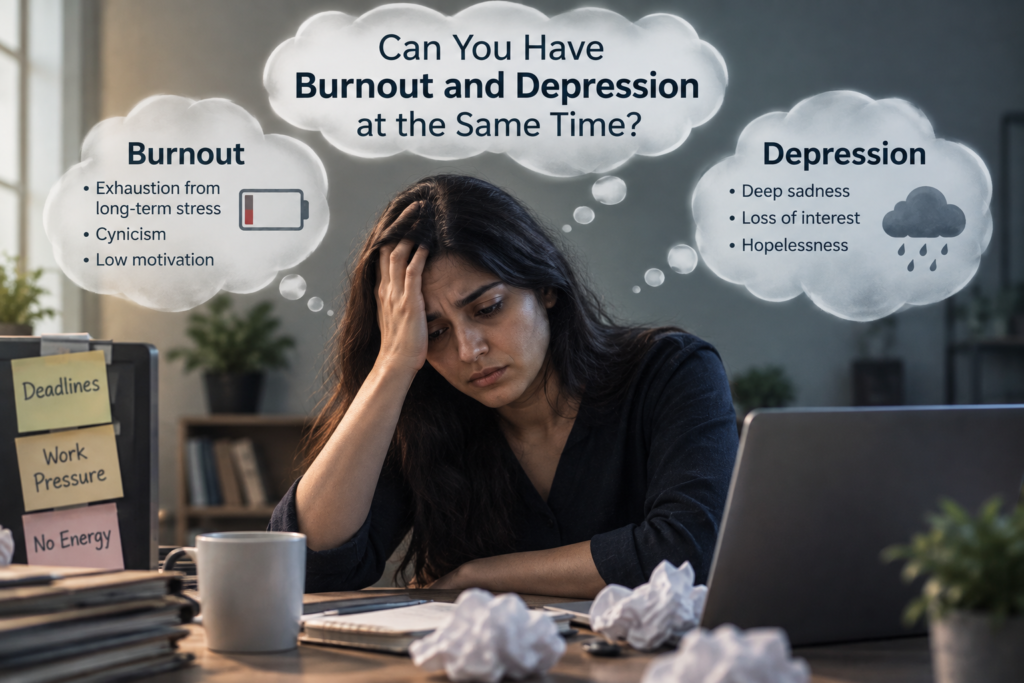
Yes. Burnout and depression are not mutually exclusive. A person can experience chronic workplace stress and also meet criteria for a depressive disorder. Burnout symptoms may also make it harder to notice when a broader mental health problem is developing.
For example, someone may initially feel cynical and exhausted only at work. Over time, they may stop enjoying friends, hobbies, food, exercise, or family activities. Sleep may become disrupted, hopelessness may increase, and the sense of failure may spread beyond professional performance.
That broader pattern deserves a mental health evaluation.
The reverse can also happen. A person with depression may experience poor concentration, low energy, and reduced motivation at work and assume that the job is the only problem. Changing roles may help with a harmful work environment, but it may not fully address an underlying depressive disorder.
The purpose of an evaluation is not to force the experience into one category. It is to identify all the factors that may be contributing and create a plan that addresses them.
Am I Burned Out or Depressed? Questions to Consider
The following questions may help you organize what you are experiencing. They are not a scored test and cannot diagnose burnout or depression.
1. Where do the symptoms show up?
Do exhaustion, dread, irritability, and detachment appear mainly around work? Or do they also affect weekends, relationships, hobbies, meals, exercise, and self-care?
2. Can you still experience enjoyment?
When you are away from work, can you become interested in people or activities? A broad loss of interest or pleasure may point toward depression and should be discussed with a professional.
3. Does meaningful rest change how you feel?
Do symptoms improve after sleep, time off, support, or distance from the workplace? Burnout may ease when recovery is possible and work conditions change. Depression may remain present despite rest.
Many people experience a mixture, so this question is informative rather than decisive.
4. What are you telling yourself?
Burnout-related thoughts may focus on professional effectiveness: “I cannot keep up,” “This job is draining me,” or “My work no longer matters.”
Depression may produce broader thoughts such as “I am worthless,” “Nothing will improve,” or “Everyone would be better without me.”
5. How long has this been happening?
Has the pattern continued for weeks or months? Is it becoming more intense? Persistent symptoms, declining functioning, or an inability to recover are reasons to seek help regardless of the label.
6. Has your sleep, appetite, or self-care changed?
Burnout and depression can both affect these areas. Significant or continuing changes may also have medical causes and deserve evaluation.
7. Are you using alcohol or other substances to cope?
Increasing substance use can worsen mood, sleep, anxiety, health, and safety. It is important to share this information honestly with a clinician.
8. Do you feel safe?
Any thoughts of death, self-harm, suicide, or being unable to remain safe require prompt support. Do not dismiss these thoughts as “just burnout.”
Call or text 988 in the United States. Call 911 or go to the nearest emergency room for immediate danger.
Why It Can Be Hard to Tell the Difference
Exhaustion changes how people think, feel, and behave. When someone has been under pressure for a long time, it may be difficult to remember what their normal energy or motivation felt like. They may also minimize symptoms because the workplace culture treats chronic exhaustion as expected.
Burnout and depression can both interfere with sleep, concentration, motivation, relationships, and physical comfort. A short vacation may not resolve burnout if the person returns to the same unmanageable conditions.

Likewise, a person with depression may experience brief moments of relief without the underlying condition being resolved.
Other issues can complicate the picture. Anxiety may cause racing thoughts, tension, and poor sleep. Trauma can produce withdrawal, irritability, numbness, or hypervigilance. Grief can affect energy, concentration, and interest.
Sleep disorders, chronic pain, thyroid problems, anemia, hormonal changes, medication effects, and substance use can resemble or intensify emotional symptoms.
An evaluation considers these possibilities instead of relying on a single online comparison.
When Should You Seek Professional Help?
You do not need to know whether the correct word is burnout, depression, stress, or anxiety before asking for help.
Consider a psychiatric or mental health evaluation when:
- Symptoms have lasted two weeks or longer.
- Rest, weekends, or time away are no longer helping.
- Exhaustion is affecting work, relationships, or self-care.
- You have lost interest in activities outside work.
- Sleep, appetite, concentration, or motivation has changed significantly.
- You feel hopeless, worthless, trapped, or unable to recover.
- You are using alcohol or other substances more often to cope.
- Work stress is triggering panic, trauma symptoms, or severe anxiety.
- You are making errors or having difficulty performing safely at work.
- You are considering quitting impulsively because you feel unable to continue.
- Symptoms keep returning after temporary improvement.
- You are already receiving treatment but are not improving enough.
- You have thoughts of death, self-harm, suicide, or harming someone else.
Seeking an evaluation does not automatically mean you will receive a diagnosis or medication. It creates space to understand the symptoms, identify risks, and discuss appropriate options.
What Happens During a Psychiatric Evaluation?

A psychiatric evaluation looks at more than your workload. The clinician may ask about mood, interest, energy, sleep, appetite, concentration, anxiety, irritability, physical symptoms, substance use, medical history, medications, and safety.
The clinician may recommend coordination with a primary care clinician, therapist, or another professional if physical health, sleep, substance use, or workplace issues require additional attention.
The goal is not to blame the person for failing to cope. It is to understand whether the symptoms reflect occupational burnout, depression, anxiety, another condition, or several problems occurring together.
They may also explore:
- When the symptoms began and what was happening at the time.
- Whether symptoms occur mainly at work or across different settings.
- How you feel during weekends, vacations, or periods of reduced workload.
- Your responsibilities, schedule, level of control, workplace relationships, and support.
- Whether the job conflicts with your values or creates moral distress.
- Previous episodes of depression, anxiety, trauma, or burnout.
- Family mental health history.
- Current medical conditions, medications, and supplements.
- Previous periods of unusually elevated mood, reduced need for sleep, racing thoughts, or impulsive behavior.
- The effect on work performance, relationships, and daily functioning.
How Treatment May Differ for Burnout and Depression
Burnout and depression may share symptoms, but the care plan should address the underlying pattern.
Support for occupational burnout
Burnout support may involve identifying the work conditions that are driving chronic stress. Depending on the situation, helpful changes could include a manageable workload, clearer priorities, improved staffing, greater control, realistic schedules, protected recovery time, stronger boundaries, supervisory support, or a change in role.
Individual strategies such as sleep, movement, nutrition, relaxation, time away, social support, and therapy may support recovery. They should not be used to suggest that a person can simply breathe or exercise their way through an unsafe or unsustainable workplace.
A therapist or psychiatrist may help with anxiety, perfectionism, guilt, conflict, trauma reactions, emotional regulation, or decisions about work.
Medication is not a direct treatment for burnout itself, but it may be considered when a diagnosable condition such as depression or an anxiety disorder is also present.
Treatment for depression
Depression treatment may include psychotherapy, medication management, lifestyle and sleep support, coordination with other healthcare professionals, or a combination of approaches.
The plan depends on the diagnosis, symptom severity, safety, previous treatment, medical history, and patient preferences.
For eligible patients whose depression has not improved enough with previous treatment, a psychiatrist may review advanced options such as BrainsWay Deep TMS®.
Deep TMS® is not a treatment for occupational burnout by itself. Eligibility depends on a qualifying diagnosis, treatment history, medical and safety factors, and provider evaluation.
When both are present
If burnout and depression occur together, treating only one side may leave important problems unresolved.
Reducing depression symptoms may help energy and functioning, but returning to an unchanged harmful environment may continue the strain. Changing the work situation may reduce stress, but depression may still require clinical treatment.
A combined plan can address symptoms, workplace realities, physical health, recovery, and longer-term mental wellness.
Burnout and Depression Care at Sunny Skies Healthcare in Chicago
Sunny Skies Healthcare provides compassionate psychiatric support for stress, burnout symptoms, depression, anxiety, sleep disruption, emotional exhaustion, and related concerns in Chicago’s West Loop.
Care begins with understanding the full picture. A psychiatric evaluation can review where the symptoms occur, how long they have lasted, how they affect daily life, and whether depression, anxiety, trauma, grief, medical factors, medication effects, or substance use may be contributing.
Depending on the evaluation, care may include medication management when appropriate, therapy coordination, lifestyle-focused guidance, holistic mental wellness support, or evaluation of advanced treatment options for an eligible diagnosed condition.
Sunny Skies Healthcare does not treat burnout as an automatic indication for Deep TMS®. If a person experiencing burnout symptoms also has depression or another potentially qualifying condition, eligibility can be reviewed based on diagnosis, treatment history, medications, medical history, implants, seizure risk, and overall clinical safety.
Frequently Asked Questions
Is burnout a mental health diagnosis?
No. Burnout is generally classified as an occupational phenomenon associated with chronic workplace stress, not as a formal mental health diagnosis.Its commonly recognized features are exhaustion, increased mental distance or cynicism toward work, and reduced professional effectiveness. A person with burnout may also have depression, anxiety, or another diagnosable condition.
Can burnout turn into depression?
Burnout and depression have a complex relationship and can occur together. A person experiencing chronic workplace stress may develop symptoms that spread beyond work, including loss of interest, hopelessness, guilt, sleep or appetite changes, and impaired self-care.These broader symptoms should be evaluated rather than assumed to be burnout alone.
Does taking time off help burnout or depression?
Meaningful time away and changes to workplace stress may help burnout. A short break may provide limited relief if the same conditions return immediately.Depression can continue during weekends or vacations and may require clinical treatment. Improvement with time off can provide useful information, but it does not confirm or rule out either condition.
How do I know if exhaustion is burnout or a medical problem?
Exhaustion can be related to burnout, depression, anxiety, poor sleep, medication effects, substance use, chronic pain, thyroid problems, anemia, sleep apnea, or other medical conditions.Seek an evaluation when fatigue persists, becomes severe, or is accompanied by mood changes, physical symptoms, or reduced functioning.
When should I see a psychiatrist for burnout or depression symptoms?
Consider seeing a psychiatrist when symptoms last two weeks or longer, spread beyond work, interfere with sleep or daily functioning, do not improve with rest, or include persistent low mood, loss of interest, hopelessness, or substance use.Seek immediate crisis or emergency help for thoughts of self-harm, suicide, or danger to yourself or someone else.
Take the Next Step
You do not need to diagnose yourself before requesting support. If exhaustion, detachment, low mood, or loss of motivation is affecting your work and the rest of your life, Sunny Skies Healthcare can help you review the full pattern and discuss appropriate next steps.