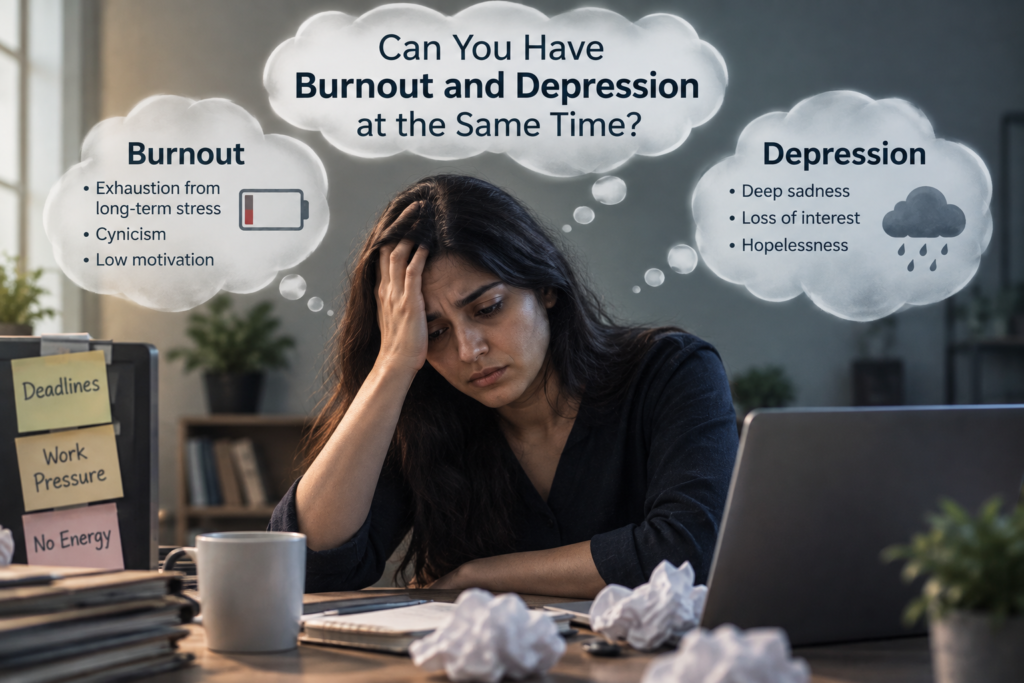
Someone can arrive at work on time, meet deadlines, care for a family, maintain friendships, and appear successful while privately struggling with depression symptoms. From the outside, life may look organized. Internally, every responsibility may require enormous effort.
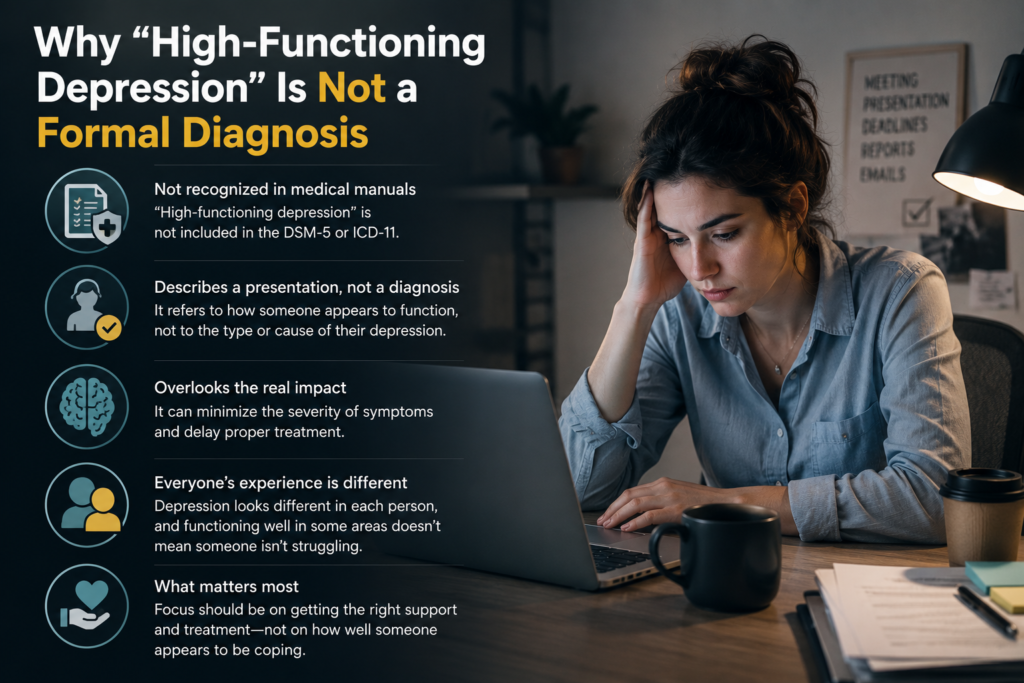
“High-functioning depression” is a commonly used phrase, not a formal psychiatric diagnosis. It is often used to describe people who experience persistent low mood, loss of pleasure, exhaustion, self-criticism, or emotional numbness while continuing to meet many outward responsibilities.
The phrase does not tell a clinician which depressive disorder, if any, is present. A person may have major depressive disorder, persistent depressive disorder, another mental health condition, a medical issue, or symptoms that do not meet criteria for a specific diagnosis. A psychiatric evaluation is needed to understand the full pattern.
If you look capable on the outside but feel empty, hopeless, disconnected, or exhausted inside, you do not need to wait until you can no longer function before asking for help.
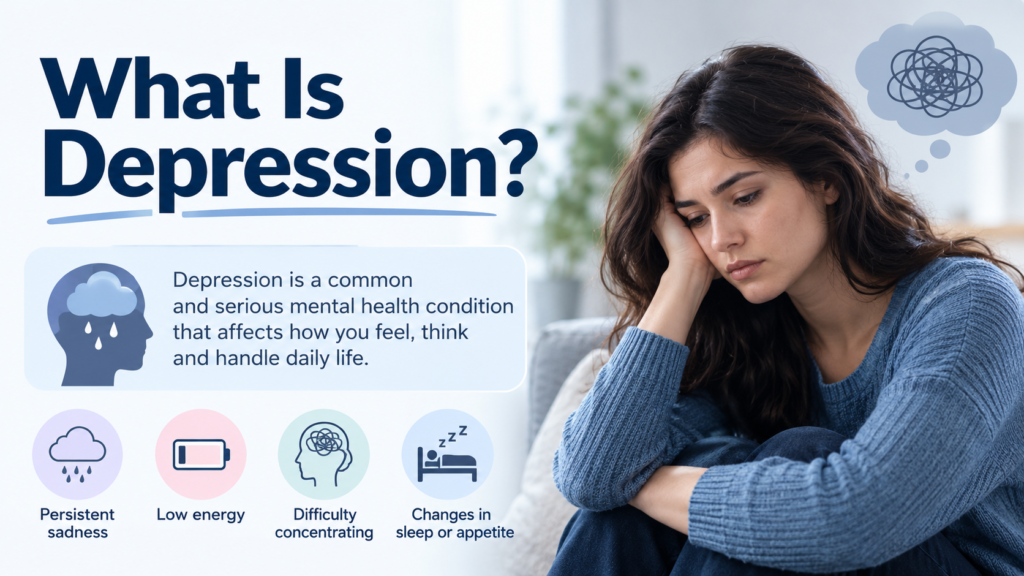
High-functioning depression is an informal phrase used for depression symptoms that may be hidden behind work, school, caregiving, social activity, or other responsibilities. The person may appear dependable and productive while experiencing low mood, reduced enjoyment, fatigue, guilt, hopelessness, difficulty concentrating, sleep changes, or emotional disconnection.
It is not a separate medical diagnosis and should not be used to diagnose yourself or someone else. It also does not mean the depression is mild. A person’s ability to complete tasks does not reveal the amount of distress, effort, or suffering involved.
Professional help may be appropriate when symptoms last two weeks or longer, keep returning, affect quality of life, or require so much effort that there is little energy left for relationships, self-care, or enjoyment.
People often expect depression to look like crying, staying in bed, missing work, or being unable to complete basic tasks. Those experiences can occur, but they are not the only way depression appears.
Friends, relatives, and coworkers may genuinely believe the person is doing well. Compliments such as “You always have everything together” can make disclosure feel even harder.
People adapt to distress in different ways. Some withdraw visibly, while others become more controlled, productive, or focused on responsibility.
Several factors may help someone maintain outward functioning temporarily:

These terms are often confused online, but they are not equivalent.
These questions can help you organize your experience, but they are not a diagnostic test.