
What to Do When Antidepressants Are Not Working

What to Do When Antidepressants Are Not Working

Taking an antidepressant and continuing to feel depressed can be discouraging. You may wonder whether you need to wait longer, change the dose, try another medication, or consider a different type of treatment. You may also feel frustrated if you have already tried more than one prescription without enough relief.

An antidepressant that is not helping does not mean you have failed treatment or that nothing will work. It means the current plan deserves a careful review. The right next step depends on how long you have taken the medication, the dose, side effects, consistency, your diagnosis, other health conditions, previous treatment, and how your symptoms have changed.

Do not stop an antidepressant suddenly, double a dose, or make medication changes without guidance from the prescribing clinician. A psychiatric medication review can help identify what may be limiting improvement and whether adjusting treatment, changing medication, adding therapy, or evaluating a non-medication option such as Deep TMS® may be appropriate

Quick Answer: What Should I Do If My Antidepressant Is Not Working?

If your antidepressant is not helping enough, continue taking it as prescribed and contact the prescribing clinician. Explain which symptoms remain, whether anything has improved, how long you have taken the medication, and whether you are experiencing side effects.

The clinician may review whether the medication has had enough time to work, whether the dose and treatment duration have been adequate, and whether missed doses, interactions, sleep problems, substance use, medical conditions, or another diagnosis may be affecting the result.

Possible next steps may include continuing the current plan for longer, adjusting the dose, switching medication, adding another treatment, coordinating psychotherapy, reviewing physical health factors, or considering an advanced treatment after a full evaluation. The appropriate choice is different for each person.

How Long Do Antidepressants Take to Work?

Antidepressants usually do not create their full effect immediately. Many require several weeks, and some symptoms may change before others. Sleep, appetite, concentration, or anxiety may improve before mood and motivation noticeably lift.

The amount of time needed depends on the medication, dose, symptoms, adherence, side effects, and individual response. A person may experience early improvement, gradual improvement, no meaningful change, or side effects that make the medication difficult to continue.

This is why it is important to ask the prescriber when they expect to assess the response. Deciding that a medication has failed too early may end a potentially helpful trial. Waiting without clinical review can also be a problem when symptoms are worsening, side effects are severe, or safety has changed.

Contact the prescriber before the planned follow-up if you experience a sharp decline in mood, new or increasing thoughts of self-harm, severe agitation, unusual behavior, symptoms of mania, a concerning allergic reaction, or another serious change. Emergency symptoms require emergency help rather than a routine message.
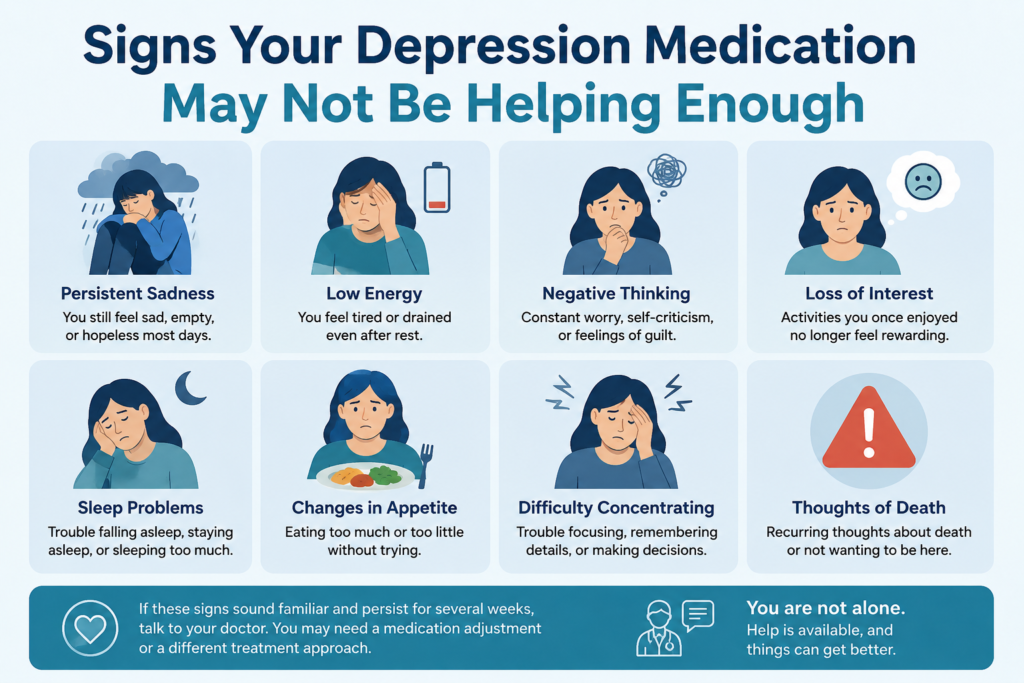
Signs Your Depression Medication May Not Be Helping Enough

“Not working” can mean different things. The medication may have caused no improvement, helped only some symptoms, worked for a period and then seemed to stop, or produced side effects that outweigh the benefit.

No noticeable improvement

You may continue to experience the same low mood, lack of interest, hopelessness, fatigue, sleep problems, guilt, difficulty concentrating, or withdrawal that you had before starting treatment.Before calling this a failed medication, the prescriber will usually want to know whether the trial was long enough and whether the medication was taken consistently at an appropriate dose.

Partial improvement

Sometimes an antidepressant helps but does not provide enough relief. You may sleep better or feel less anxious while still having low motivation, emotional numbness, poor concentration, or loss of pleasure.
Partial improvement matters, but persistent symptoms can still interfere with recovery and make daily functioning difficult. A medication review can identify what improved, what did not, and whether the next step should build on the partial benefit or use a different approach.

Symptoms returned after initial improvement

A medication may seem helpful at first, but depression symptoms can return. This does not automatically mean the medication has permanently stopped working.Recurrence may be related to a new stressor, missed doses, a medication interaction, changes in sleep or physical health, substance use, the course of the illness, or other factors. The prescriber can review the timing of the change rather than assuming that another prescription is the only answer.

Side effects are difficult to tolerate

Some people stop taking medication because of nausea, fatigue, sleep disruption, emotional blunting, sexual side effects, appetite or weight changes, agitation, or other concerns. Do not feel embarrassed about raising side effects. They are an important part of deciding whether the treatment is acceptable and sustainable.Do not stop suddenly to escape side effects unless emergency professionals instruct you to do so. Contact the prescriber for guidance because discontinuation symptoms and returning depression can occur when certain medications are stopped too quickly.

Daily functioning remains impaired

Symptom improvement should be considered alongside functioning. You may report a slightly better mood while still being unable to work consistently, care for yourself, maintain relationships, sleep normally, or participate in activities.A treatment plan may need review when the improvement does not translate into meaningful daily change.

Why Might an Antidepressant Not Work?

There is rarely one simple explanation. A thoughtful review looks for clinical, practical, medical, and personal factors before deciding what to do next.

The medication may need more time

If treatment was started recently, it may be too early to judge the full response. The clinician can explain the expected timeline and what changes to monitor.This does not mean you should silently tolerate worsening symptoms or serious side effects. It means the decision should be made with the prescriber using the complete clinical picture.

The dose or duration may not have been adequate

A medication trial may not provide clear information if the dose was too low, treatment was too brief, or side effects prevented reaching a clinically appropriate plan. Only a qualified prescriber should determine whether a dose change is appropriate.Taking more medication than prescribed is not a safe way to speed up improvement. If you accidentally take too much or are concerned about an overdose, seek immediate medical guidance.

Doses may have been missed or taken inconsistently

Missing doses can affect symptoms and may cause discontinuation effects with some medications. People miss doses for many understandable reasons, including side effects, cost, travel, a changing routine, difficulty remembering, or uncertainty about whether the medication is helping.Be honest with the clinician about how often you take the medication. The purpose is not judgment. Accurate information helps prevent an ineffective or inconsistent trial from being mistaken for treatment resistance.

Medication or substance interactions may be involved

Prescription medications, nonprescription drugs, supplements, alcohol, cannabis, stimulants, and other substances may affect mood, sleep, anxiety, side effects, or medication levels.Bring a complete list to the review, including products that do not seem related to mental health. Do not add supplements promoted for mood without discussing them with a clinician or pharmacist. “Natural” does not mean interaction-free or appropriate for every person.

The diagnosis may need another look

Symptoms that appear to be depression can also occur with bipolar disorder, anxiety disorders, OCD, trauma-related conditions, grief, burnout, substance-related conditions, sleep disorders, attention problems, and medical illnesses. Depression can also occur alongside these conditions.A history of unusually elevated or irritable mood, much less need for sleep, racing thoughts, impulsive behavior, or periods of markedly increased energy is especially important to discuss. An accurate diagnosis affects which treatments are appropriate.

Physical health may be contributing

Thyroid problems, anemia, sleep apnea, chronic pain, hormonal changes, nutritional issues, neurological conditions, infections, and other medical factors can overlap with depression symptoms.This does not mean every person needs the same laboratory tests. It means the provider may recommend medical evaluation based on symptoms and history.

Ongoing stress or an untreated condition may be maintaining symptoms

Medication cannot remove every source of distress. Trauma, grief, relationship conflict, isolation, work pressure, caregiving strain, financial stress, unsafe living conditions, poor sleep, or untreated anxiety can continue to affect mental health.This is not a reason to blame the person or suggest that depression can be solved through willpower. It is a reason to consider whether the care plan should address more than medication alone.

The depression may be difficult to treat

Some people do not improve enough even after appropriate treatment attempts. This is often described as treatment-resistant depression.The term does not mean that the person is resistant, difficult, or beyond help. It describes a pattern in which standard treatments have not produced sufficient relief.Definitions can vary, which is why a psychiatrist should verify what was tried, at what dose, for how long, how consistently it was taken, and what response or side effects occurred.

What Not to Do When Antidepressants Are Not Helping

Feeling impatient or discouraged is understandable, but certain reactions can increase risk or make the treatment history harder to interpret.
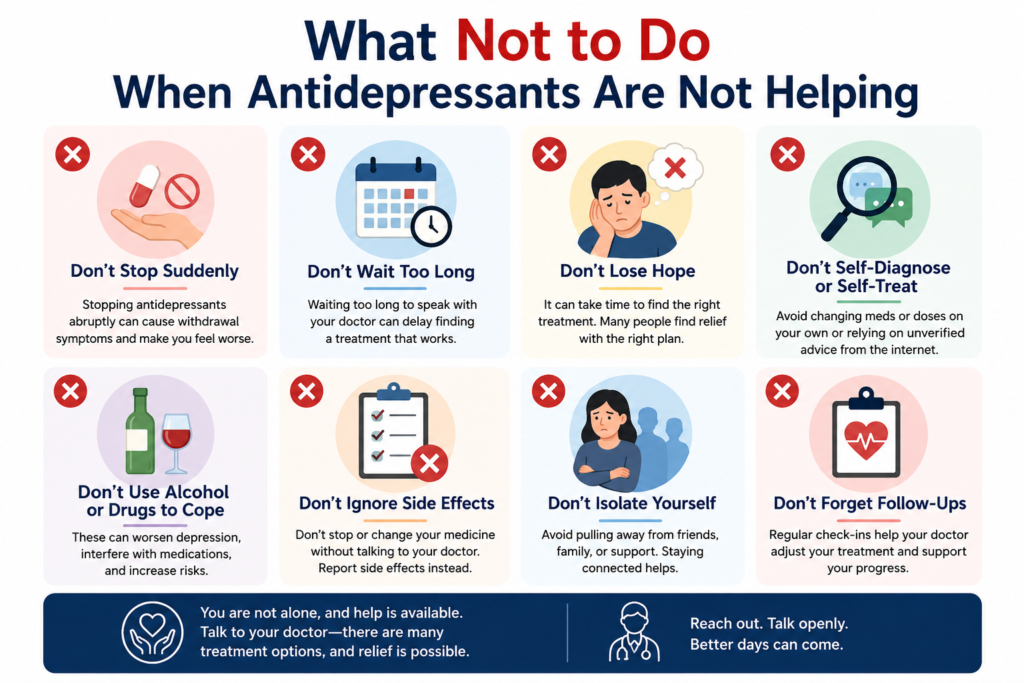
Do not:

  • Stop the medication suddenly without prescriber guidance.
  • Increase, reduce, or skip doses to test how you feel.
  • Take someone else’s medication.
  • Combine prescriptions with alcohol, recreational substances, or supplements without discussing possible interactions.
  • Assume that one unsuccessful medication means no treatment can help.
  • Continue severe or dangerous side effects without contacting a clinician.
  • Wait for a routine appointment if you are experiencing suicidal thoughts, mania, psychosis, a severe reaction, or an inability to stay safe.

The safest next step is usually to document what you are experiencing and contact the prescribing clinician. If you cannot reach the prescriber and the situation is urgent, use an urgent care, crisis, or emergency service appropriate to the severity of the symptoms.

What Happens During a Medication Review?

A medication review is more than choosing another prescription. It helps the clinician understand what has been tried and why the current plan may not be providing enough relief.

The review may include:

  • Your current symptoms and how they affect daily life.
  • Which symptoms improved, stayed the same, or became worse.
  • The medication name, dose, schedule, and length of treatment.
  • How consistently the medication has been taken.
  • Side effects and whether they are manageable.
  • Previous antidepressants and other psychiatric medications.
  • Previous therapy, hospital care, brain-stimulation treatment, or other interventions.
  • Sleep, appetite, energy, concentration, anxiety, trauma symptoms, and substance use.
  • Medical conditions, current prescriptions, supplements, and possible interactions.
  • Family mental health history and previous periods of unusual mood or energy.
  • Current stressors, support systems, treatment goals, and safety.

It can help to bring prescription bottles, pharmacy records, or a written medication timeline. Include approximate dates, doses when known, benefits, side effects, and the reason each treatment ended. If details are missing, say so rather than guessing.

What Treatment Changes Might Be Considered?

The next step depends on the review. There is no single sequence that is right for every patient.may be uncomfortable or painful.

Continue the medication with monitoring

If the trial is still early and the medication is tolerated, the clinician may recommend allowing more time while monitoring symptoms and safety. A follow-up plan should explain what improvement to look for and when the medication will be reassessed.

Adjust the dose

The prescriber may decide that a dose adjustment is clinically appropriate. The potential benefit must be considered alongside side effects, other medications, health conditions, and the recommended dosing range.

Switch to another antidepressant

A different medication may be considered when there is little benefit, unacceptable side effects, or another clinical reason to change.

Switching plans vary. Some medications require gradual reduction, overlapping schedules, or specific precautions, so the prescriber should provide clear instructions.

Add another medication

In some situations, a clinician may add a second medication to support the antidepressant response or address particular symptoms. This is sometimes called augmentation.

The decision should include a discussion of possible benefits, side effects, interactions, and monitoring.

Add or adjust psychotherapy

Therapy can address patterns, relationships, trauma, stress, avoidance, behavior, and coping in ways medication alone may not.

A person already in therapy may benefit from reviewing whether the approach, frequency, goals, and therapeutic relationship still fit their needs.

Address sleep, substance use, or medical contributors

Treating a sleep disorder, reviewing alcohol or substance use, managing pain, or evaluating a possible medical contributor may be part of improving the overall treatment plan.

These factors should be handled without reducing depression to a lifestyle problem.

Consider an advanced treatment

If depression has not improved enough after appropriate treatment attempts, a psychiatrist may discuss a non-medication or advanced option.

Depending on diagnosis, severity, safety, history, availability, and individual circumstances, this may include transcranial magnetic stimulation or another evidence-based intervention.

Does This Mean I Have Treatment-Resistant Depression?

Not necessarily. One medication that did not help, a brief trial, missed doses, or a dose that could not be optimized because of side effects may not establish treatment-resistant depression.

Treatment-resistant depression commonly refers to major depressive disorder that has not improved sufficiently after more than one adequate antidepressant treatment attempt. However, definitions used by clinicians, researchers, and insurance plans can differ.

Before using the label, a psychiatric evaluation should confirm the diagnosis and review whether previous treatments were clinically adequate. The evaluation should also consider bipolar disorder, anxiety, OCD, trauma, substance use, sleep conditions, medical contributors, medication interactions, and psychosocial stress.

The purpose of identifying a difficult-to-treat pattern is not to create hopelessness. It is to stop repeating the same approach without enough thought and to consider a broader, individualized plan.

Could Deep TMS® Be an Option When Antidepressants Are Not Working?

BrainsWay Deep TMS® may be considered for eligible patients with depression who have not found enough relief through previous treatment. It is a non-invasive treatment that uses magnetic pulses to stimulate targeted brain areas involved in mood regulation.

Deep TMS® does not work through the bloodstream and does not require surgery, needles, anesthesia, or sedation. Patients remain awake during treatment. Because there is no anesthesia, many patients can return to ordinary activities after a session, although individual guidance should come from the treating provider.

Deep TMS® is not an automatic replacement for medication, and it is not appropriate for everyone. Some patients continue medication during treatment, while other plans may differ. Medication decisions remain under the direction of the prescribing clinician.

Factors considered during a Deep TMS® eligibility review

The provider may review:

  • The current diagnosis and severity of symptoms.
  • Previous antidepressants, doses, duration, response, and side effects.
  • Therapy and other treatments already attempted.
  • Current medications and substance use.
  • Seizure history and other neurological or medical concerns.
  • Implanted metallic or electronic devices.
  • Pregnancy status when relevant.
  • The ability to attend a structured course of treatment.
  • Insurance documentation and pre-authorization requirements.
  • Personal preferences, goals, and overall clinical safety.

Eligibility cannot be confirmed by a brief website statement. A clinical review is needed to determine whether Deep TMS® or another option may be appropriate.

When Depression Symptoms Need Urgent Help

Contact a clinician promptly if depression is rapidly worsening, you have new or increasing thoughts of death or self-harm, you feel intensely agitated, or people close to you notice a concerning behavioral change.

Seek emergency help if you may act on suicidal or violent thoughts, have a plan or access to means, cannot keep yourself safe, are experiencing psychosis, have symptoms of a severe medication reaction, or are in immediate danger.

Call 911 or go to the nearest emergency room for immediate danger. In the United States, call or text 988 for immediate crisis support. If possible, tell someone you trust and ask them to stay with you while you connect with help.

Do not use a medication review request, contact form, portal message, or Deep TMS® eligibility form for an emergency.

Depression Treatment Review at Sunny Skies Healthcare in Chicago

Sunny Skies Healthcare provides patient-centered psychiatric care in Chicago’s West Loop for people experiencing depression, treatment-resistant depression, anxious depression, and related concerns.

Care begins with the full picture rather than an automatic prescription change. The psychiatric evaluation can review current symptoms, diagnosis, medication history, side effects, previous treatment, sleep, lifestyle, physical health, stress, and treatment goals.

Depending on the evaluation, care may include medication management, therapy coordination, holistic mental wellness support, or a BrainsWay Deep TMS® eligibility review.

Sunny Skies Healthcare can also help eligible patients understand insurance benefits and possible pre-authorization requirements for Deep TMS®.

If antidepressants have not helped enough, you do not have to keep repeating the same process without a clear review. A thoughtful evaluation can help identify what has been tried, what may have been missed, and which next steps may be reasonable.

Frequently Asked Questions

How long should I take an antidepressant before deciding it is not working?

Antidepressants often need several weeks before their full effect can be evaluated. The appropriate timeline depends on the medication, dose, adherence, side effects, symptoms, and clinical situation.Ask the prescribing clinician when the response should be reviewed. Contact them sooner if symptoms worsen, side effects are severe, or safety changes.

Look for changes in both symptoms and functioning. Improvements may include better sleep, appetite, concentration, energy, motivation, emotional range, interest, or ability to complete daily responsibilities.A medication may be helping partially even when some symptoms remain. Tracking changes can make the follow-up conversation more specific.

Do not stop an antidepressant suddenly without guidance from the prescribing clinician. Some medications can cause discontinuation symptoms when reduced too quickly, and depression symptoms may return or worsen.Contact the prescriber for a safe, individualized plan. Use urgent or emergency services if you are experiencing a severe reaction or cannot remain safe.

Not necessarily. Clinicians consider whether the diagnosis was accurate and whether previous medication trials used an appropriate dose and duration with consistent use.Treatment-resistant depression usually involves insufficient improvement after more than one adequate treatment attempt, but definitions can vary. A psychiatric evaluation is needed.

Deep TMS® may be considered for eligible patients with depression who have not improved enough with previous treatment. It uses magnetic stimulation rather than medication and does not require surgery or anesthesia.A provider must review diagnosis, treatment history, medications, medical safety factors, implants, seizure risk, scheduling, and insurance requirements before determining eligibility.

If your depression medication is not helping enough, the next step should be a careful review rather than guesswork.Sunny Skies Healthcare can help assess your symptoms, medication history, previous treatment, side effects, and goals, then discuss options that may be appropriate for your situation.

Scroll to Top