
Why Does Depression Keep Coming Back
Why Does Depression Keep Coming Back?
When depression returns after you began feeling better, it can be confusing and discouraging. You may wonder whether the treatment stopped working, whether you did something wrong, or whether you will always feel this way.
Depression can follow different patterns. Some people experience one episode. Others have symptoms that improve but never fully resolve. Some recover for a period and later experience a new episode.
Returning symptoms do not mean you failed, and they do not automatically mean that previous treatment was useless.
A recurrence may reflect the natural course of a depressive disorder, incomplete recovery, a treatment change, a new stressor, poor sleep, substance use, another mental health condition, a medical issue, or several factors occurring together.
A psychiatric treatment review can help determine which explanation may fit and whether the care plan should change.
Quick Answer: Why Do Depression Symptoms Return?
Depression symptoms may return because the original episode did not fully resolve, treatment was reduced or stopped, medication was taken inconsistently, a new life or medical stressor appeared, sleep or substance use changed, or the original diagnosis needs another look.
Some depressive disorders are recurrent, which means a person may experience more than one episode over time. Depression may also be seasonal or related to another condition, including bipolar disorder, trauma, anxiety, chronic pain, hormonal changes, or substance use.
The best next step is not to assume the reason. A treatment review can compare your current symptoms with previous episodes, identify early warning signs, examine what treatment helped, and determine whether medication, therapy, medical evaluation, or another option may be appropriate.
Depression Relapse vs Recurrence: What Is the Difference?
The terms relapse and recurrence both describe the return of symptoms, but they are not always used in exactly the same way.
Depression relapse
Relapse generally means that symptoms return before the person has achieved a stable, sustained recovery from the original episode.
You may have felt partly better or had a short period with few symptoms, but the same episode may not have fully ended.
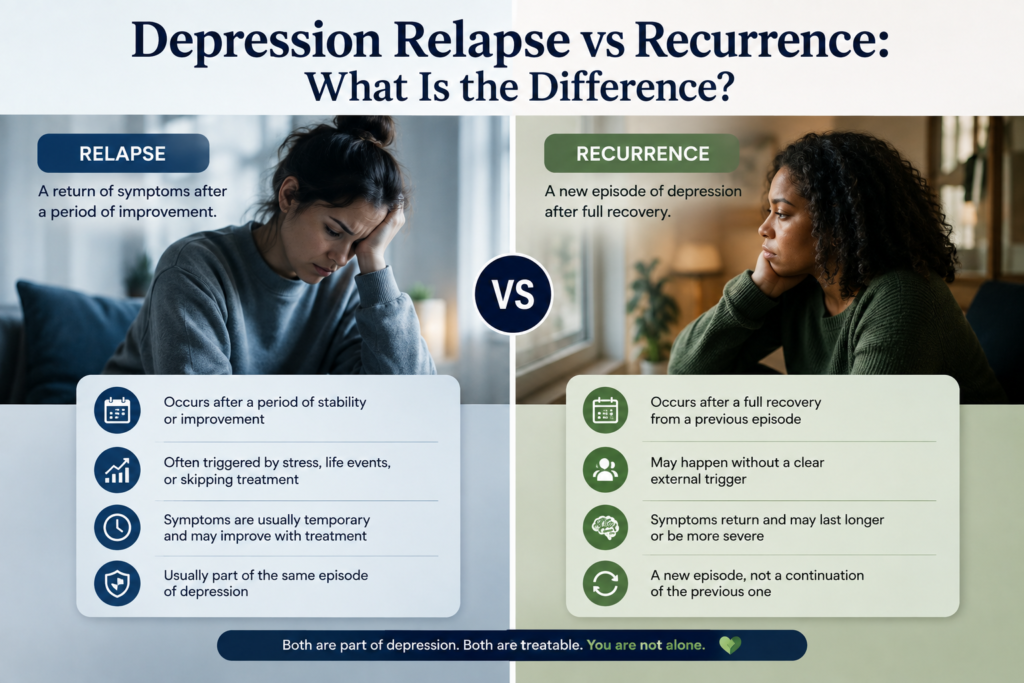
Depression recurrence
Recurrence generally means that a new depressive episode begins after a period of recovery or remission. A person may feel well for months or longer before symptoms return.
The exact timing used to separate relapse from recurrence can vary across clinical and research settings. For the patient, the most important questions are what symptoms returned, how long improvement lasted, what changed, and what the previous treatment accomplished.
Persistent symptoms
Sometimes depression did not leave completely. Mood may have improved, but fatigue, sleep problems, low motivation, reduced pleasure, concentration difficulties, or hopelessness remained.
These residual symptoms matter. A person may appear better while still being vulnerable to a more noticeable worsening.
The goal of a treatment review is not only to determine whether the person is “less depressed.” It is to understand whether meaningful recovery was reached and sustained.
Common Reasons Depression May Keep Returning
There is rarely one universal explanation. Several clinical, medical, treatment, and life factors may need to be considered.
1. Recovery was incomplete
Partial improvement can be mistaken for full recovery. You may return to work or resume responsibilities while continuing to feel emotionally flat, tired, disconnected, or unable to enjoy life.
When residual symptoms remain, a new stressor or treatment change may make them more visible. Tracking individual symptoms and functioning helps the clinician see whether the previous episode fully resolved.
2. Treatment was stopped or reduced too early
People may stop treatment because they feel better, experience side effects, lose insurance, face cost or scheduling barriers, or want to move forward without medication or therapy.
These decisions are understandable, but changing treatment without a plan may raise concerns for some patients.
Do not stop an antidepressant suddenly or change the dose without the prescribing clinician. Some medications can cause discontinuation symptoms, and returning depression may be difficult to distinguish from withdrawal-related changes.
The appropriate length of continuation or maintenance treatment varies. It depends on diagnosis, number and severity of previous episodes, safety history, treatment response, side effects, medical factors, and personal preferences.
3. Medication was taken inconsistently
Missed doses can affect symptoms and may cause discontinuation effects with some medications. Cost, side effects, travel, a changing routine, forgetfulness, or uncertainty about the medication can all contribute.
Tell the clinician honestly how the medication has been taken. The purpose is not judgment. Accurate information prevents an inconsistent trial from being mistaken for medication failure or treatment-resistant depression.
4. A treatment that helped before is no longer enough
Symptoms, health, stress, and life circumstances can change. A medication or therapy that was helpful during one period may not address the current episode completely.
This does not always mean the medication has permanently “stopped working.” The review should consider dose, adherence, interactions, sleep, medical changes, substance use, stressors, diagnosis, and other treatments before choosing the next step.
5. A new stressor or loss occurred
Relationship changes, grief, trauma, financial strain, work pressure, caregiving, illness, isolation, discrimination, housing problems, or major life transitions can affect mood and recovery.
Stress is not proof that the symptoms are “only situational.” A person can experience a depressive episode in the context of real-life difficulties.
Treatment may need to address both the symptoms and the circumstances maintaining distress.
6. Sleep became disrupted
Insomnia, oversleeping, an irregular schedule, shift work, sleep apnea, or other sleep problems can affect mood, energy, concentration, and emotional regulation.
Sleep change may be an early warning sign of returning depression. It can also indicate anxiety, substance use, medication effects, a medical issue, or a bipolar-spectrum mood change.
The pattern should be evaluated rather than managed by guesswork.
7. Alcohol or other substance use increased
Alcohol, cannabis, stimulants, sedatives, opioids, and other substances can influence mood, sleep, anxiety, medication adherence, physical health, and safety.
Some people increase substance use when early depression symptoms appear, while the substance then makes symptoms harder to interpret or treat.
Honest disclosure helps the provider create a safer plan.
8. Another mental health condition is contributing
Anxiety disorders, OCD, trauma-related conditions, eating-related concerns, attention problems, grief, and personality-related patterns may complicate depression treatment.
If another condition remains untreated, depression symptoms may continue or return.
The goal is not to collect labels. It is to understand which symptoms belong to which pattern and whether the care plan addresses the whole person.
9. The diagnosis may need to be reconsidered
Bipolar disorder can include depressive episodes as well as periods of unusually elevated or irritable mood, increased energy or activity, reduced need for sleep, racing thoughts, impulsivity, or risky behavior.
Some people seek care only during depressive periods and do not recognize previous hypomanic or manic symptoms as relevant.
A complete lifetime mood history is important when depression repeatedly returns or responds unpredictably to treatment.
10. A medical condition or medication effect may be involved
Thyroid disorders, anemia, sleep apnea, chronic pain, hormonal changes, neurological conditions, infections, nutritional concerns, and other medical issues may contribute to depressive symptoms.
Medications used for non-psychiatric conditions may also affect mood, sleep, or energy.
A clinician can determine whether coordination with a primary care professional or medical testing is appropriate based on symptoms and history.
11. The depression may have a seasonal pattern
Some people experience depressive episodes during a particular time of year. A seasonal pattern requires more than feeling disappointed by weather or holidays.
The clinician looks for a recurring relationship between depressive episodes and a particular season over time.
Tracking when symptoms begin and improve can help identify whether seasonality may be relevant.
12. The condition may be recurrent or difficult to treat
Some people experience multiple depressive episodes despite appropriate care. Others do not improve enough after adequate treatment attempts and may be evaluated for treatment-resistant or difficult-to-treat depression.
Recurring depression and treatment-resistant depression are not the same.
A person can respond well to treatment during each episode and still experience a later recurrence. Treatment resistance generally refers to insufficient response despite adequate treatment attempts.

Early Warning Signs That Depression May Be Returning
Depression does not always return all at once. Recognizing a personal pattern may allow you to contact a provider before symptoms become more severe.
Possible early signs include:
- Sleep becoming shorter, longer, or more irregular.
- Losing interest in hobbies, relationships, food, exercise, or intimacy.
- Cancelling plans and spending more time alone.
- Feeling unusually irritable, numb, or overwhelmed.
- Having more difficulty concentrating or making decisions.
- Falling behind on ordinary responsibilities.
- Skipping medication or appointments.
- Neglecting meals, hygiene, movement, or household tasks.
- Increasing alcohol or substance use.
- Becoming more self-critical or pessimistic.
- Feeling that ordinary tasks require much more effort.
- Thinking that treatment is pointless or that nothing will improve.
- Experiencing thoughts of death, self-harm, or being a burden.
Your early signs may be different. Some people first notice physical heaviness, headaches, anxiety, changes in appetite, overworking, emotional numbness, or reduced patience.
Write down what happened before previous episodes. A short personalized warning-sign list can make future changes easier to recognize and discuss.
Does Recurring Depression Mean Treatment Failed?
Not automatically. Treatment may have reduced symptoms, restored functioning, or provided a meaningful period of recovery even if depression later returned.
The return of symptoms does mean the plan deserves another look.
The clinician may ask:
- Did the previous episode fully resolve?
- How long did the improvement last?
- Which symptoms improved and which remained?
- Was treatment continued as recommended?
- Were side effects, cost, scheduling, or other barriers involved?

- Did a new stressor, loss, medical issue, or medication change occur?
- Is the diagnosis still the best explanation?
- Was psychotherapy focused on both current symptoms and relapse prevention?
- Are there early warning signs that could guide future care?
Treatment can be useful without guaranteeing that depression will never return.
The purpose of the review is to build on what helped, correct what did not, and create a longer-term plan.
When Should You Seek a Depression Treatment Review?

Consider scheduling a review when:
- Symptoms have returned after a period of improvement.
- You never felt fully recovered.
- Depression follows a repeated pattern.
- A medication seems less helpful than before.
- You stopped medication or therapy and symptoms returned.
- Side effects make it difficult to follow the plan.
- Sleep, appetite, energy, or concentration has changed.
- Work, relationships, parenting, school, or self-care is becoming harder.
- Alcohol or substance use is increasing.
- Current therapy or medication is not providing enough relief.
- You are unsure whether symptoms may reflect bipolar disorder, anxiety, trauma, grief, a seasonal pattern, or a medical condition.
- You want to create a relapse-prevention or maintenance plan.
- You have thoughts of death, self-harm, suicide, or being unable to remain safe.
You do not need to wait until symptoms become as severe as a previous episode. A review can be appropriate at the first meaningful change.
What Happens During a Recurring Depression Treatment Review?
A recurrence-focused evaluation examines the timeline of symptoms and treatment across more than one episode.
The clinician may review:
- Current depression symptoms and their effect on daily life.
- The beginning, duration, and severity of previous episodes.
- The length and quality of recovery between episodes.
- Residual symptoms that never fully resolved.
- Previous medications, doses, duration, adherence, benefits, and side effects.
- Current prescriptions, supplements, alcohol, and substance use.
- Therapy approaches, frequency, goals, and response.
- Sleep patterns, medical history, pain, and physical symptoms.
- Anxiety, OCD, trauma, grief, or other co-occurring concerns.
- Seasonal, hormonal, occupational, relationship, or life-transition patterns.
- Any history of elevated mood, reduced need for sleep, increased activity, racing thoughts, or impulsivity.
- Family mental health history.
- Previous suicidal thoughts, self-harm, emergency care, or hospitalization.
- Current supports, barriers to care, preferences, and goals.
It can help to bring pharmacy records, medication bottles, old treatment summaries, or a written timeline. Include approximate dates if exact information is unavailable.
The clinician may also recommend coordination with a primary care professional, therapist, sleep specialist, or another clinician when appropriate.
How Treatment May Change When Depression Returns
There is no universal recurrence plan. Recommendations depend on the diagnosis, current severity, safety, previous response, side effects, medical history, and patient preferences.
Restarting or continuing a previously helpful treatment
If a previous treatment was helpful and safe, the clinician may consider whether restarting or continuing it is appropriate.
The decision should account for why it ended, how complete the response was, and what has changed since then.
Do not restart an old prescription or use leftover medication without speaking with a qualified prescriber.
Adjusting medication
A medication review may lead to continued monitoring, a dose adjustment, a switch, or the addition of another medication.
Each option has different potential benefits, side effects, interactions, and monitoring needs.
Do not stop, start, or change medication without individualized instructions.
Adding or changing psychotherapy
Therapy may address current symptoms as well as patterns associated with relapse or recurrence.
Depending on the person, treatment may focus on negative thinking, avoidance, relationships, grief, trauma, stress, emotional regulation, or recognizing early warning signs.
If previous therapy did not help enough, the review may consider whether the approach, frequency, goals, or therapist fit should change.
Addressing sleep, substances, and physical health
Improving sleep regularity, treating a sleep disorder, reviewing alcohol or substance use, managing pain, or evaluating medical contributors may strengthen the overall plan.
These factors should not be used to blame the person or imply that depression can be cured through lifestyle changes alone.
Considering longer-term maintenance care
Some people with repeated or severe episodes may benefit from a longer-term treatment and monitoring plan. The appropriate duration is individualized.
Maintenance care may include medication, psychotherapy, scheduled psychiatric follow-ups, symptom tracking, coordination with other clinicians, or a combination of strategies.
Do not reduce or end maintenance treatment without discussing recurrence risk and a monitoring plan.
Reviewing advanced treatment options
If depression has not improved enough despite appropriate treatment attempts, the provider may assess whether an advanced option is appropriate.
BrainsWay Deep TMS® is a non-invasive treatment that uses magnetic pulses to stimulate targeted brain areas involved in mood regulation. It may be considered for eligible patients with depression after a clinical and safety review.
It is not an automatic treatment for every recurrence.
Can Recurring Depression Be Prevented?
No plan can guarantee that depression will never return. However, a personalized maintenance strategy may help reduce risk, identify symptoms earlier, and shorten the time between a change and professional support.
A prevention-focused plan may include:
- Continuing treatment for the clinically recommended period.
- Attending scheduled psychiatric and therapy follow-ups even when feeling well.
- Tracking personal early warning signs.
- Creating instructions for whom to contact when symptoms change.
- Maintaining a consistent sleep and daily routine when possible.
- Reviewing medication adherence and side effects openly.
- Addressing alcohol or substance use.
- Treating co-occurring anxiety, trauma, sleep, pain, or medical conditions.
- Planning for predictable high-stress or seasonal periods.
- Involving a trusted person with permission.
- Keeping emergency and crisis information available.
The plan should be realistic. It should account for cost, scheduling, caregiving, transportation, work, insurance, side effects, privacy, and other barriers that affect continuity of care.
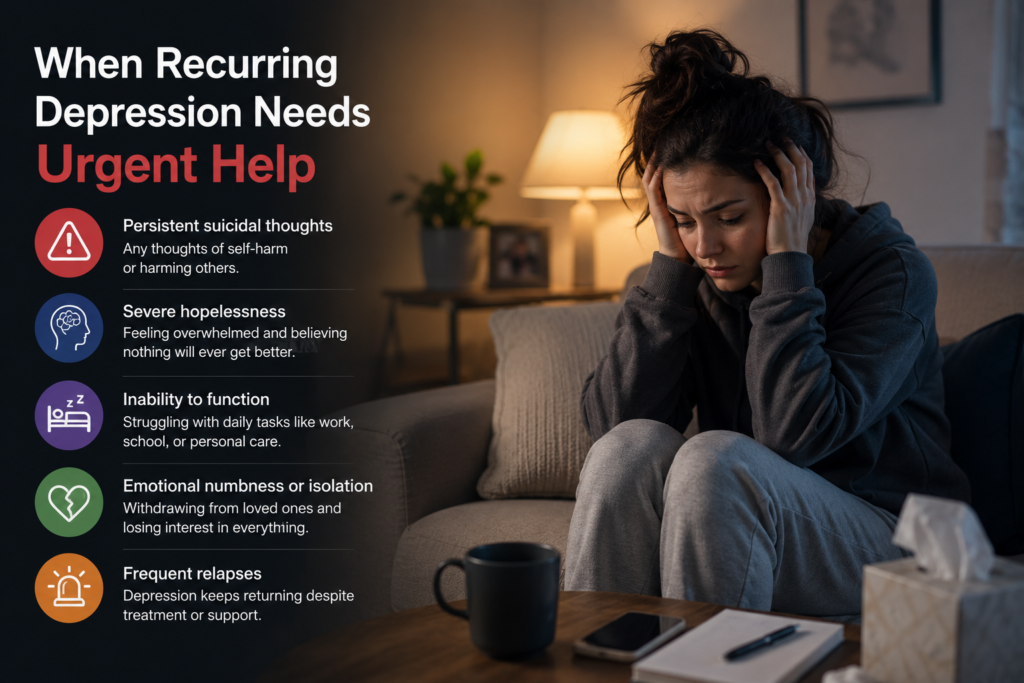
When Recurring Depression Needs Urgent Help
Seek prompt professional support if symptoms are rapidly worsening, you are unable to complete essential self-care, you are using substances in a dangerous way, or people close to you notice a major change.
Seek emergency help if you may act on suicidal or violent thoughts, have a plan or access to means, cannot remain safe, are experiencing psychosis, or are in immediate danger.
Call 911 or go to the nearest emergency room for immediate danger. In the United States, call or text 988 for immediate crisis support.
If possible, tell someone you trust and ask them to stay with you while you connect with help.
Do not use a routine treatment-review form, contact request, or patient portal message for an emergency.
Recurring Depression Treatment Review at Sunny Skies Healthcare
Sunny Skies Healthcare provides compassionate psychiatric care for depression, recurring depression symptoms, treatment-resistant depression, anxious depression, and related concerns in Chicago’s West Loop.
Care begins with the full history rather than assuming that the previous treatment simply failed.
A psychiatric review can examine symptom patterns, previous episodes, medications, side effects, therapy, sleep, medical factors, substance use, stress, safety, and treatment goals.
Depending on the evaluation, care may include medication management when appropriate, therapy coordination, lifestyle-focused and holistic mental wellness support, or review of advanced treatment options such as BrainsWay Deep TMS® for eligible patients.
If depression keeps returning, you do not have to repeat the same plan without understanding why.
A treatment review can help identify what improved, what remained unresolved, and what may support a more stable path forward.
Frequently Asked Questions
Why does my depression keep coming back even after treatment?
Depression may return because the original episode did not fully resolve, treatment changed, a new stressor or medical issue appeared, or the condition follows a recurrent pattern.Sleep, substance use, medication adherence, anxiety, trauma, bipolar disorder, and other factors may also contribute. A treatment review can help clarify the pattern.
Does recurring depression mean I have treatment-resistant depression?
Treatment-resistant depression generally refers to insufficient improvement after adequate treatment attempts. A person can respond well during each episode and still experience a later recurrence.
Should I restart medication if depression symptoms return?
Do not restart an old medication or change a current prescription without speaking with a qualified prescriber.The clinician should review the current symptoms, previous response, dose, side effects, medical changes, interactions, and diagnosis before recommending a plan.
What are the early signs of a depression relapse?
Early signs may include sleep changes, withdrawal, irritability, reduced pleasure, low energy, difficulty concentrating, missed medication, declining self-care, increased substance use, or more negative thinking.Personal patterns vary, so reviewing what happened before previous episodes can be useful.
Can I lower the chance that depression will return?
No strategy can guarantee prevention, but continuing treatment as recommended, attending follow-ups, recognizing early warning signs, addressing sleep and co-occurring conditions, and creating a personalized maintenance plan may help.Decisions about medication or therapy duration should be made with the treating clinician.
Take the Next Step
Returning depression symptoms are a reason for review, not self-blame.
Sunny Skies Healthcare can help examine your treatment history, current symptoms, previous response, safety, and goals, then discuss appropriate next steps for your situation.