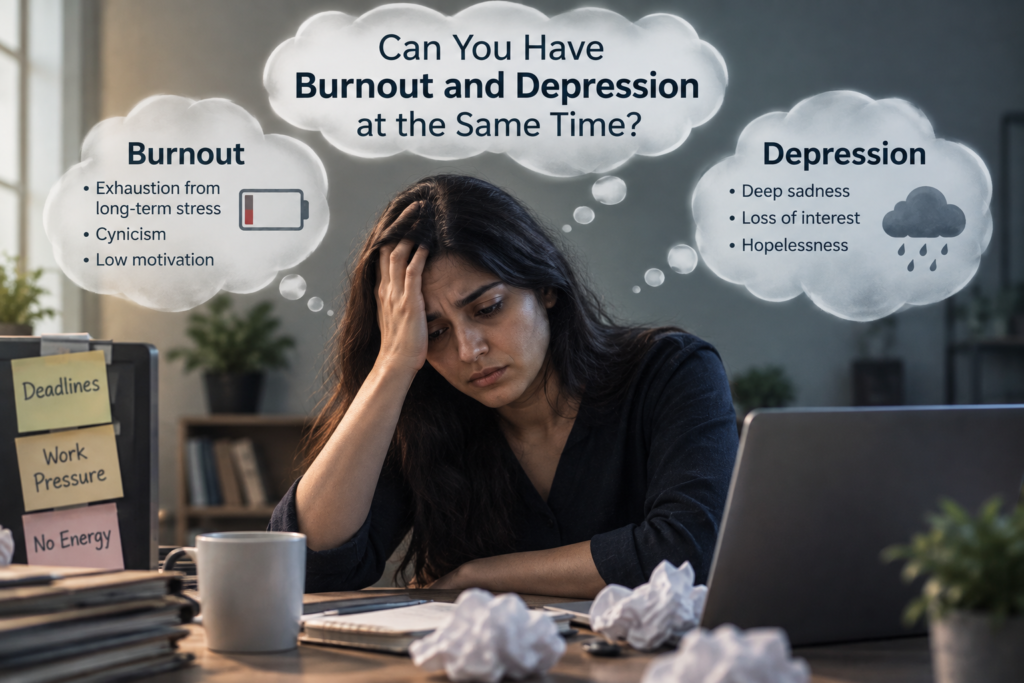
Feeling exhausted, unmotivated, irritable, and disconnected can make it difficult to know what is happening. You may wonder whether you are burned out, depressed, or simply going through an unusually stressful period.
Burnout and depression can look similar, but they are not the same. Burnout is generally associated with chronic workplace stress and often centers on exhaustion, detachment or cynicism toward work, and reduced professional effectiveness. Depression is a mental health condition that can affect mood, interest, sleep, appetite, concentration, self-worth, relationships, and functioning across every part of life.
The distinction is not always clear from symptoms alone. Burnout and depression can occur at the same time, and anxiety, grief, trauma, sleep problems, substance use, medical conditions, and medication effects can create similar experiences.
If the symptoms are persistent, spreading beyond work, or affecting your ability to function, a psychiatric evaluation can help clarify what may be happening.
Burnout is most closely connected to chronic workplace stress. It may cause emotional and physical exhaustion, mental distance from the job, cynicism, reduced motivation, and a sense that you are no longer effective at work.
Depression is broader. It may cause a persistent sad, empty, or irritable mood; loss of interest or pleasure; hopelessness; guilt; low energy; sleep or appetite changes; trouble concentrating; withdrawal; and thoughts of death or self-harm. These symptoms can affect work, home, relationships, hobbies, and self-care.
A person with burnout may feel noticeably better when away from the work environment or after meaningful rest and changes to the stressor. A person with depression may continue to feel low, empty, hopeless, or unable to enjoy things even when work pressure is temporarily removed.
This is only a general pattern, not a diagnostic rule.

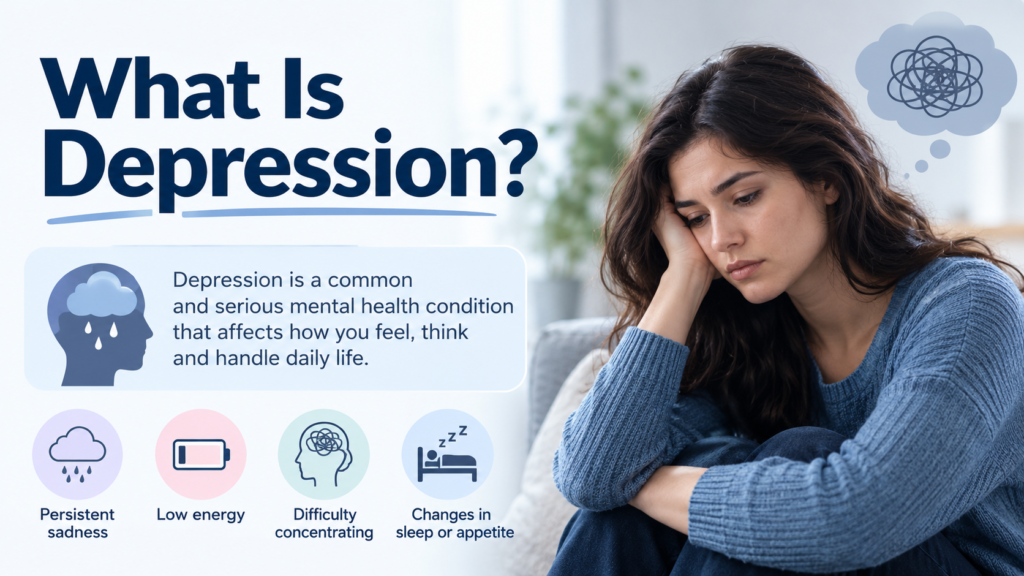
Depression is more than feeling sad after a difficult day. It is a mental health condition that can affect how a person feels, thinks, behaves, and manages ordinary activities.
Major depression commonly involves depressed mood or loss of interest or pleasure for much of the day, on most days, for at least two weeks, along with other symptoms that create distress or interfere with functioning. Only a qualified healthcare professional can diagnose a depressive disorder.
Burnout and depression overlap enough that guessing from one symptom can be misleading. Both may involve:

Burnout may be more likely when symptoms are closely tied to work and become noticeably stronger during the workday, before a shift, on Sunday evening, or when thinking about job responsibilities.
Depression may be more likely when the symptoms extend across most settings and continue even when the work stressor is absent.