
How Much Does TMS Therapy Cost, and Does Insurance Cover It?

How Much Does TMS Therapy Cost, and Does Insurance Cover It?

The cost of Transcranial Magnetic Stimulation can feel confusing because there is no single national price for treatment.

Some patients receive insurance approval and pay only the cost-sharing required by their health plan. Others may need to meet a deductible before insurance begins paying. Patients without coverage may receive a self-pay price for the full treatment course.

As a broad U.S. market estimate, an uninsured course of TMS is often advertised in the range of approximately $6,000 to $15,000. Individual self-pay treatment sessions are sometimes quoted at approximately $200 to $500 each. These figures are general consumer estimates—not Sunny Skies Healthcare prices—and actual charges can be lower or higher.

Your real TMS therapy cost depends on:The condition being treatedThe recommended TMS protocolThe number of sessionsWhether an initial evaluation and treatment mapping are billed separatelyYour insurance company and specific benefit planWhether the provider is in networkYour remaining deductibleYour copay or coinsurancePrior-authorization requirementsWhether additional or maintenance sessions are recommendedThe provider’s self-pay or financing policiesFor many patients, the most useful question is not simply “What does TMS cost?” It is:“What will I personally be responsible for paying under my specific treatment plan and insurance benefits?”

Sunny Skies Healthcare helps patients explore insurance coverage, preauthorization requirements, possible out-of-pocket expenses, self-pay options, and financing before beginning BrainsWay Deep TMS® in Chicago.

The cost depends heavily on insurance coverage.

Common or expected TMS experiences may include:

  • Payment situation

    What the patient may experience

    Insurance approves TMS and the deductible has been met

    The patient may owe a copay or coinsurance for covered services

    Insurance approves TMS but the deductible has not been met

    The patient may initially owe a larger portion of the insurer’s allowed amount

    Provider is out of network

    The patient may have higher cost-sharing or no out-of-network coverage

    Insurance denies or excludes treatment

    The patient may appeal, ask about a single-case agreement when appropriate, or request self-pay information

    Patient is uninsured or chooses not to use insurance

    The provider can explain the self-pay price and available payment options

    Additional sessions are recommended

    New authorization or additional self-pay costs may apply

Because TMS involves multiple appointments, even a seemingly modest per-session copay can add up over an entire treatment course

For example, if an insurance plan assigns a $30 copay to each of 36 visits, the total copays would be $1,080. That is only a mathematical example. It does not represent a Sunny Skies rate, a standard treatment schedule, or what any particular insurer will require.

Some plans apply coinsurance instead of a fixed copay. If the plan requires 20% coinsurance, the patient’s responsibility is generally calculated from the insurer’s contracted allowed amount—not necessarily the provider’s original billed charge.

An insurance verification should be completed before relying on any estimate.

Why Does TMS Therapy Cost So Much Without Insurance?

TMS is not a one-time office procedure. A full treatment course usually involves an initial clinical evaluation, safety screening, treatment planning or mapping, and repeated outpatient treatment sessions.
Costs may reflect:

  • Psychiatric evaluation and diagnosis review
  • Review of previous medication and therapy history
  • Medical and implant safety screening
  • Treatment mapping and determination of stimulation settings
  • Repeated treatment sessions
  • Physician supervision
  • Trained clinical staff
  • Specialized medical equipment
  • Progress measurements
  • Follow-up visits
  • Insurance documentation and authorization work
  • Equipment maintenance and clinical operating expenses
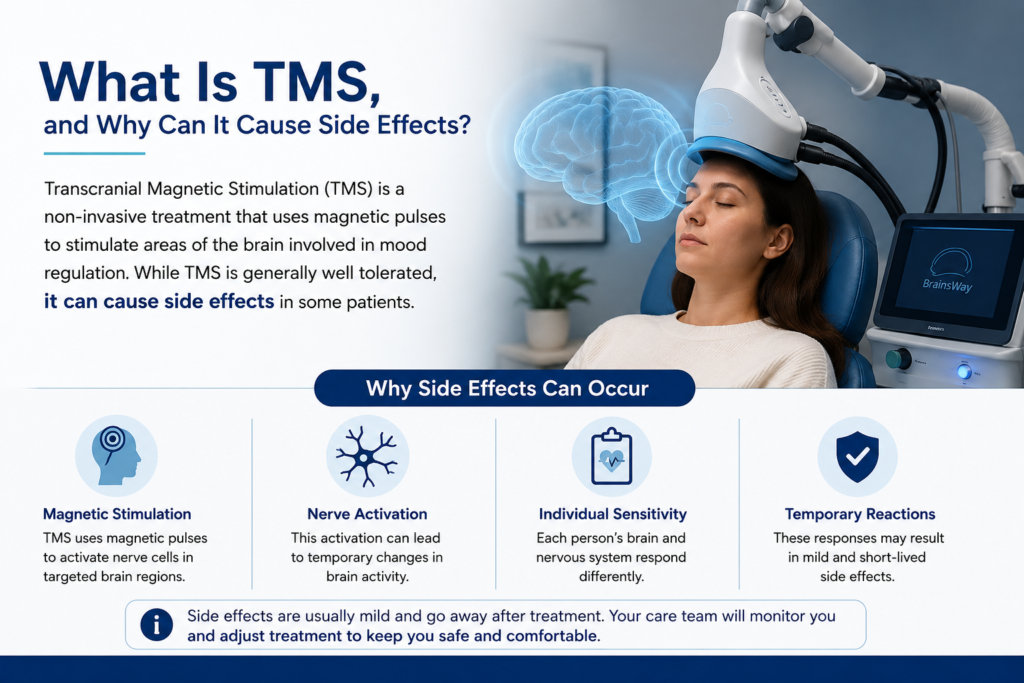
What Is TMS, and Why Can It Cause Side Effects

The exact number of sessions varies according to the condition, clinical protocol, provider recommendation, treatment response, and insurance authorization.

A clinic may quote one self-pay price for a complete course or separate prices for evaluation, mapping, treatment, and follow-up. Patients should ask exactly what is included before comparing offers.

Does Insurance Cover TMS Therapy?

Many commercial health plans and Medicare policies provide coverage for TMS treatment of major depressive disorder when the patient meets the plan’s medical-necessity criteria.

Coverage is not automatic. It depends on:

  • The diagnosis
  • The insurance policy
  • The patient’s previous treatment history
  • The provider’s network status
  • Medical-necessity documentation
  • Prior authorization
  • The treatment protocol
  • Any exclusions in the patient’s benefit plan

Insurance coverage is generally more established for major depressive disorder than for some other TMS indications.

BrainsWay Deep TMS® is FDA-cleared for certain conditions, including major depressive disorder and obsessive-compulsive disorder. However, FDA clearance does not require every insurance plan to cover treatment for every cleared indication.

A plan may cover Deep TMS® for depression while limiting or excluding coverage for OCD. Another insurer may evaluate OCD treatment individually or consider a single-case agreement. Coverage for smoking cessation and other applications may also differ.

Always verify the specific diagnosis and protocol with the insurer before treatment begins.

What Does Insurance Usually Require for TMS Coverage?

Requirements vary significantly between insurers and plans. A patient should not assume that one insurance company’s policy applies to another plan with a similar name.

For depression treatment, insurers may request documentation of some combination of the following:

  • A confirmed diagnosis of major depressive disorder
  • Current symptom severity
  • Significant effects on daily functioning
  • Previous antidepressant medication trials
  • The dose and duration of each medication trial
  • Inadequate response or inability to tolerate medication
  • Previous psychotherapy
  • A standardized depression assessment
  • The absence of certain safety contraindications
  • Treatment by or under the supervision of a qualified provider
What Does Insurance Usually Require for TMS Coverage

Some policies require a particular number of medication trials. Others use different definitions of treatment resistance or accept documented medication intolerance.

Do not stop medication or attempt additional treatment solely to satisfy what you believe an insurer requires. The provider should determine what is clinically appropriate and document your actual treatment history.

What Is Prior Authorization for TMS?

Prior authorization is the insurance company’s review process before treatment begins.

The TMS practice may submit:

  • The proposed diagnosis
  • Clinical notes
  • Current symptom measurements
  • Medication history
  • Medication responses and side effects
  • Therapy history
  • Relevant medical information

Prior authorization is not the same as a guarantee of payment. Even after authorization, payment may depend on:

  • Continued insurance eligibility
  • Accurate clinical and billing information
  • Network status
  • Benefit limits
  • Patient cost-sharing
  • Whether the authorized service matches the service delivered
  • Whether authorization remains valid on each treatment date

Ask the insurance company and clinic what an approval actually covers.

Facial Twitching, Tingling, and Jaw Discomfort

Magnetic stimulation can activate nearby nerves or muscles, resulting in:

Magnetic stimulation can activate nearby nerves or muscles, resulting in:
  • Forehead movement
  • Eyebrow or eyelid twitching
  • Cheek movement
  • Jaw tightening
  • Tooth or facial discomfort
  • Tingling on the scalp or face

These effects usually occur during active stimulation and may stop during pauses between pulse trains.

Report facial or jaw symptoms if they are:
  • Painful
  • Increasing
  • Affecting your ability to remain still
  • Continuing after the session
  • Accompanied by weakness or numbness
  • Different from previous sessions
New facial weakness, one-sided numbness, difficulty speaking, or other possible neurological symptoms should receive urgent medical assessment rather than being assumed to be a normal TMS effect.

Can TMS Make You Dizzy or Lightheaded?

Some patients may experience brief dizziness or lightheadedness. Anxiety, dehydration, missed meals, medications, and changes in blood pressure can also contribute.

If you feel lightheaded:
  • Tell the operator immediately
  • Remain seated
  • Do not stand suddenly
  • Follow the clinic’s instructions
  • Do not drive until you feel fully alert and steady

Fainting is not something to dismiss. The treatment team should assess any loss of consciousness, even if it appears related to anxiety or a vasovagal response.

Call 911 for fainting accompanied by chest pain, severe shortness of breath, injury, prolonged confusion, seizure-like activity, or other concerning symptoms.

Does TMS Cause Fatigue?

Some patients report tiredness after treatment, but fatigue is not specific to TMS. Fatigue may also be related to:
  • Depression
  • Anxiety
  • Poor sleep
  • Medication
  • Travel to repeated appointments
  • Changes in daily routine
  • Medical conditions
  • Alcohol or substance use
  • Emotional strain
Tell the provider if fatigue is severe, worsening, or interfering with daily activities. It may be necessary to review sleep, medication timing, health conditions, or changes in psychiatric symptoms.

New extreme tiredness with weakness, confusion, breathing problems, fever, or another concerning physical symptom requires appropriate medical evaluation.

Is the Clicking Sound Harmful to Hearing?

TMS equipment produces repeated clicking or tapping sounds. Proper hearing protection is an important safety measure.

Patients are commonly instructed to wear earplugs or other approved hearing protection during treatment. The operator should confirm that the protection is positioned correctly and remains in place.

Tell the treatment team immediately if:
  • An earplug becomes loose or falls out
  • The sound becomes painful
  • You notice ringing in the ears
  • Hearing seems muffled
  • You develop ear pain
  • You notice a change in hearing after treatment
Do not remove hearing protection during stimulation unless instructed by the treatment team. Hearing loss is considered an uncommon but potentially serious risk when the ears are not adequately protected. Persistent ringing, pain, or hearing change should be medically evaluated.

Can TMS Cause a Seizure?

A seizure is the most important known serious risk associated with TMS, although it is rare when treatment is appropriately screened and delivered within established safety parameters. A TMS-related seizure, when it occurs, is generally triggered during stimulation. It is not the intended effect of ordinary TMS treatment. Factors that may affect seizure risk include:
  • Personal history of seizures
  • Epilepsy
  • Certain neurological conditions
  • Brain injury
  • Stroke
  • Brain tumor or other structural brain condition
  • Medications that may change the seizure threshold
  • Abrupt medication changes
  • Alcohol withdrawal
  • Withdrawal from sedative medication
  • Heavy alcohol or substance use
  • Severe sleep deprivation
  • Treatment intensity and protocol
  • Incorrect device settings
  • Other individual medical factors
A history of seizures does not mean you should make your own eligibility determination. It means the prescribing clinician needs complete information to evaluate the potential risks and benefits.

Tell the TMS team immediately about:
  • Any past seizure, even if it occurred years ago
  • A family history of epilepsy
  • Fainting or unexplained loss of consciousness
  • Serious head injury
  • Neurological illness
  • Recent medication changes
  • Alcohol or sedative withdrawal
  • Severe sleep loss
  • Use of substances or nonprescribed medication
If a seizure occurs, treatment should stop and the clinical team should follow its emergency protocol. Emergency medical evaluation may be required.

How Do Providers Reduce Seizure Risk?

TMS safety involves more than asking whether someone has epilepsy.

Appropriate precautions may include:
  • Comprehensive medical and psychiatric history
  • Medication and substance-use review
  • Implant and metal screening
  • Review of neurological conditions
  • Review of previous seizures or unexplained loss of consciousness
  • Determination of an individualized motor threshold
  • Use of appropriate stimulation parameters
  • Confirmation of the correct patient, site, and treatment settings
  • Monitoring throughout treatment
  • Staff training in emergency response
  • Reassessment after relevant medical or medication changes
Patients also have an important role. Tell the care team about changes between appointments rather than assuming that previously completed screening is enough.

Medications, Alcohol, Sleep, and Seizure Risk

Your clinical circumstances can change during a multiweek TMS course.

Before each session, report important changes such as:
  • Starting a new prescription
  • Stopping a medication
  • Changing a medication dose
  • Missing several medication doses
  • Starting a new supplement
  • Increased alcohol use
  • Recent substance use
  • Alcohol or sedative withdrawal
  • Severe sleep deprivation
  • Fever or acute illness
  • A recent head injury
  • A seizure or fainting episode
Do not stop medication because you are concerned about TMS safety without speaking to the prescribing clinician. Abruptly stopping certain medications can increase risk.
Be honest about alcohol and substance use. The purpose of screening is to protect your safety, not to punish or shame you.

Can TMS Trigger Mania or Hypomania?

Mood elevation, sometimes described as mania or hypomania, is an uncommon but important potential risk, particularly for people with bipolar disorder or bipolar-spectrum symptoms.

Warning signs may include:
  • Needing much less sleep without feeling tired
  • Unusually elevated or intensely irritable mood
  • Rapid speech
  • Racing thoughts
  • Increased goal-directed activity
  • Inflated confidence
  • Impulsive spending
  • Risky sexual behavior
  • Reckless driving
  • Aggressive or disruptive behavior
  • Making unrealistic plans
  • Feeling unusually powerful or invulnerable

Not every period of improved energy means mania. Depression improvement may naturally involve better motivation and functioning. The provider must consider the degree, pattern, sleep change, behavior, judgment, and personal history.
Report noticeable mood or behavioral changes promptly. Family members may sometimes observe these changes before the patient recognizes them.
Severe agitation, dangerous behavior, psychosis, or an inability to remain safe requires urgent or emergency evaluation.

Does TMS Cause Memory Loss?

TMS is not generally associated with the type of memory loss or post-procedure confusion that can occur with electroconvulsive therapy.

  • Does not usually require anesthesia
  • Does not intentionally trigger a seizure
  • Is not typically associated with significant memory impairment
  • Usually allows patients to remain awake and communicate throughout treatment

This does not mean that every concentration or memory concern during treatment should be dismissed. Depression, anxiety, poor sleep, medication changes, substance use, medical conditions, and other factors can affect cognition.

TMS Side Effects Compared With Antidepressant Side Effects

TMS and medication work differently.

Medication travels through the body and may cause systemic effects. Depending on the medication, these can include gastrointestinal symptoms, sexual side effects, weight changes, sleep changes, sedation, activation, sweating, or other effects.

TMS delivers magnetic stimulation to targeted brain areas and does not circulate through the bloodstream. Its commonly reported side effects are more often localized to the treatment area, such as scalp discomfort or headache.

This does not mean TMS has no side effects or that medication is an inferior treatment. Medication helps many people, and TMS is not appropriate for everyone.

Consideration Psychiatric Medication TMS
How it is delivered Usually taken orally or by another medication route Delivered through an external magnetic coil or helmet
Anesthesia Usually not required Not normally required
Common concerns Depend on the specific medication and patient Often scalp discomfort, headache, twitching, or tingling
Systemic exposure Medication circulates through the body No medication enters the bloodstream
Monitoring Medication response, side effects, interactions, and adherence Treatment comfort, settings, mood response, and safety changes
Serious risks Depend on the medication Rare seizure risk and other uncommon adverse events
Stopping treatment Some medications require gradual tapering Does not create medication withdrawal, although the treatment plan should still be discussed

Never stop psychiatric medication simply because you are beginning TMS. Some patients continue medication during treatment under their prescriber’s direction.

Frequently Asked Questions

What is the most common side effect of TMS?

Scalp discomfort and headache are among the most commonly reported TMS side effects. Patients may also feel tapping, pressure, tingling, or temporary facial-muscle movement during stimulation. Tell the operator about discomfort so it can be assessed.

TMS delivered according to established safety guidelines is not known to cause structural brain damage in routine clinical use. However, inappropriate treatment around certain metal objects or implanted devices could create serious risks. Proper screening, individualized settings, and trained operation are essential.

Yes, but seizure is considered a rare complication. Risk may be affected by seizure history, neurological conditions, medications, withdrawal, substance use, sleep deprivation, and treatment parameters. A detailed safety assessment is required before treatment.

TMS is not typically associated with the memory loss or post-treatment confusion that may occur with ECT. Patients remain awake, and anesthesia is not normally needed. New confusion, significant memory changes, or neurological symptoms should still be reported and evaluated.

Common effects such as headache or scalp discomfort are often temporary and may become less noticeable over repeated sessions. Individual experiences vary. Persistent, severe, worsening, or unusual symptoms should be reported rather than assumed to be normal.

Scroll to Top