When a loved one begins needing extra support at home, families are often introduced to two terms that sound almost identical: home care and home health care. Because both services are delivered in the comfort of a person’s home, it’s easy to assume they provide the same type of assistance.
In reality, they serve very different purposes.
While both home care and home health care are designed to help individuals remain safely at home, the type of care provided, the professionals delivering that care, and the situations in which each service is appropriate are quite different. Understanding these differences can help families make informed decisions while ensuring their loved ones receive the right level of support at the right time.
As more seniors choose to age in place, knowing when non-medical assistance is enough and when professional medical care becomes necessary has become more important than ever.
Why More Seniors Are Choosing To Age In Place
Over the past decade, aging in place has become one of the fastest-growing trends in senior healthcare. Rather than relocating to assisted living communities or long-term care facilities, many older adults prefer to remain in the homes they know and love.
For most seniors, home represents much more than a physical space. It provides familiarity, comfort, independence, treasured memories, and close connections with family, friends, and neighbors. Remaining in this environment often contributes to greater emotional well-being while allowing individuals to continue following their normal routines.
As this preference continues growing, both home care and home health care have become valuable solutions that allow seniors to receive support without leaving home. Although these services may sometimes work together, understanding their individual roles is essential when selecting the most appropriate care plan.
What Is Home Care?
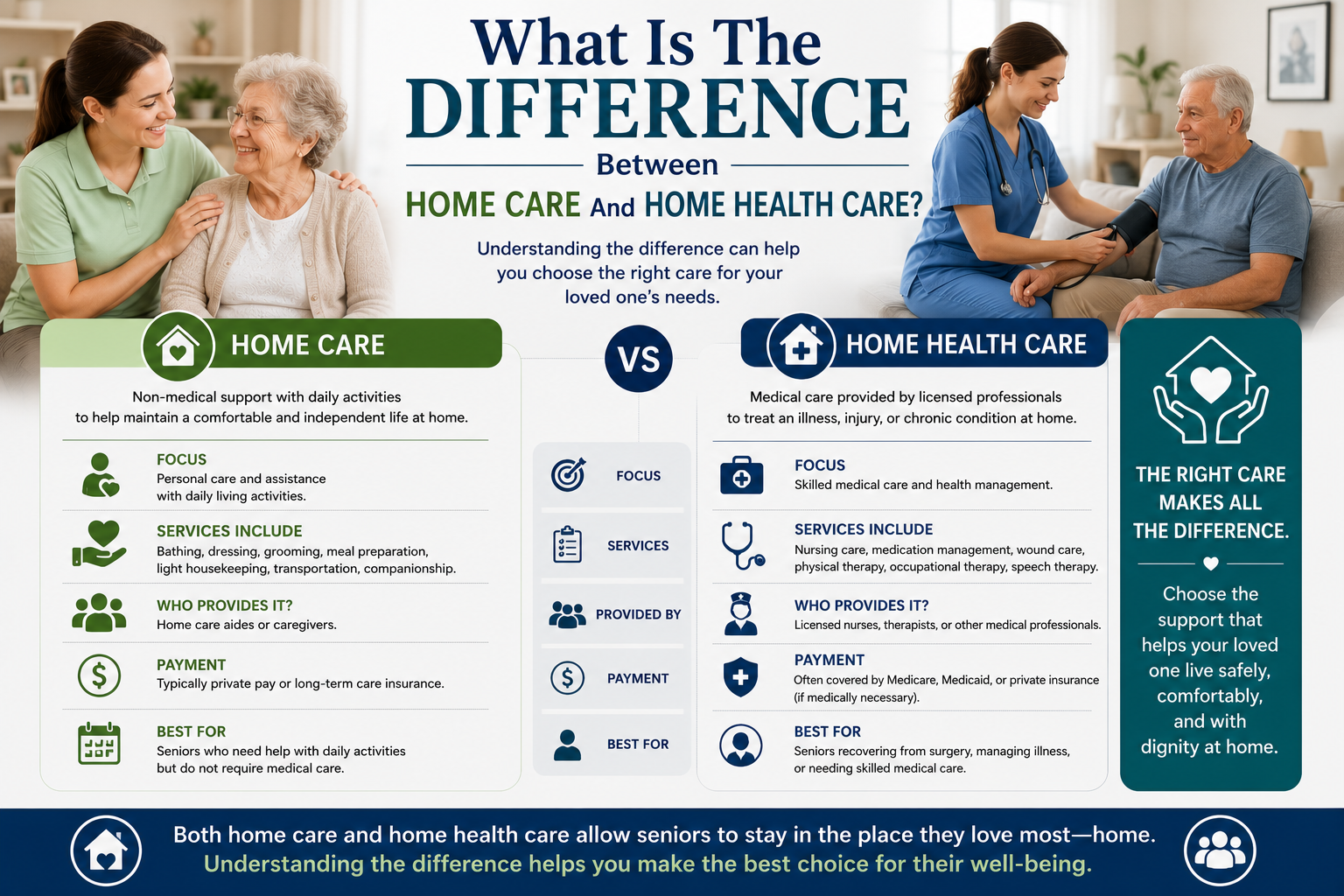
Home care focuses primarily on providing non-medical assistance that helps individuals safely manage everyday life. Rather than treating medical conditions, home care supports activities that may become more difficult because of aging, mobility limitations, illness, or recovery.
The primary goal is to help people remain independent while improving comfort, safety, and quality of life within their own homes.
Home care professionals commonly assist with personal routines, household responsibilities, meal preparation, transportation, and companionship. These services help reduce daily challenges while giving family members additional peace of mind.
| Common Home Care Services | How They Help |
| Personal Care Assistance | Support with bathing, dressing, grooming, and personal hygiene. |
| Meal Preparation | Preparing nutritious meals based on individual needs and preferences. |
| Light Housekeeping | Helping maintain a clean, organized, and safe home environment. |
| Transportation Assistance | Providing transportation to appointments, errands, and community activities. |
| Companionship | Offering social interaction, conversation, and emotional support. |
| Daily Living Assistance | Helping individuals remain independent during everyday activities. |
Home care is often an excellent option for seniors who are generally healthy but benefit from extra support with daily living.
What Is Home Health Care?
Home health care focuses on professional medical services provided by licensed healthcare professionals. Unlike home care, these services address medical conditions, rehabilitation, recovery, and ongoing clinical needs.
In many cases, home health care is recommended by a physician as part of a treatment or recovery plan. The objective is to allow patients to receive high-quality medical care without requiring extended hospital stays or frequent visits to healthcare facilities.
Depending on each patient’s condition, home health care may include skilled nursing, physical therapy, occupational therapy, speech therapy, medication management, chronic disease monitoring, and post-hospital recovery services.
| Home Health Care Services | Purpose |
| Skilled Nursing | Delivers professional medical care, assessments, and medication management. |
| Physical Therapy | Helps restore mobility, strength, and balance after illness or injury. |
| Occupational Therapy | Improves the ability to perform everyday activities safely. |
| Speech Therapy | Supports communication and swallowing difficulties. |
| Chronic Disease Monitoring | Helps manage long-term medical conditions through ongoing assessment. |
| Post-Hospital Recovery | Provides continued medical support during recovery at home. |
For individuals recovering from surgery, managing chronic illnesses, or requiring skilled medical supervision, home health care offers clinical support while allowing them to remain in familiar surroundings.
The Biggest Difference Between Home Care And Home Health Care
Although both services are delivered in the home, the primary distinction lies in the type of care provided.
Home care focuses on helping people with everyday living activities, while home health care focuses on treating medical conditions and supporting recovery through licensed healthcare professionals.
The comparison below highlights the key differences.
| Home Care | Home Health Care |
| Non-medical assistance | Medical and clinical care |
| Personal care and companionship | Skilled nursing and rehabilitation |
| Helps with daily activities | Treats or monitors health conditions |
| Caregivers provide support | Licensed healthcare professionals provide treatment |
| Designed to maintain independence | Designed to improve health outcomes and recovery |
Understanding this distinction helps families select services that best match their loved one’s healthcare needs.
Who Benefits From Home Care?
Home care is often the right choice for individuals who remain relatively independent but would benefit from extra assistance with daily responsibilities.
For many seniors, simple tasks such as preparing meals, dressing, housekeeping, or running errands become more challenging over time. Home care allows them to receive practical support while continuing to enjoy life in their own home.
Individuals who commonly benefit from home care include:
- Seniors living independently
- Older adults with limited mobility
- Individuals needing companionship
- People recovering from minor illnesses
- Families seeking additional caregiving support
By reducing everyday challenges, home care helps seniors preserve both independence and confidence.
Who Benefits From Home Health Care?
Home health care is designed for individuals who require professional medical attention while remaining at home. These patients often need ongoing clinical oversight, rehabilitation, or specialized treatment following illness or hospitalization.
Common situations where home health care may be appropriate include:
| Patient Situation | How Home Health Care Helps |
| Recovery After Surgery | Skilled nursing and rehabilitation support healing. |
| Chronic Disease Management | Ongoing monitoring of conditions such as diabetes, heart disease, or COPD. |
| Stroke Recovery | Physical, occupational, and speech therapy assist rehabilitation. |
| Hospital Discharge | Provides continued medical care during recovery at home. |
| Complex Medical Conditions | Skilled healthcare professionals monitor changing health needs. |
By bringing professional healthcare directly into the home, patients often experience greater comfort while continuing their recovery.
Why Families Often Confuse These Services
The confusion is understandable because both services share several similarities.
Both allow seniors to remain at home. Both promote independence. Both improve quality of life. Both provide valuable support for families.
However, the qualifications of the professionals providing care are very different.
Home care providers focus on assisting with everyday activities and improving daily living, while home health care professionals deliver licensed medical services that require specialized education, training, and clinical expertise.
Recognizing this difference helps families make more confident and informed healthcare decisions.
Can Home Care And Home Health Care Work Together?
Absolutely.
In many situations, combining both services creates the most comprehensive care plan possible.
For example, someone recovering from surgery may receive skilled nursing visits and physical therapy through home health care while also receiving meal preparation, housekeeping, and personal care assistance through home care.
Together, these services address both medical recovery and everyday living needs.
Rather than choosing one or the other, many families discover that combining both forms of support creates greater comfort, improved recovery, and better overall quality of life.
Why Personalized Care Matters
No two patients have identical healthcare needs. Every person’s medical condition, mobility level, recovery goals, home environment, and family support system are unique.
This is why personalized care planning remains one of the most important aspects of both home care and home health care.
Healthcare professionals carefully evaluate each patient’s circumstances before recommending services. As needs change over time, care plans can also be adjusted to ensure patients continue receiving the appropriate level of support.
Personalized care not only improves healthcare outcomes but also allows seniors to remain as independent and comfortable as possible throughout their healthcare journey.
Why Home-Based Healthcare Continues Growing
Healthcare is steadily moving toward more patient-centered models of care, and home-based healthcare has become one of the most important developments in modern medicine.
Advances in healthcare technology now allow many treatments, rehabilitation programs, and nursing services to be safely delivered outside hospitals.
Families also increasingly recognize the benefits of receiving care at home, including:
- Greater comfort
- Personalized attention
- Increased family involvement
- Improved convenience
- Better overall patient experience
As demand continues growing, home-based healthcare will likely remain an essential part of how seniors receive high-quality care in the years ahead.
Understanding The Cost Differences
Cost is naturally one of the first questions families ask when comparing care options. Because home care and home health care provide different services, their pricing structures are often different as well.
Home care costs are generally based on the number of caregiving hours provided, the type of assistance required, the frequency of visits, and geographic location.
Home health care costs depend more on the medical services being delivered. Skilled nursing, therapy services, physician-directed treatment plans, and clinical monitoring all influence the overall cost of care.
Rather than comparing services based solely on price, families should consider the level of support their loved one actually requires to remain safe, healthy, and independent.
Understanding Medicare Coverage For Home Health Care
Many families are surprised to learn that Medicare may cover certain home health care services when eligibility requirements are met.
Coverage typically depends on several important factors.
| Medicare Consideration | Why It Matters |
| Physician’s Order | Home health services generally require a doctor’s referral. |
| Medical Necessity | The services must be considered medically necessary. |
| Medicare-Certified Provider | Care must be delivered through an approved provider. |
| Patient Eligibility | Individuals must meet Medicare’s established coverage requirements. |
Because every situation is different, families should always speak with their healthcare provider and insurance representative to better understand available coverage and eligibility before beginning services.
Benefits Of Home Care Services
For many older adults, remaining at home while receiving the right level of support can significantly improve both comfort and quality of life. Home care focuses on assisting with everyday activities that may become more challenging with age, illness, or limited mobility. Rather than replacing independence, these services are designed to help seniors continue living safely while maintaining as much control over their daily routines as possible.
The benefits of home care extend beyond practical assistance. Families often find that having reliable support in place reduces stress while providing reassurance that their loved one is receiving consistent care.
| Benefit | How It Helps |
| Greater Independence | Seniors can continue living safely in familiar surroundings while receiving the support they need. |
| Assistance With Daily Activities | Help with personal care, meal preparation, housekeeping, and other everyday tasks makes daily life more manageable. |
| Meaningful Companionship | Regular social interaction can reduce feelings of isolation while supporting emotional well-being. |
| Peace Of Mind For Families | Loved ones know professional assistance is available when they cannot always be present. |
| Flexible Care Plans | Services can often be adjusted as healthcare needs and personal circumstances change over time. |
For many families, home care provides the balance between independence and assistance that allows seniors to remain comfortable in their own homes.
Benefits Of Home Health Care Services
While home care focuses on non-medical assistance, home health care provides professional medical services delivered by licensed healthcare professionals. These services allow patients to receive clinical treatment, rehabilitation, and ongoing monitoring without leaving the comfort of home.
For individuals recovering from surgery, managing chronic illnesses, or requiring skilled nursing care, home health care offers personalized medical support while promoting recovery in a familiar environment.
| Benefit | How It Helps |
| Skilled Clinical Care | Licensed nurses and healthcare professionals provide medical treatment and ongoing health monitoring. |
| Recovery Support | Nursing visits and therapy services help patients recover following illness, injury, or surgery. |
| Chronic Disease Management | Continuous monitoring helps patients manage long-term health conditions more effectively. |
| Reduced Risk Of Hospital Readmissions | Regular assessments allow healthcare teams to identify concerns before they become more serious. |
| Individualized Treatment Plans | Care is tailored to each patient’s medical condition, recovery goals, and healthcare needs. |
Receiving medical care at home often improves convenience while supporting continuity of care throughout the recovery process.
When Should Families Consider Home Care?
Many families begin exploring home care after noticing that everyday activities have become more difficult for a loved one. While medical treatment may not yet be necessary, additional assistance with daily routines can greatly improve safety, comfort, and overall well-being.
Some common signs that home care may be beneficial include:
| Situation | Why Home Care May Help |
| Household Tasks Become Difficult | Assistance with cooking, cleaning, laundry, and organizing daily routines. |
| Increased Social Isolation | Regular companionship helps reduce loneliness and encourages engagement. |
| Mobility Challenges | Additional support makes everyday activities safer and easier to manage. |
| Caregiver Fatigue | Professional caregivers provide relief while sharing caregiving responsibilities. |
| Safety Concerns At Home | Assistance with daily routines helps reduce risks and improve confidence. |
Recognizing these needs early allows families to put supportive services in place before everyday challenges become overwhelming.
When Should Families Consider Home Health Care?
Home health care becomes appropriate when an individual requires professional medical treatment or rehabilitation that can safely be provided at home.
Healthcare providers often recommend home health services during recovery periods or when ongoing medical supervision is necessary.
Situations where home health care may be recommended include:
| Situation | Home Health Care Support |
| Recovery After Hospitalization | Skilled nursing and follow-up care help support a safe recovery at home. |
| Post-Surgical Rehabilitation | Medical monitoring and therapy services assist healing and recovery. |
| Chronic Disease Management | Ongoing assessments help manage complex medical conditions. |
| Physical, Occupational, Or Speech Therapy | Rehabilitation services help restore strength, mobility, and independence. |
| Skilled Nursing Needs | Licensed nurses provide medical treatments that require professional expertise. |
A healthcare provider can evaluate each patient’s condition and determine whether home health care is the most appropriate option.
The Important Role Of Family Caregivers
Family caregivers play an essential role in supporting aging loved ones. From coordinating appointments and managing medications to providing emotional encouragement and assisting with everyday activities, caregivers often carry significant responsibilities.
While caregiving can be deeply rewarding, it can also become physically and emotionally demanding over time.
Professional home care and home health care services help families by providing additional expertise, sharing responsibilities, and ensuring patients continue receiving consistent, high-quality care. This collaborative approach benefits both patients and the family members who care for them.
How Care Needs Can Change Over Time
Healthcare needs rarely remain the same forever. As individuals recover, age, or experience changes in their overall health, the type of support they require may also change.
For example, someone recovering from surgery may initially receive skilled nursing and physical therapy through home health care before later transitioning to home care for assistance with daily activities. Likewise, an individual receiving only home care today may eventually require medical services if their healthcare needs become more complex.
This flexibility allows care plans to evolve alongside each patient’s changing circumstances, ensuring the right level of support is available throughout every stage of care.
Why Personalized Assessments Matter
Every patient has unique healthcare needs, personal goals, and living circumstances. Choosing the right services begins with a thorough assessment performed by qualified healthcare professionals.
A comprehensive evaluation typically considers several important factors.
| Assessment Area | Why It Matters |
| Medical History | Existing conditions help determine appropriate healthcare services. |
| Functional Abilities | Daily mobility and independence influence care recommendations. |
| Personal Goals | Individual recovery objectives guide personalized care planning. |
| Family Support | Available caregivers help shape ongoing care needs. |
| Home Environment | Safety and accessibility are important when developing care plans. |
A personalized assessment helps ensure patients receive services that support both their healthcare needs and long-term quality of life.
Sunny Skies Healthcare: Helping Families Choose The Right Care
Choosing between home care and home health care can feel overwhelming, especially when families are making important decisions for someone they love.
At Sunny Skies Healthcare, we work closely with patients, families, physicians, and caregivers to develop individualized care plans that reflect each person’s unique medical needs, recovery goals, and personal preferences.
Whether someone requires skilled nursing, rehabilitation services, chronic disease management, or additional support while recovering at home, our focus remains on delivering compassionate, professional care that promotes independence, safety, and overall well-being.
By bringing quality healthcare directly into the home, we help patients receive the support they need while remaining in the place where they feel most comfortable.
Frequently Asked Questions
What is the difference between home care and home health care?
Home care provides non-medical assistance with everyday activities, while home health care delivers medical services such as skilled nursing, therapy, and clinical monitoring through licensed healthcare professionals.
Is home health care considered medical care?
Yes. Home health care includes physician-directed medical services such as skilled nursing, physical therapy, occupational therapy, speech therapy, and chronic disease management.
Can someone receive both home care and home health care?
Yes. Many individuals benefit from receiving both services simultaneously, allowing medical treatment and everyday support to work together.
Does Medicare cover home health care?
Medicare may cover certain home health care services when eligibility requirements are met. Coverage depends on medical necessity and physician recommendations.
Is home care covered by Medicare?
Coverage varies depending on individual circumstances and insurance programs. Families should confirm benefits directly with their insurance provider.
Who provides home care services?
Home care is typically provided by trained caregivers who assist with personal care, companionship, meal preparation, housekeeping, and other daily living activities.
Who provides home health care services?
Licensed nurses, physical therapists, occupational therapists, speech therapists, and other qualified healthcare professionals provide home health care services.
When should families consider home health care?
Home health care may be appropriate after hospitalization, surgery, illness, injury, or whenever ongoing medical treatment and professional supervision are required.
Can home-based care help seniors remain independent?
Yes. Both home care and home health care are designed to support independence while helping seniors remain safe and comfortable in their own homes.
How do families choose the right type of care?
A professional healthcare assessment helps determine whether non-medical home care, skilled home health care, or a combination of both will best meet the individual’s needs.
Conclusion
Understanding the difference between home care and home health care allows families to make informed decisions based on their loved one’s unique healthcare needs.
While home care focuses on assisting with everyday activities and maintaining independence, home health care provides skilled medical services that support recovery, rehabilitation, and ongoing clinical care.
In many situations, combining both services creates a well-rounded approach that addresses both daily living needs and medical requirements.
As more seniors choose to age in place, personalized home-based care continues to play an essential role in promoting safety, improving quality of life, supporting recovery, and helping individuals remain comfortable in the place they call home.