Mental health care has evolved significantly over the past several decades. While psychotherapy and psychiatric medications continue to play an important role in treating many mental health conditions, they do not work equally well for everyone. Millions of people living with depression, obsessive-compulsive disorder (OCD), anxiety-related conditions, and nicotine dependence continue to experience symptoms despite trying multiple medications, counseling approaches, or combinations of treatments. For these individuals, the search for an effective solution can often become frustrating, emotionally exhausting, and financially burdensome.
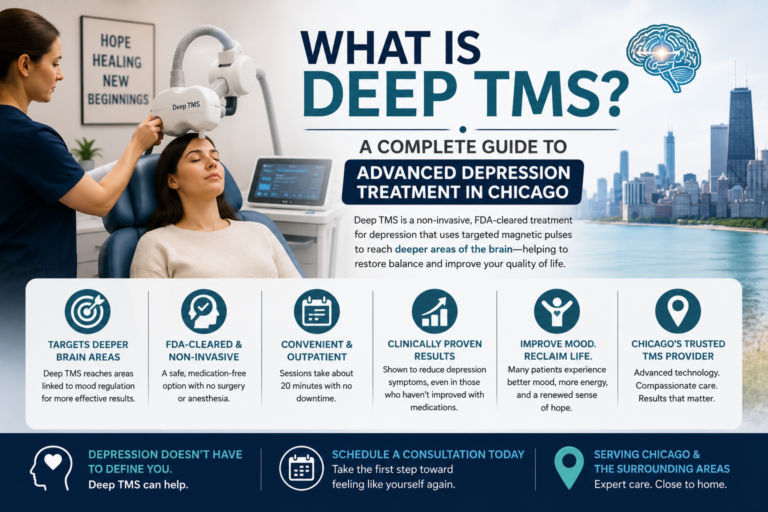
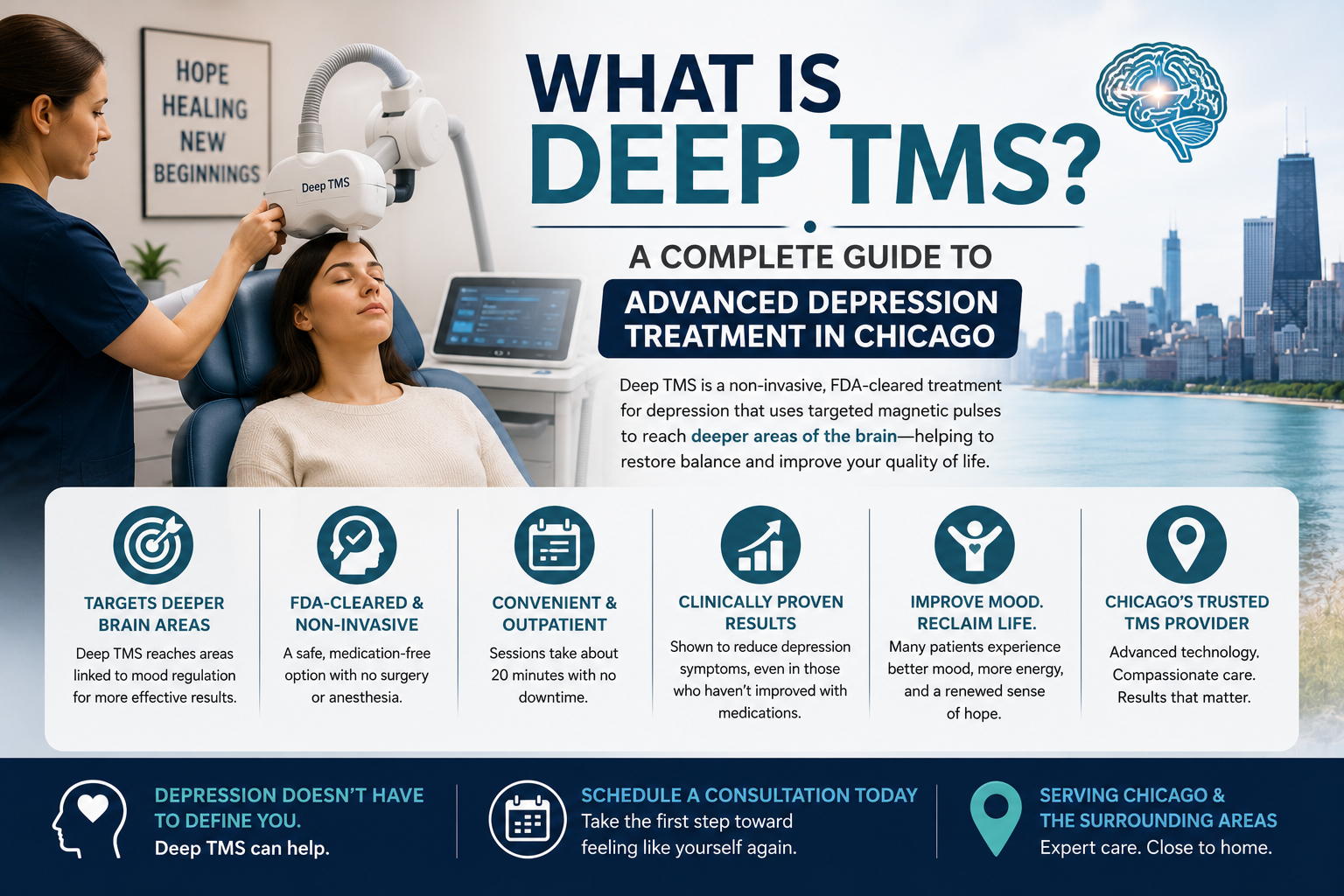
Fortunately, advances in neuroscience have introduced new treatment options that focus directly on the way the brain functions rather than simply managing symptoms. One of the most important developments in modern psychiatry is Deep Transcranial Magnetic Stimulation (Deep TMS), an FDA-cleared, non-invasive treatment that uses targeted magnetic pulses to stimulate specific areas of the brain involved in mood regulation, compulsive behaviors, and addiction. Unlike surgical procedures or invasive brain stimulation techniques, Deep TMS requires no anesthesia, no hospitalization, and allows patients to return to their normal daily activities immediately after each treatment session.
As researchers continue to better understand the biology of mental illness, it has become increasingly clear that many psychiatric conditions are associated with disruptions in communication between different regions of the brain. These disruptions may affect emotional regulation, decision-making, motivation, memory, reward processing, and cognitive flexibility. Traditional medications attempt to influence these systems through changes in neurotransmitter activity, while Deep TMS works by directly stimulating neural networks that have become underactive or dysregulated. This approach offers an entirely different treatment pathway and has become an important option for patients who have not achieved satisfactory improvement with medication alone.
At Sunny Skies Healthcare, this scientific advancement is integrated into a comprehensive model of psychiatric care that combines evidence-based medicine with individualized treatment planning. Led by board-certified psychiatrist Dr. Georgios Nikolaos Asimis, the practice focuses on understanding the biological, neurological, and lifestyle factors contributing to each patient’s condition rather than relying on a one-size-fits-all approach. Deep TMS represents one component of a broader philosophy that emphasizes precision psychiatry, patient education, medication management when appropriate, and long-term mental wellness through personalized care.
Quick Answer
Deep TMS is an FDA-cleared, non-invasive brain stimulation treatment that uses magnetic fields to activate specific neural circuits associated with depression, obsessive-compulsive disorder, and smoking addiction. The treatment is performed in an outpatient setting, requires no surgery or anesthesia, and is designed to improve communication between brain regions involved in emotional regulation and cognitive function. For many patients who have not responded adequately to traditional therapies, Deep TMS provides an additional evidence-based treatment option that can be incorporated into a comprehensive psychiatric care plan.
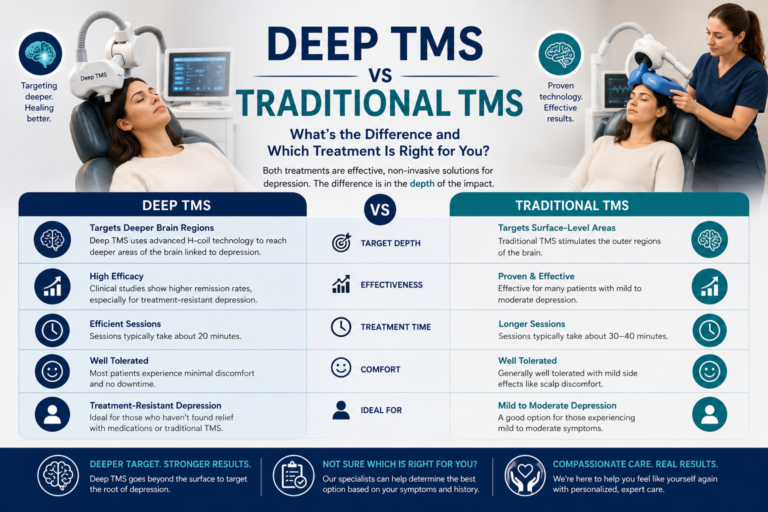
One of the reasons Deep TMS has attracted significant attention within psychiatry is its ability to target deeper brain structures than conventional repetitive transcranial magnetic stimulation (rTMS). Using specialized H-Coil technology developed by BrainsWay, magnetic pulses penetrate broader and deeper neural networks while remaining completely non-invasive. This expanded stimulation allows clinicians to address brain circuits associated with specific psychiatric disorders using protocols that have undergone extensive clinical evaluation.
Deep TMS is currently FDA-cleared for several conditions, including Major Depressive Disorder (MDD), Obsessive-Compulsive Disorder (OCD), and Smoking Addiction. Research continues to explore additional applications, reflecting growing interest in neuromodulation as an important component of modern psychiatric care. At Sunny Skies Healthcare, treatment begins with a comprehensive psychiatric evaluation to determine whether Deep TMS is an appropriate option based on a patient’s diagnosis, medical history, previous treatments, and overall clinical presentation.
The treatment itself is straightforward. During each session, the patient sits comfortably while a specially designed helmet containing the H-Coil is positioned over the head. After an individualized motor threshold assessment establishes the appropriate stimulation intensity, magnetic pulses are delivered according to FDA-cleared treatment protocols. Sessions generally last about twenty minutes, and because no sedation is required, patients can typically drive themselves to and from appointments and resume work, school, or other daily activities immediately afterward.
Unlike many psychiatric interventions that focus primarily on symptom suppression, Deep TMS is designed to influence the underlying neural networks involved in emotional regulation. By repeatedly stimulating targeted brain regions over a structured treatment course, the therapy aims to promote neuroplasticity—the brain’s natural ability to strengthen and reorganize neural connections. This process may help restore healthier patterns of brain activity and support meaningful improvements in mood, motivation, cognitive functioning, and overall quality of life.
As awareness of advanced neuromodulation continues to grow, patients increasingly want to understand not only what Deep TMS is, but also how it works, who may benefit, what to expect during treatment, and how it compares with other approaches to depression and mental health care. In the following sections, we will examine the science behind Deep TMS, explore its FDA-approved applications, discuss safety considerations, review the treatment process step by step, and explain why this innovative technology has become an important part of comprehensive psychiatric care for many individuals seeking new hope after previous treatments have not provided lasting relief.
How Does Deep TMS Work? The Science Behind Advanced Brain Stimulation
To understand why Deep TMS has become one of the most significant innovations in modern psychiatry, it is helpful to first understand how the brain functions. Every thought, emotion, decision, memory, and behavior depends on billions of neurons communicating with one another through complex electrical and chemical signals. These communication pathways form highly specialized neural networks responsible for regulating mood, motivation, attention, reward processing, emotional resilience, and executive functioning.
In a healthy brain, these networks operate in harmony. Electrical signals travel efficiently between different brain regions, allowing individuals to regulate emotions, adapt to stressful situations, solve problems, and experience pleasure from everyday activities. However, many psychiatric conditions are associated with disruptions in these neural circuits. Rather than functioning as a balanced communication system, certain networks become either underactive or overactive, leading to persistent symptoms that cannot simply be “thought away.”
For example, research has shown that many individuals with Major Depressive Disorder (MDD) demonstrate reduced activity within the left dorsolateral prefrontal cortex (DLPFC), a brain region responsible for executive function, emotional regulation, motivation, planning, and decision-making. At the same time, other neural circuits involved in negative emotional processing may become excessively active. This imbalance contributes to symptoms such as persistent sadness, loss of motivation, difficulty concentrating, hopelessness, and reduced enjoyment of previously rewarding activities.
Similarly, patients with Obsessive-Compulsive Disorder (OCD) often experience hyperactivity within the Cortico-Striato-Thalamo-Cortical (CSTC) circuit. Instead of allowing intrusive thoughts to naturally diminish, this network repeatedly reinforces obsessive thinking and compulsive behaviors, making it difficult for individuals to break the cycle without targeted intervention.
Deep TMS was developed specifically to address these types of dysfunctional neural networks.
From Medication to Neuromodulation
Traditional psychiatric medications primarily influence the brain by altering neurotransmitters such as serotonin, dopamine, and norepinephrine. For many people, these medications are highly effective and remain an important component of treatment.
However, medications do not directly stimulate the brain regions responsible for generating healthy neural communication.
Deep TMS introduces an entirely different therapeutic approach.
Instead of relying exclusively on chemical changes within the brain, Deep TMS delivers carefully controlled magnetic pulses that stimulate targeted cortical regions associated with emotional regulation and cognitive function. These magnetic fields generate small electrical currents within brain tissue, encouraging neurons to activate and communicate more effectively.
Importantly, the treatment does not deliver electricity directly into the brain.
The magnetic field passes safely through the scalp and skull without causing pain or tissue damage. Once it reaches the targeted brain regions, it induces electrical activity within neurons, encouraging healthier communication between neural networks.
This process is known as neuromodulation.
The Importance of Neuroplasticity
One of the most exciting aspects of Deep TMS is its relationship with neuroplasticity.
Neuroplasticity refers to the brain’s remarkable ability to reorganize itself by forming new neural connections throughout life. Contrary to earlier scientific beliefs, the adult brain is not fixed or unchangeable. Instead, it continuously adapts in response to learning, experiences, injuries, and therapeutic interventions.
Repeated Deep TMS sessions are designed to encourage these adaptive changes.
Rather than producing temporary stimulation during a single appointment, the therapy aims to strengthen healthier communication pathways over several weeks. As treatment progresses, these repeated sessions may help normalize activity within dysfunctional neural circuits involved in depression, OCD, and other FDA-cleared conditions.
This gradual process explains why Deep TMS is delivered as a structured treatment course rather than a one-time procedure.
How BrainsWay H-Coil Technology Differs
One of the defining features of Deep TMS is the use of BrainsWay’s H-Coil technology.
Traditional repetitive Transcranial Magnetic Stimulation (rTMS) systems primarily stimulate superficial cortical regions located close to the surface of the brain.
BrainsWay’s H-Coil was engineered to reach broader and deeper neural networks while maintaining patient safety and comfort.
This expanded stimulation field allows clinicians to influence larger interconnected brain circuits rather than focusing on a single superficial area.
The result is a treatment specifically designed around the biological mechanisms underlying complex psychiatric disorders.
At Sunny Skies Healthcare, this technology is incorporated into evidence-based treatment protocols that follow FDA-cleared clinical guidelines for each approved indication.
Individualized Treatment Planning
No two brains function in exactly the same way.
For this reason, every Deep TMS treatment begins with a comprehensive evaluation rather than immediately starting therapy.
At Sunny Skies Healthcare, patients first undergo a detailed psychiatric assessment conducted by Dr. Georgios Asimis or another qualified member of the clinical team. The evaluation reviews symptoms, previous treatments, medical history, medications, treatment goals, and overall clinical suitability.
Once Deep TMS is recommended, clinicians perform a motor threshold assessment.
This step measures the minimum stimulation intensity required to activate specific motor neurons. The information gathered allows clinicians to personalize treatment intensity rather than applying identical stimulation settings to every patient.
This individualized approach is one of the reasons modern neuromodulation emphasizes precision medicine rather than standardized treatment alone.
Why Multiple Sessions Are Necessary
Patients often ask why Deep TMS requires several weeks of treatment instead of producing immediate results after a single session.
The answer lies in how neuroplasticity develops.
Changing established neural communication patterns requires repeated stimulation over time. Each session builds upon previous sessions, gradually reinforcing healthier brain activity while weakening dysfunctional communication pathways associated with psychiatric symptoms.
For many FDA-cleared protocols, patients receive treatment five days per week over approximately four to six weeks, followed by a tapering schedule when clinically appropriate. Because these changes occur progressively, symptom improvement often develops gradually rather than overnight.
A Science-Driven Approach to Mental Health
Deep TMS represents a shift toward understanding mental illness through the lens of neuroscience rather than symptoms alone. By focusing on dysfunctional neural circuits and the brain’s capacity for adaptation, neuromodulation offers an evidence-based option that complements comprehensive psychiatric care.
At Sunny Skies Healthcare, Deep TMS is not viewed as an isolated technology but as part of a broader clinical philosophy that combines advanced neuroscience, individualized psychiatric evaluation, medication management when appropriate, and an integrative approach to long-term mental wellness. This patient-centered model aims to treat the underlying neurological mechanisms contributing to mental health conditions while supporting each individual’s journey toward lasting recovery.
Who Can Benefit from Deep TMS? Conditions, Eligibility, Safety, and What Patients Can Expect
One of the most common questions patients ask after learning about Deep TMS is whether they are good candidates for treatment. This is an important question because, like any medical intervention, Deep TMS is not intended for every individual or every mental health condition. The treatment is most effective when it is recommended following a comprehensive psychiatric evaluation that considers a patient’s diagnosis, symptom severity, previous treatments, overall health, and long-term goals.
Unlike many online resources that describe Deep TMS as a universal solution, experienced psychiatric providers recognize that successful treatment begins with careful patient selection. Every person’s brain, medical history, and treatment journey are unique. For that reason, Deep TMS should always be integrated into an individualized care plan rather than viewed as a standalone therapy.
At Sunny Skies Healthcare, every patient undergoes a detailed assessment before treatment begins. This evaluation allows the clinical team to determine whether Deep TMS is appropriate, whether additional therapies should be included, and how treatment can best support long-term recovery.
FDA-Cleared Conditions for Deep TMS
Deep TMS has undergone extensive clinical research and has received FDA clearance for several specific psychiatric conditions. These approvals are based on scientific evidence demonstrating the therapy’s safety and effectiveness for carefully selected patient populations.
The primary FDA-cleared applications include:
- Major Depressive Disorder (MDD)
- Obsessive-Compulsive Disorder (OCD)
- Smoking Addiction (Nicotine Dependence)
Researchers continue to investigate additional applications, and ongoing clinical studies are exploring the role of Deep TMS in other neurological and psychiatric disorders. However, treatment recommendations should always follow current clinical guidelines and FDA-cleared indications.
Major Depressive Disorder
Depression is far more than temporary sadness or emotional stress.
Major Depressive Disorder is a medical condition that affects mood, energy, sleep, concentration, appetite, motivation, and overall quality of life. Many individuals experience symptoms that interfere with work, relationships, education, and daily functioning.
For some patients, antidepressant medications and psychotherapy provide significant improvement.
Others, however, continue to struggle despite trying multiple treatment approaches.
This situation is commonly referred to as Treatment-Resistant Depression (TRD).
Deep TMS offers an evidence-based option for appropriate patients whose symptoms have not improved sufficiently with conventional therapies. By stimulating brain regions associated with mood regulation, the treatment aims to support healthier neural communication while complementing an overall psychiatric treatment plan.
Obsessive-Compulsive Disorder
Obsessive-Compulsive Disorder is characterized by intrusive thoughts, repetitive behaviors, or compulsions that individuals feel driven to perform in order to reduce anxiety.
These compulsions may consume several hours each day and significantly interfere with normal life.
Examples include:
- Excessive handwashing
- Repeated checking behaviors
- Counting rituals
- Intrusive unwanted thoughts
- Ordering or arranging objects repeatedly
Deep TMS targets neural circuits associated with obsessive thinking and compulsive behaviors. When combined with comprehensive psychiatric care, appropriate medication management, and psychotherapy when indicated, the treatment may help reduce symptom severity for eligible patients.
Smoking Addiction
Nicotine dependence is both a behavioral and neurological condition.
Although many smokers sincerely want to quit, long-term nicotine exposure alters reward pathways within the brain, making sustained abstinence extremely challenging.
Deep TMS has received FDA clearance as part of a comprehensive smoking cessation program for appropriate patients.
Rather than relying solely on willpower, the treatment focuses on brain circuits involved in cravings and addictive behavior while supporting broader cessation strategies developed by healthcare professionals.
Who May Be a Good Candidate?
Although eligibility varies from patient to patient, Deep TMS may be considered for individuals who:
- Have been diagnosed with an FDA-cleared condition.
- Continue to experience symptoms despite previous treatment.
- Are seeking a non-invasive treatment option.
- Can attend a structured series of outpatient appointments.
- Complete a comprehensive psychiatric evaluation confirming clinical suitability.
A detailed consultation remains essential because every patient’s medical history is different.
When Deep TMS May Not Be Appropriate
Patient safety is always the highest priority.
Certain medical conditions or implanted metallic devices near the treatment area may require additional evaluation or may prevent treatment altogether.
Examples can include certain implanted electronic devices, specific metallic implants, or other medical considerations identified during the initial assessment.
For this reason, patients should always provide a complete medical history before beginning treatment.
What Happens During Treatment?
Many patients feel anxious before their first appointment simply because they do not know what to expect.
Fortunately, the procedure itself is straightforward.
During each session:
- The patient sits comfortably in a treatment chair.
- The clinician positions the BrainsWay H-Coil helmet.
- Treatment settings are verified.
- Magnetic pulses are delivered according to the individualized treatment protocol.
- The patient remains awake and alert throughout the session.
No anesthesia is required.
No hospitalization is necessary.
Following treatment, most patients return directly to work, school, or normal daily activities.
Is Deep TMS Safe?
Deep TMS has been extensively studied through clinical research and is performed according to established safety protocols. Like any medical treatment, it may have potential side effects, and patients should discuss these with their treating psychiatrist before beginning therapy.
The most commonly reported effects are generally mild and temporary, such as scalp discomfort or headache during the early treatment sessions. These symptoms often improve as treatment continues.
Before starting therapy, clinicians explain expected benefits, possible risks, and alternative treatment options so patients can make informed decisions about their care.
A Personalized Approach at Sunny Skies Healthcare
At Sunny Skies Healthcare, Deep TMS is never viewed as an isolated procedure. Instead, it is incorporated into a comprehensive psychiatric care model that considers the biological, psychological, and lifestyle factors influencing each patient’s mental health. Treatment recommendations are individualized, evidence-based, and continuously monitored to ensure patients receive care that aligns with their diagnosis, goals, and overall well-being. This personalized approach reflects the practice’s commitment to combining advanced neuroscience with compassionate, patient-centered psychiatry, helping individuals pursue meaningful and lasting improvements in their mental health journey.
The Future of Deep TMS and Why Personalized Mental Health Care Matters
Mental health treatment has changed dramatically over the last several decades. In the past, most treatment plans relied primarily on psychotherapy and medication. While these approaches continue to help millions of people worldwide, researchers now recognize that mental health conditions are highly complex disorders involving genetics, brain circuitry, environment, lifestyle, physical health, stress, sleep, nutrition, and many other interconnected factors.
As neuroscience continues to evolve, psychiatric care is moving away from a one-size-fits-all model toward personalized medicine. Rather than assuming every patient will respond to the same treatment, modern psychiatry focuses on identifying the unique biological and psychological factors influencing each individual. Deep TMS represents one of the clearest examples of this shift because it targets specific brain networks involved in mental illness while allowing treatment to be integrated into a comprehensive care plan tailored to the patient.
Mental Health Care Is Becoming More Individualized
Every patient experiences depression, OCD, anxiety, or addiction differently.
Two people may receive the same diagnosis while having completely different symptom patterns, medical histories, treatment responses, and recovery goals.
For example:
- One patient may respond extremely well to psychotherapy alone.
- Another may benefit from medication management.
- A third may require a combination of psychotherapy, medication, lifestyle changes, and Deep TMS.
- Someone else may need adjustments over time as symptoms evolve.
This variability explains why comprehensive psychiatric evaluations remain one of the most important parts of modern mental healthcare.
Rather than focusing only on symptoms, experienced psychiatrists evaluate the entire person, including medical history, previous treatments, family history, sleep quality, physical health, stress levels, work environment, relationships, and lifestyle habits.
Only after considering all of these factors can an evidence-based treatment plan be developed.
Deep TMS Works Best as Part of Comprehensive Care
One common misconception is that Deep TMS replaces every other mental health treatment.
In reality, the most effective psychiatric care is often multidisciplinary.
Depending on each patient’s needs, a treatment plan may include:
- Comprehensive psychiatric evaluation
- Medication management
- Deep TMS therapy
- Cognitive Behavioral Therapy (CBT)
- Lifestyle modifications
- Nutritional support
- Sleep optimization
- Stress management
- Ongoing psychiatric follow-up
These different components complement one another rather than compete with one another.
At Sunny Skies Healthcare, this philosophy forms the foundation of patient care. Deep TMS is incorporated into a broader clinical strategy designed to address not only symptoms but also the biological, behavioral, and lifestyle factors that influence long-term mental wellness.
The Growing Role of Integrative Psychiatry
Mental health is closely connected to overall physical health.
Growing scientific evidence suggests that factors such as sleep quality, physical activity, chronic stress, nutrition, inflammation, and metabolic health can influence emotional well-being.
For this reason, many psychiatric practices are increasingly adopting an integrative approach that combines evidence-based psychiatric treatment with broader wellness strategies.
An integrative model may include discussions about:
| Area | Why It Matters |
| Sleep | Supports emotional regulation and cognitive function |
| Nutrition | Provides nutrients essential for brain health |
| Physical Activity | May improve mood and reduce stress |
| Stress Management | Helps reduce chronic activation of stress pathways |
| Healthy Daily Habits | Supports long-term emotional resilience |
This approach does not replace established psychiatric treatments. Instead, it recognizes that optimizing overall health can enhance recovery and improve quality of life.
The Importance of Patient Education
Another significant development in modern psychiatry is the emphasis on patient education.
Today’s patients want to understand:
- What their diagnosis means.
- Why a treatment has been recommended.
- How the treatment works.
- What benefits may be expected.
- What potential risks should be discussed.
- How progress will be monitored.
Providing clear, evidence-based education helps patients become active participants in their own care.
Rather than feeling overwhelmed by unfamiliar medical terminology, patients gain confidence in understanding their treatment options and working collaboratively with their healthcare team.
Why Trust Matters in Mental Health Care
Mental health treatment is unlike many other areas of medicine.
Patients often share deeply personal experiences involving depression, anxiety, trauma, compulsive thoughts, addiction, or emotional distress.
Because of this, trust between the patient and clinician is essential.
Patients deserve a healthcare provider who:
- Listens carefully.
- Performs a thorough evaluation.
- Explains treatment options clearly.
- Answers questions honestly.
- Respects individual goals.
- Provides ongoing follow-up and support.
Building this therapeutic relationship helps patients feel more comfortable discussing symptoms, reporting progress, and participating in shared decision-making throughout treatment.
Sunny Skies Healthcare’s Patient-Centered Philosophy
Sunny Skies Healthcare emphasizes individualized psychiatric care grounded in clinical evidence and compassionate communication. Under the leadership of Dr. Georgios Nikolaos Asimis, treatment plans are developed based on each patient’s unique diagnosis, history, treatment response, and long-term objectives rather than applying standardized solutions to every individual. This patient-centered philosophy combines advanced psychiatric evaluation, medication management when appropriate, Deep TMS, and integrative mental health strategies to create personalized care plans designed to support meaningful recovery.
Looking Ahead
The future of psychiatry is increasingly focused on precision medicine, neuroscience, and individualized care. As research continues to improve our understanding of how the brain functions, innovative treatments such as Deep TMS will likely play an increasingly important role alongside psychotherapy, medication management, and lifestyle-based interventions.
For individuals living with depression, obsessive-compulsive disorder, or smoking addiction who have not achieved adequate improvement through conventional treatment alone, Deep TMS offers an evidence-based option that may become part of a broader, personalized treatment strategy. However, the decision to pursue Deep TMS should always be made following a comprehensive psychiatric evaluation with a qualified healthcare professional.
Ultimately, successful mental health care is not defined by a single treatment but by selecting the right combination of therapies for the individual patient. Through evidence-based medicine, compassionate clinical care, advanced technologies like Deep TMS, and a commitment to treating the whole person, practices such as Sunny Skies Healthcare are helping shape a
more personalized future for psychiatric care—one that focuses not only on reducing symptoms but also on improving long-term well-being, daily functioning, and overall quality of life.
Frequently Asked Questions (FAQ)
1. What is Deep TMS?
Deep Transcranial Magnetic Stimulation (Deep TMS) is an FDA-cleared, non-invasive treatment that uses magnetic pulses to stimulate specific areas of the brain associated with depression, obsessive-compulsive disorder (OCD), and smoking addiction. Unlike surgery or implanted devices, Deep TMS does not require anesthesia or hospitalization and is performed in an outpatient setting.
2. How does Deep TMS differ from traditional TMS?
Traditional repetitive TMS (rTMS) primarily stimulates superficial areas of the brain. Deep TMS utilizes BrainsWay’s H-Coil technology, which is designed to reach broader and deeper neural networks while remaining completely non-invasive. This allows clinicians to target brain circuits involved in complex psychiatric conditions more effectively.
3. What conditions can Deep TMS treat?
Deep TMS has received FDA clearance for:
- Major Depressive Disorder (MDD)
- Obsessive-Compulsive Disorder (OCD)
- Smoking Addiction (Nicotine Dependence)
Researchers continue to investigate additional applications for other neurological and psychiatric conditions, although treatment recommendations should always follow current clinical guidelines.
4. Who may be a good candidate for Deep TMS?
Deep TMS may be appropriate for individuals diagnosed with an FDA-cleared condition who continue to experience symptoms despite previous treatment, including medication or psychotherapy. Every patient should first undergo a comprehensive psychiatric evaluation to determine whether the treatment is suitable for their specific medical history and clinical needs.
5. Is Deep TMS painful?
Most patients describe Deep TMS as well tolerated. During treatment, patients may experience a tapping sensation on the scalp as magnetic pulses are delivered. Some individuals experience mild scalp discomfort or headaches during the first few sessions, but these effects are generally temporary and often decrease as treatment continues.
6. How long does each Deep TMS session take?
Although the initial consultation and motor threshold mapping appointment are more comprehensive, the actual treatment sessions typically last around 20 minutes. Because no anesthesia or sedation is required, patients can usually return to work or normal daily activities immediately afterward.
7. How many Deep TMS treatments are usually recommended?
Treatment plans vary depending on the condition being treated and each patient’s individual needs. Many FDA-cleared protocols involve sessions five days per week over approximately four to six weeks, followed by a tapering schedule when clinically appropriate. Your psychiatrist will recommend the most appropriate treatment plan based on your diagnosis and progress.
8. Can I continue taking my psychiatric medications during Deep TMS?
Many patients continue their prescribed medications while undergoing Deep TMS. However, treatment decisions should always be made in consultation with your psychiatrist. Your healthcare provider will review your medications, medical history, and overall treatment goals before recommending the most appropriate approach.
9. Is Deep TMS covered by insurance?
Insurance coverage varies depending on the patient’s insurance provider, diagnosis, medical history, and policy requirements. Many insurance plans provide coverage for eligible patients who meet specific medical criteria. Sunny Skies Healthcare can help patients understand the evaluation process and discuss available insurance options during the consultation.
10. Is Deep TMS a replacement for psychotherapy or medication?
Not necessarily. Deep TMS is often incorporated into a comprehensive treatment plan that may also include psychotherapy, medication management, lifestyle modifications, and ongoing psychiatric care. The most effective treatment strategy depends on each patient’s unique diagnosis and clinical needs.
11. Why choose Sunny Skies Healthcare for Deep TMS treatment?
Sunny Skies Healthcare combines advanced neuroscience with personalized psychiatric care. Led by Dr. Georgios Nikolaos Asimis, the practice offers comprehensive psychiatric evaluations, individualized treatment planning, FDA-cleared BrainsWay Deep TMS technology, medication management, and an integrative approach that considers each patient’s overall mental and physical well-being. Rather than focusing solely on symptom management, the team works to develop evidence-based treatment plans tailored to the individual.
12. What should I expect during my first appointment?
Your first visit typically includes a detailed psychiatric evaluation where your symptoms, medical history, previous treatments, medications, and treatment goals are carefully reviewed. If Deep TMS is considered appropriate, your provider will explain the treatment process, discuss potential benefits and risks, answer your questions, and determine the next steps in creating a personalized treatment plan. This comprehensive approach helps ensure that every patient receives care based on their specific clinical needs rather than a standardized treatment pathway.
13. How soon will I notice results from Deep TMS?
Every patient responds differently to treatment. Some individuals begin noticing improvements within the first few weeks, while others experience gradual progress throughout the complete treatment course. Because Deep TMS works by promoting neuroplasticity and strengthening healthier brain communication pathways over time, improvements often occur progressively rather than immediately. Your psychiatrist will monitor your response throughout treatment and adjust your care plan when appropriate.
14. Can Deep TMS help if antidepressants have not worked?
Deep TMS is frequently considered for individuals with Treatment-Resistant Depression (TRD) who have not achieved sufficient improvement after trying one or more antidepressant medications. Following a comprehensive psychiatric evaluation, your provider can determine whether Deep TMS may be an appropriate addition to your overall treatment plan.
15. Can I drive myself after a Deep TMS session?
Yes. Because Deep TMS does not require anesthesia or sedation, most patients are able to drive themselves to and from their appointments and return to work, school, or their normal daily routine immediately after each treatment session.
16. Is Deep TMS safe for older adults?
Treatment eligibility depends on each individual’s medical history rather than age alone. Many older adults may be candidates for Deep TMS after a thorough psychiatric and medical evaluation. Your psychiatrist will carefully review your health history, medications, and any underlying medical conditions before determining whether treatment is appropriate.
17. What happens if I miss a treatment session?
Occasionally missing an appointment does not necessarily mean treatment will be unsuccessful. However, maintaining a consistent treatment schedule is important because Deep TMS relies on repeated stimulation over several weeks to encourage neuroplastic changes. If you miss an appointment, your treatment team will help you reschedule and maintain the recommended treatment course whenever possible.
18. Will I need maintenance treatments after completing Deep TMS?
Some patients continue to experience lasting symptom improvement after completing their initial treatment series, while others may benefit from maintenance treatments depending on their diagnosis, symptom history, and clinical progress. Decisions regarding maintenance therapy are individualized and should always be made in consultation with your psychiatrist.
19. Can Deep TMS be combined with lifestyle changes and integrative psychiatry?
Yes. At Sunny Skies Healthcare, Deep TMS is often incorporated into a broader treatment strategy that may include medication management, psychotherapy, nutrition, sleep optimization, stress management, and other evidence-based lifestyle interventions. This comprehensive approach recognizes that mental health is influenced by multiple biological and environmental factors working together.
20. Why is an individualized treatment plan so important?
No two patients experience mental health conditions in exactly the same way. Individualized treatment planning allows psychiatrists to consider symptoms, previous treatments, medical history, medications, lifestyle factors, and personal goals before recommending the most appropriate combination of therapies. This personalized approach helps ensure that care is tailored to the unique needs of each patient rather than relying on a standardized treatment model.
Conclusion
Deep TMS represents one of the most significant advances in modern psychiatric care, offering a scientifically grounded, non-invasive treatment option for individuals living with depression, obsessive-compulsive disorder, and smoking addiction. As our understanding of the brain continues to evolve, mental healthcare is shifting away from treating symptoms alone and toward addressing the underlying neural networks that contribute to psychiatric illness. Deep TMS reflects this evolution by using targeted magnetic stimulation to promote healthier communication between brain regions associated with mood regulation, emotional processing, and cognitive function.
Throughout this guide, we have explored the science behind Deep TMS, how the technology works, the conditions for which it has received FDA clearance, what patients can expect during treatment, and why individualized psychiatric evaluation remains essential before beginning therapy. While medications and psychotherapy continue to play an important role in mental healthcare, Deep TMS offers an additional evidence-based option for appropriately selected patients, particularly those who have not achieved sufficient improvement with conventional treatments alone.
An important theme throughout modern psychiatry is personalization. Mental health conditions affect every individual differently, and successful treatment rarely follows a single formula. Factors such as medical history, symptom severity, previous treatments, physical health, lifestyle, and personal goals all influence the development of an effective care plan. For this reason, Deep TMS should not be viewed as a standalone solution but rather as one component of a comprehensive treatment strategy that may also include psychiatric medication management, psychotherapy, lifestyle interventions, nutritional support, and ongoing clinical follow-up.
At Sunny Skies Healthcare, this patient-centered philosophy guides every stage of care. Under the leadership of Dr. Georgios Nikolaos Asimis, each patient receives a comprehensive psychiatric evaluation designed to identify the most appropriate treatment pathway based on current clinical evidence and individual needs. By combining advanced BrainsWay Deep TMS technology with personalized psychiatric care, integrative medicine principles, and long-term treatment planning, the practice aims to provide thoughtful, evidence-based support for patients seeking lasting improvements in their mental health.
Although no treatment can guarantee identical results for every individual, advances in neuroscience continue to expand the options available to people living with complex psychiatric conditions. Deep TMS demonstrates how innovation, clinical research, and compassionate patient care can work together to create new opportunities for recovery. As more patients seek alternatives beyond medication alone, treatments that target the biological foundations of mental illness will likely continue to play an increasingly important role within modern psychiatry.
If you or someone you care about is experiencing persistent symptoms of depression, OCD, or nicotine dependence despite previous treatment, the first step is not self-diagnosis but a comprehensive evaluation by a qualified mental health professional. An individualized assessment can determine whether Deep TMS or another evidence-based treatment approach may be appropriate based on your unique clinical circumstances. Through accurate diagnosis, collaborative decision-making, and personalized care, patients can make informed choices about their mental health and work toward meaningful improvements in daily functioning, emotional well-being, and overall quality of life.