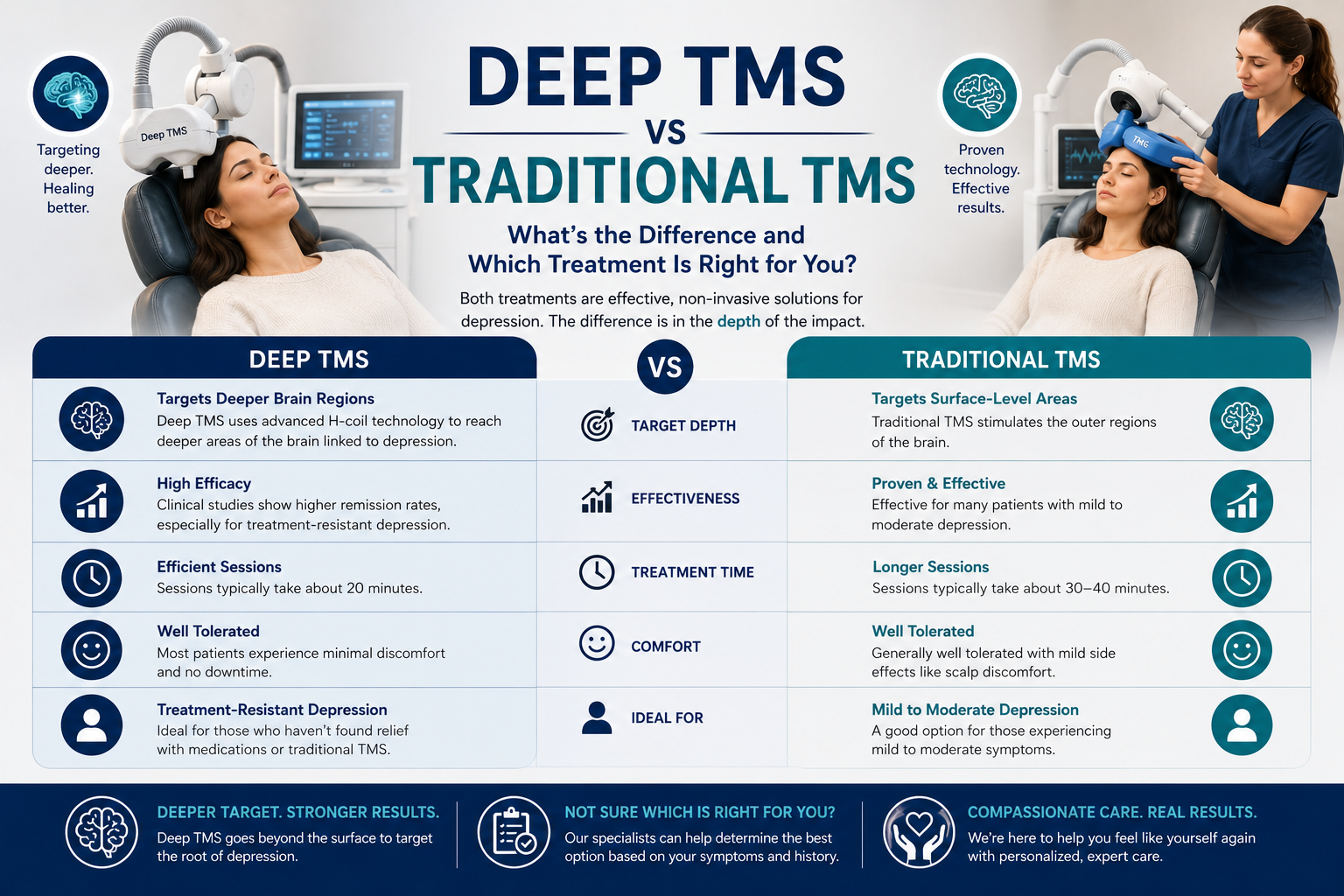
Over the last decade, Transcranial Magnetic Stimulation (TMS) has become one of the most significant advancements in non-invasive psychiatric treatment. As awareness of neuromodulation continues to grow, more patients are exploring alternatives to conventional therapies such as antidepressant medications and psychotherapy—particularly when these treatments have not produced the desired results.
However, many individuals quickly discover that not all TMS treatments are the same.
Two terms frequently appear during research: Traditional TMS (often called repetitive TMS or rTMS) and Deep TMS. Although both therapies use magnetic fields to stimulate specific areas of the brain, they differ in several important ways, including the technology they use, the depth and breadth of stimulation, treatment protocols, FDA-cleared indications, and the neural circuits they are designed to target.
For someone considering advanced treatment for depression, obsessive-compulsive disorder (OCD), or smoking addiction, understanding these differences is essential. Choosing a treatment should never be based solely on advertisements or online comparisons. Instead, patients should understand the scientific principles behind each technology and discuss their individual circumstances with a qualified psychiatrist who can recommend the most appropriate treatment approach.
One of the biggest misconceptions surrounding neuromodulation is the assumption that every TMS system functions identically.
In reality, various TMS devices have been developed using different engineering approaches, coil designs, stimulation patterns, and clinical protocols. While they all rely on magnetic energy to influence brain activity, the way that energy is delivered—and the brain regions it reaches—can vary significantly.
This distinction has become increasingly important as clinical research continues to expand. Today, psychiatrists have access to multiple FDA-cleared neuromodulation technologies, allowing treatment to be tailored more precisely to each patient’s diagnosis and clinical needs.
At Sunny Skies Healthcare, advanced psychiatric care is built upon evidence-based medicine and individualized treatment planning. Rather than recommending a single treatment for every patient, the clinical team begins with a comprehensive psychiatric evaluation that considers symptoms, previous treatments, medical history, lifestyle factors, and long-term goals. This personalized assessment helps determine whether Deep TMS, medication management, psychotherapy, or another evidence-based intervention is the most appropriate option.
Quick Answer
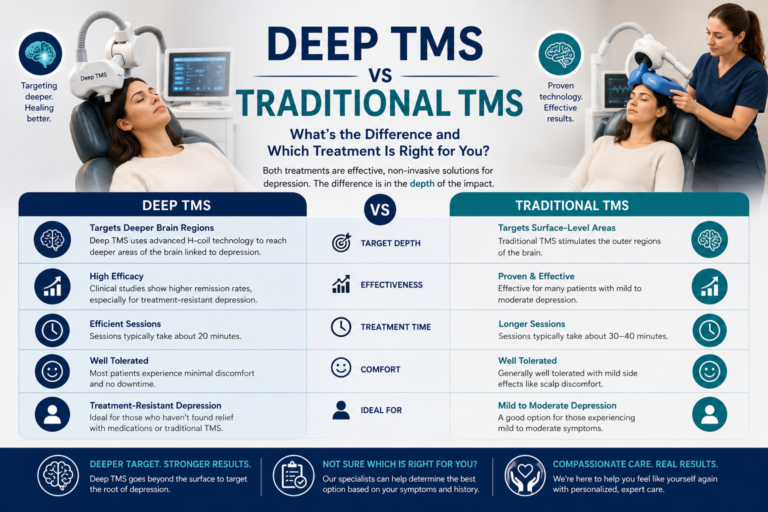
Traditional TMS and Deep TMS are both FDA-cleared, non-invasive brain stimulation therapies designed to treat certain psychiatric conditions. The primary difference lies in the technology used to deliver magnetic stimulation. Traditional TMS generally focuses on more superficial regions of the brain using a figure-eight coil, while BrainsWay Deep TMS utilizes a specialized H-Coil designed to stimulate broader and deeper neural networks associated with specific mental health conditions. Although both approaches aim to improve brain function through neuromodulation, the most appropriate treatment depends on each patient’s diagnosis, medical history, and clinical evaluation.
Why Brain Circuitry Matters
Mental health disorders are no longer viewed simply as chemical imbalances.
Modern neuroscience has shown that many psychiatric conditions involve disruptions in communication between multiple interconnected brain regions. These neural circuits regulate mood, emotional processing, executive functioning, motivation, attention, reward systems, and behavioral control.
When communication within these networks becomes disrupted, symptoms such as persistent depression, intrusive obsessive thoughts, compulsive behaviors, or addictive cravings may develop.
Neuromodulation therapies such as TMS attempt to improve this communication by stimulating carefully selected brain regions using magnetic pulses.
Rather than introducing medication into the bloodstream, magnetic stimulation encourages neurons to become more active and communicate more efficiently.
Over repeated treatment sessions, these changes may promote neuroplasticity, the brain’s natural ability to strengthen and reorganize neural connections.
This biological process represents one of the reasons TMS treatments have become increasingly important within modern psychiatry.
Understanding Traditional TMS
Traditional repetitive Transcranial Magnetic Stimulation (rTMS) has been used clinically for many years and has become an established treatment option for patients experiencing certain forms of depression.
The treatment uses a figure-eight magnetic coil positioned against the scalp.
As controlled magnetic pulses pass through the skull, electrical currents are generated within targeted cortical regions involved in emotional regulation.
Patients remain awake throughout treatment.
No anesthesia is required.
No surgery is performed.
Most sessions are completed in an outpatient setting, allowing patients to return to their normal activities shortly afterward.
Traditional TMS represented an important milestone in psychiatric medicine because it introduced the concept of directly stimulating brain regions involved in depression without invasive procedures.
Its success helped pave the way for additional innovations in neuromodulation.
The Development of Deep TMS
As neuroscience advanced, researchers sought methods capable of stimulating broader and deeper neural networks involved in complex psychiatric disorders.
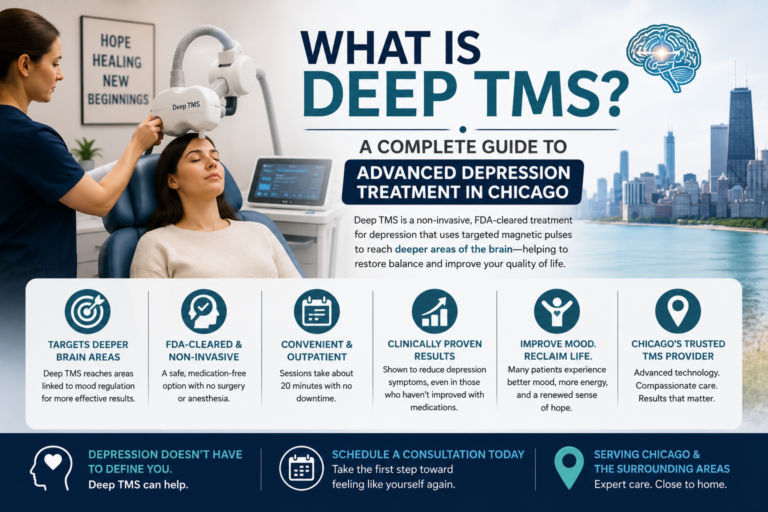
This effort ultimately led to the development of BrainsWay Deep TMS, which utilizes proprietary H-Coil technology specifically engineered to influence larger brain networks while maintaining the same non-invasive treatment experience for patients.
Unlike traditional figure-eight coils, the H-Coil distributes magnetic fields differently, allowing clinicians to reach neural circuits associated with disorders such as Major Depressive Disorder, Obsessive-Compulsive Disorder, and Smoking Addiction using FDA-cleared treatment protocols.
Although both therapies rely on magnetic stimulation, the engineering behind the technology differs substantially.
Understanding these differences helps patients appreciate why psychiatrists carefully evaluate each individual’s diagnosis before recommending one treatment approach over another.
In the next section, we will compare Deep TMS and Traditional TMS side by side, examining their technology, treatment experience, FDA-cleared indications, clinical applications, safety profiles, and how psychiatrists determine which option may be most appropriate for each patient based on current scientific evidence.
Deep TMS vs Traditional TMS — A Detailed Comparison of Technology, Treatment Experience, and Clinical Applications
Although Deep TMS and Traditional TMS belong to the same family of neuromodulation therapies, they are not identical treatments. Both use magnetic fields to stimulate areas of the brain associated with psychiatric disorders, but the engineering behind the technology, the way magnetic energy is distributed, and the neural networks targeted during treatment differ significantly. Understanding these differences helps patients make informed decisions while allowing psychiatrists to recommend the most appropriate therapy based on each individual’s diagnosis and clinical presentation.
One of the most important concepts to understand is that mental health conditions rarely involve a single isolated area of the brain. Instead, disorders such as Major Depressive Disorder (MDD), Obsessive-Compulsive Disorder (OCD), and nicotine dependence are associated with dysfunction across interconnected neural networks. These networks communicate continuously through electrical signals, coordinating emotional regulation, motivation, memory, executive functioning, reward processing, and behavioral control.
Modern neuromodulation aims to improve communication within these networks rather than simply masking symptoms.
Coil Design: The Foundation of the Difference
Perhaps the most significant distinction between Traditional TMS and Deep TMS is the design of the magnetic coil.
Traditional TMS systems generally use a figure-eight coil. This coil produces a focused magnetic field designed to stimulate relatively superficial cortical regions located near the surface of the brain. The focused nature of the stimulation allows clinicians to target specific brain areas with precision and has made traditional TMS an established treatment option for certain psychiatric conditions.
Deep TMS, on the other hand, uses the proprietary BrainsWay H-Coil.
Rather than concentrating magnetic energy into a small focal area, the H-Coil is engineered to stimulate broader and deeper neural networks while remaining completely non-invasive. This expanded field of stimulation reflects advances in neuroscience that recognize psychiatric disorders as network-based conditions rather than problems confined to a single brain region.
Importantly, neither approach should be viewed as universally superior. Each technology was designed with specific clinical objectives in mind, and treatment recommendations should always be individualized.
Comparing the Technologies
The following table provides a simplified comparison.
| Feature | Traditional TMS | BrainsWay Deep TMS |
| Primary Coil | Figure-eight coil | H-Coil technology |
| Brain Stimulation | More focused cortical stimulation | Broader and deeper neural network stimulation |
| Surgical Procedure | No | No |
| Anesthesia Required | No | No |
| Outpatient Treatment | Yes | Yes |
| FDA-Cleared Applications | Varies by device | Includes Major Depression, OCD, and Smoking Addiction using approved protocols |
While both treatments are non-invasive and outpatient procedures, the engineering differences influence how magnetic stimulation interacts with neural circuits involved in psychiatric disorders.
The Patient Experience
One reason both Traditional TMS and Deep TMS continue to gain popularity is that neither treatment requires surgery.
Patients remain awake throughout every appointment.
There are no surgical incisions.
No implanted devices.
No general anesthesia.
Following treatment, most patients are able to resume their normal daily activities, including returning to work, attending school, driving, or participating in routine family responsibilities.
During treatment, patients typically sit comfortably while the magnetic coil is positioned over the head. Once the appropriate treatment parameters have been established, magnetic pulses are delivered according to the prescribed protocol.
Most individuals describe the sensation as rhythmic tapping on the scalp during stimulation.
Although some patients experience temporary scalp discomfort or mild headaches during the early sessions, these effects are generally mild and often decrease as treatment progresses.
Treatment Planning Is Highly Individualized
One of the biggest misconceptions about neuromodulation is that every patient receives identical treatment.
In reality, psychiatrists carefully individualize treatment protocols.
Before recommending either Traditional TMS or Deep TMS, clinicians evaluate:
- The patient’s diagnosis.
- Current symptoms.
- Previous medication history.
- Response to psychotherapy.
- Medical conditions.
- Current medications.
- Overall treatment goals.
- Potential contraindications.
This comprehensive evaluation ensures that treatment decisions are based on clinical evidence rather than generalized assumptions.
At Sunny Skies Healthcare, this evaluation represents one of the most important stages of the treatment process because it allows the care team to determine whether Deep TMS is appropriate within a broader personalized psychiatric treatment plan.
FDA-Cleared Clinical Applications
Another important distinction involves FDA-cleared treatment indications.
BrainsWay Deep TMS has received FDA clearance for protocols including:
- Major Depressive Disorder
- Obsessive-Compulsive Disorder
- Smoking Addiction
These approvals reflect extensive clinical research evaluating safety and effectiveness for specific patient populations.
As neuroscience continues to evolve, researchers are actively investigating additional applications for neuromodulation technologies, but treatment recommendations should always follow current FDA-cleared indications and accepted clinical guidelines.
Safety Considerations
Patient safety remains central to every psychiatric treatment decision.
Both Traditional TMS and Deep TMS have been extensively studied and are performed using established clinical safety protocols. Before treatment begins, patients undergo detailed screening to identify any medical conditions or implanted metallic or electronic devices that may influence eligibility.
Healthcare providers also discuss:
- Expected benefits.
- Possible side effects.
- Treatment alternatives.
- Individual risks.
- Questions or concerns.
This informed consent process allows patients to participate actively in treatment decisions while understanding both the potential benefits and limitations of therapy.
Why Technology Alone Should Never Determine Treatment
Patients frequently search online hoping to discover which technology is “better.”
The reality is more nuanced.
The best treatment is not determined solely by the device.
It is determined by selecting the most appropriate therapy for the individual patient.
A successful psychiatric treatment plan depends on numerous factors, including:
- Accurate diagnosis.
- Comprehensive psychiatric evaluation.
- Clinical expertise.
- Evidence-based treatment protocols.
- Ongoing monitoring.
- Personalized follow-up care.
Technology supports these goals, but it does not replace thoughtful clinical decision-making.
Sunny Skies Healthcare’s Evidence-Based Approach
At Sunny Skies Healthcare, Deep TMS is incorporated into a comprehensive model of psychiatric care rather than being offered as an isolated procedure. Under the leadership of Dr. Georgios Nikolaos Asimis, treatment decisions are guided by clinical evidence, FDA-cleared protocols, and individualized patient evaluations. The goal is not simply to recommend advanced technology but to determine whether Deep TMS, medication management, psychotherapy, lifestyle interventions, or a combination of therapies offers the greatest opportunity for meaningful improvement based on each patient’s unique circumstances.
As research into neuromodulation continues to advance, patients have access to more scientifically validated treatment options than ever before. Understanding the technological differences between Traditional TMS and Deep TMS is an important first step, but equally important is recognizing that successful mental healthcare depends on much more than the equipment itself. It depends on comprehensive evaluation, individualized treatment planning, and ongoing collaboration between patients and experienced psychiatric professionals dedicated to achieving long-term mental wellness.
Which Treatment Is Right for You? Understanding Patient Eligibility, Clinical Decision-Making, and Personalized Care
After learning about the technological differences between Traditional TMS and Deep TMS, many patients naturally ask the next question: Which treatment is right for me? While online comparisons often attempt to present one technology as universally superior, experienced psychiatrists understand that the answer is rarely that simple. Mental health conditions are highly individualized, and successful treatment depends on far more than selecting a specific device. It requires a comprehensive understanding of the patient’s diagnosis, medical history, previous treatments, symptom severity, treatment goals, and overall health.
Modern psychiatry has moved away from standardized treatment models toward personalized medicine, where clinical decisions are based on the unique characteristics of each patient. This individualized approach recognizes that no two people experience depression, obsessive-compulsive disorder (OCD), or smoking addiction in exactly the same way. Even patients sharing the same diagnosis may respond differently to medications, psychotherapy, lifestyle interventions, or neuromodulation therapies.
Personalized Psychiatry Comes Before Technology
One of the biggest misconceptions surrounding Deep TMS and Traditional TMS is that choosing the right machine automatically determines treatment success.
In reality, the technology is only one part of a much larger clinical process.
Before recommending any neuromodulation therapy, psychiatrists conduct a comprehensive psychiatric evaluation that explores multiple aspects of the patient’s mental and physical health.
This evaluation typically includes:
- Current psychiatric diagnosis
- Duration and severity of symptoms
- Previous medication history
- Response to psychotherapy
- Family history of mental illness
- Medical conditions
- Current medications
- Lifestyle factors
- Sleep quality
- Personal treatment goals
Only after this assessment can an evidence-based recommendation be made regarding the most appropriate treatment pathway.
At Sunny Skies Healthcare, this comprehensive evaluation serves as the foundation of every treatment plan. Rather than focusing exclusively on one therapy, the clinical team develops individualized strategies designed to address the patient’s overall mental health needs.
Comparing Deep TMS and Traditional TMS
The following comparison highlights several important differences between the two approaches.
| Clinical Feature | Traditional TMS | BrainsWay Deep TMS |
| Technology | Figure-eight magnetic coil | Proprietary H-Coil technology |
| Brain Regions Targeted | Primarily superficial cortical regions | Broader and deeper neural networks |
| Treatment Setting | Outpatient | Outpatient |
| Surgery Required | No | No |
| General Anesthesia | Not required | Not required |
| Recovery Time | Patients usually resume normal activities immediately | Patients usually resume normal activities immediately |
| FDA-Cleared Applications | Varies by device | Major Depressive Disorder, OCD, and Smoking Addiction using approved protocols |
| Personalized Treatment Planning | Yes | Yes |
Although the technologies differ, both treatments share important advantages. They are non-invasive, performed in outpatient settings, and designed to complement—not necessarily replace—other evidence-based psychiatric treatments.
Factors That Influence Treatment Recommendations
Psychiatrists consider numerous variables before recommending Deep TMS or another treatment option.
The following table illustrates how different clinical factors contribute to treatment planning.
| Clinical Consideration | Why It Matters |
| Accurate Diagnosis | Determines whether FDA-cleared treatment protocols apply |
| Previous Treatments | Helps evaluate whether additional options should be considered |
| Symptom Severity | Guides treatment intensity and long-term planning |
| Medical History | Identifies factors that may influence safety or eligibility |
| Current Medications | Ensures therapies work together safely |
| Patient Goals | Supports shared decision-making and individualized care |
| Lifestyle Factors | May influence overall treatment success |
| Follow-Up Availability | Allows ongoing monitoring and treatment adjustments |
This comprehensive approach reflects one of the most important principles of modern psychiatry: effective treatment is based on the individual, not simply the diagnosis.
Deep TMS as Part of Comprehensive Mental Healthcare
Another common misconception is that Deep TMS functions as a standalone solution for every patient.
Evidence-based psychiatry takes a different approach.
Depending on the individual’s needs, a comprehensive treatment plan may combine several evidence-based therapies.
These may include:
- Psychiatric evaluation
- Medication management
- Deep TMS
- Cognitive Behavioral Therapy (CBT)
- Lifestyle modifications
- Sleep optimization
- Stress management
- Ongoing psychiatric follow-up
Rather than competing with one another, these interventions often work together to support long-term recovery.
This multidisciplinary philosophy reflects the growing understanding that mental health conditions are influenced by biological, psychological, and environmental factors.
Safety and Clinical Monitoring
Both Traditional TMS and Deep TMS have undergone extensive clinical evaluation and are performed using established safety protocols. Before treatment begins, healthcare providers review each patient’s medical history, discuss potential benefits and risks, identify possible contraindications, and answer questions regarding the treatment process.
Throughout the treatment course, patients are monitored closely to evaluate progress and determine whether adjustments to the overall care plan are needed.
Regular follow-up appointments allow psychiatrists to assess symptom improvement, review any concerns, and coordinate additional therapies when appropriate.
This ongoing monitoring helps ensure that treatment remains aligned with the patient’s changing clinical needs.
The Importance of Shared Decision-Making
Modern psychiatric care encourages patients to participate actively in treatment decisions.
Instead of simply being told which therapy to receive, patients are encouraged to understand:
- Why a particular treatment is recommended.
- How the treatment works.
- What results may reasonably be expected.
- What alternatives are available.
- How progress will be monitored.
- When additional treatments may be considered.
This collaborative process builds trust and helps patients make informed decisions based on accurate medical information rather than misconceptions found online.
Sunny Skies Healthcare’s Patient-Centered Philosophy
At Sunny Skies Healthcare, personalized care extends beyond selecting an advanced treatment technology. Under the leadership of Dr. Georgios Nikolaos Asimis, every patient receives a thorough psychiatric evaluation that considers the complete picture of their mental health. Treatment recommendations are based on current scientific evidence, FDA-cleared protocols, clinical expertise, and each patient’s unique goals and circumstances. Whether a patient may benefit from Deep TMS, medication management, psychotherapy, or an integrated combination of therapies, the objective remains the same: delivering compassionate, evidence-based care that supports long-term mental wellness and improved quality of life.
As advances in neuroscience continue to reshape psychiatric medicine, patients have more treatment options than ever before. Understanding the differences between Deep TMS and Traditional TMS is an important step, but the most meaningful decision is choosing a healthcare provider who prioritizes individualized assessment, clinical expertise, and comprehensive care. With the right evaluation and a personalized treatment plan, patients can confidently explore evidence-based options that align with their diagnosis, needs, and long-term recovery goals.
Making an Informed Decision — Why Personalized Psychiatric Care Matters More Than Choosing a Device
Choosing between Deep TMS and Traditional TMS is an important healthcare decision, but it should never be reduced to selecting one technology over another based solely on online comparisons. The most successful psychiatric treatment begins with understanding the individual rather than focusing exclusively on the equipment. Every person’s brain, medical history, symptoms, treatment experiences, and recovery goals are different, which is why evidence-based psychiatry emphasizes comprehensive evaluation before recommending any form of neuromodulation.
Today, mental healthcare is increasingly guided by advances in neuroscience and precision medicine. Rather than applying identical treatments to every patient with the same diagnosis, psychiatrists now recognize that effective care requires a personalized strategy that reflects each individual’s biological, psychological, and lifestyle factors. This shift has transformed the way conditions such as Major Depressive Disorder (MDD), Obsessive-Compulsive Disorder (OCD), and nicotine dependence are managed.
Modern Psychiatry Is About Personalization
Psychiatric disorders are highly complex.
Two individuals diagnosed with depression may experience entirely different symptoms.
For example:
- One person may struggle primarily with persistent sadness and fatigue.
- Another may experience difficulty concentrating, sleep disturbances, and loss of motivation.
- A third individual may have significant anxiety alongside depression.
- Someone else may have previously responded well to medication but experienced a relapse years later.
Because every clinical presentation is different, treatment planning should always begin with a complete psychiatric evaluation rather than assumptions based on diagnosis alone.
Building an Individualized Treatment Plan
A psychiatrist considers many different clinical factors before recommending Deep TMS, Traditional TMS, medication management, psychotherapy, or another treatment option.
The following table illustrates how these factors contribute to personalized decision-making.
| Individual Assessment Area | Why It Is Important |
| Mental health diagnosis | Determines the most appropriate evidence-based treatment pathway |
| Symptom pattern | Helps identify primary areas of concern |
| Duration of illness | Influences long-term treatment planning |
| Previous medication response | Assesses whether additional treatment approaches should be considered |
| Psychotherapy history | Evaluates previous therapeutic progress |
| Physical health | Identifies medical considerations affecting treatment |
| Lifestyle habits | Sleep, nutrition, stress, and activity levels may influence recovery |
| Patient preferences | Encourages shared decision-making and individualized care |
This comprehensive approach ensures that treatment recommendations are based on the patient’s complete clinical picture rather than a single symptom or isolated diagnosis.
Deep TMS Within a Comprehensive Care Model
One of the greatest strengths of Deep TMS is that it can be incorporated into a broader psychiatric treatment plan.
Depending on the patient’s needs, this plan may include multiple evidence-based therapies working together.
Rather than replacing these interventions, Deep TMS may complement them as part of an individualized treatment strategy developed by the treating psychiatrist.
Comparing the Overall Treatment Experience
Although the technologies differ, both Deep TMS and Traditional TMS share several practical similarities that patients often appreciate.
| Treatment Experience | Traditional TMS | Deep TMS |
| Outpatient procedure | ✓ | ✓ |
| No surgery required | ✓ | ✓ |
| No anesthesia required | ✓ | ✓ |
| Awake during treatment | ✓ | ✓ |
| Return to daily activities afterward | ✓ | ✓ |
| Evidence-based treatment | ✓ | ✓ |
| Requires psychiatric evaluation | ✓ | ✓ |
| Individualized treatment planning | ✓ | ✓ |
These shared characteristics have helped neuromodulation become an increasingly important option for patients seeking non-invasive psychiatric care.
Why Clinical Expertise Matters
Technology alone does not determine successful outcomes.
The expertise of the treating psychiatrist remains one of the most important aspects of care.
Experienced clinicians evaluate far more than the treatment device itself. They assess how the patient’s diagnosis, previous treatment history, medications, physical health, lifestyle, and personal goals interact before recommending a treatment strategy.
They also continue monitoring progress throughout therapy.
This ongoing evaluation allows treatment plans to evolve as the patient’s symptoms improve or new needs emerge.
The Importance of Long-Term Mental Wellness
Mental health treatment should focus on more than short-term symptom reduction.
Achieving these goals often requires an integrated approach rather than reliance on one treatment alone.
Sunny Skies Healthcare’s Evidence-Based Philosophy
At Sunny Skies Healthcare, individualized psychiatric care forms the foundation of every patient relationship. Under the leadership of Dr. Georgios Nikolaos Asimis, treatment begins with a comprehensive psychiatric assessment that carefully evaluates each patient’s symptoms, medical history, previous treatments, and long-term goals. Recommendations are based on current scientific evidence, FDA-cleared treatment protocols, and a commitment to providing compassionate, patient-centered care. Whether Deep TMS becomes part of the treatment plan or another evidence-based approach is recommended, every decision is guided by the patient’s unique clinical needs rather than a standardized protocol.
Final Thoughts
The comparison between Deep TMS and Traditional TMS demonstrates that both technologies represent meaningful advances in modern psychiatry. Each offers a non-invasive method of neuromodulation supported by scientific research and clinical experience. However, the most important question is not simply which technology exists—it is which treatment is most appropriate for a specific patient.
By combining comprehensive psychiatric evaluation, individualized treatment planning, ongoing clinical monitoring, and evidence-based therapies, mental healthcare providers can develop strategies that address the underlying factors contributing to psychiatric illness. For patients seeking care for depression, OCD, or smoking addiction, understanding the differences between Deep TMS and Traditional TMS is an important first step, but partnering with an experienced psychiatric team committed to personalized care is what ultimately supports informed decision-making and long-term mental wellness.
Frequently Asked Questions (FAQ)
1. What is the main difference between Deep TMS and Traditional TMS?
The primary difference lies in the technology used to deliver magnetic stimulation. Traditional TMS generally uses a figure-eight coil to stimulate targeted cortical areas near the brain’s surface, while BrainsWay Deep TMS uses a specialized H-Coil designed to stimulate broader and deeper neural networks associated with certain psychiatric conditions. Both are non-invasive and FDA-cleared for specific clinical applications, but the appropriate treatment depends on each patient’s diagnosis and individual evaluation.
2. Is Deep TMS better than Traditional TMS?
There is no universal answer because the most appropriate treatment depends on the individual patient. A psychiatrist considers factors such as diagnosis, symptom severity, previous treatments, medical history, and treatment goals before recommending the most suitable therapy. Rather than asking which technology is “better,” it is more helpful to ask which option best fits your specific clinical needs.
3. What conditions can Deep TMS treat?
Deep TMS has received FDA clearance for treating:
- Major Depressive Disorder (MDD)
- Obsessive-Compulsive Disorder (OCD)
- Smoking Addiction (Nicotine Dependence)
Researchers continue studying additional potential applications, but treatment recommendations should always follow current FDA-cleared indications and accepted clinical guidelines.
4. Are both treatments non-invasive?
Yes. Both Traditional TMS and Deep TMS are completely non-invasive. Neither treatment requires surgery, implanted devices, or general anesthesia. Patients remain awake during every treatment session and typically return to their normal daily activities immediately afterward.
5. Does Deep TMS require anesthesia or hospitalization?
No. Deep TMS is performed entirely on an outpatient basis. Since no anesthesia or sedation is required, patients are generally able to drive themselves home and resume work, school, or other daily responsibilities following each appointment.
6. How long does a typical Deep TMS session last?
While the initial consultation and motor threshold assessment take longer, individual Deep TMS treatment sessions generally last around 20 minutes. The exact schedule depends on the treatment protocol prescribed by your psychiatrist.
7. How many treatment sessions are usually recommended?
Treatment schedules vary according to the patient’s diagnosis and clinical response. Many FDA-cleared protocols involve treatments five days per week over approximately four to six weeks, followed by a tapering phase if clinically appropriate. Your psychiatrist will determine the most appropriate treatment plan for your individual needs.
8. Is Deep TMS painful?
Most patients tolerate Deep TMS well. During treatment, patients often notice a tapping sensation on the scalp caused by the magnetic pulses. Some individuals experience mild scalp discomfort or headaches during the first few sessions, but these effects are generally temporary and often improve as treatment continues.
9. Can I continue taking medication during Deep TMS treatment?
Many patients continue taking prescribed psychiatric medications while undergoing Deep TMS. However, medication decisions should always be discussed with your treating psychiatrist, who will review your medications and determine the safest and most effective overall treatment strategy.
10. Can Deep TMS replace psychotherapy?
Not necessarily. Deep TMS is often incorporated into a comprehensive treatment plan that may also include psychotherapy, medication management, lifestyle interventions, and ongoing psychiatric follow-up. The combination of treatments depends on each patient’s diagnosis and individual treatment goals.
11. How does a psychiatrist decide whether Deep TMS is appropriate?
Before recommending Deep TMS, a psychiatrist performs a comprehensive psychiatric evaluation that considers:
- Current diagnosis
- Symptom severity
- Previous treatments
- Medical history
- Current medications
- Overall health
- Personal treatment goals
This individualized assessment helps determine whether Deep TMS is an appropriate option within a broader treatment plan.
12. Is Deep TMS covered by insurance?
Insurance coverage varies depending on the patient’s diagnosis, insurance provider, medical necessity, and individual policy. Many insurance plans provide coverage for eligible patients who meet specific clinical criteria. During your consultation, the healthcare team can discuss insurance eligibility and available options.
13. Can I drive after a Deep TMS session?
Yes. Since Deep TMS does not require anesthesia or sedation, most patients can safely drive themselves to and from treatment appointments and continue their normal daily routine immediately afterward.
14. How soon might I notice improvements?
Every patient responds differently. Some individuals begin noticing changes during the first few weeks, while others experience gradual improvement throughout the complete treatment course. Because Deep TMS works by promoting neuroplasticity over time, results often develop progressively rather than immediately.
15. Why choose Sunny Skies Healthcare for Deep TMS?
Sunny Skies Healthcare combines advanced neuroscience with personalized psychiatric care. Under the leadership of Dr. Georgios Nikolaos Asimis, every patient receives a comprehensive psychiatric evaluation, individualized treatment planning, evidence-based medication management when appropriate, and access to FDA-cleared BrainsWay Deep TMS technology. Rather than focusing solely on technology, the practice emphasizes compassionate, patient-centered care designed to support long-term mental wellness through personalized treatment strategies.
16. Can Deep TMS help people with Treatment-Resistant Depression (TRD)?
Yes. One of the most common reasons psychiatrists recommend Deep TMS is for individuals with Treatment-Resistant Depression (TRD)—patients whose depressive symptoms have not improved sufficiently after trying one or more antidepressant medications. Following a comprehensive psychiatric evaluation, Deep TMS may be considered as part of an individualized treatment strategy that also includes medication management, psychotherapy, and ongoing clinical monitoring when appropriate.
17. What happens during my first Deep TMS consultation?
Your first appointment focuses on understanding your complete mental health history rather than immediately beginning treatment. Your psychiatrist will discuss your symptoms, previous treatments, medical conditions, medications, lifestyle factors, treatment goals, and any questions you may have. If Deep TMS appears to be an appropriate option, additional assessments, including motor threshold mapping, may be scheduled before treatment begins.
18. Are there people who should not receive Deep TMS?
Although Deep TMS is considered safe for many patients, it may not be appropriate for everyone. Individuals with certain implanted metallic or electronic medical devices near the treatment area, or specific neurological or medical conditions, may require additional evaluation. A comprehensive consultation is essential to determine eligibility and ensure patient safety before treatment begins.
19. Can Deep TMS be combined with lifestyle and wellness strategies?
Yes. Modern psychiatric care recognizes that mental health is influenced by many interconnected factors, including sleep, nutrition, physical activity, stress management, and overall physical health. At Sunny Skies Healthcare, Deep TMS may be incorporated into a broader, personalized treatment plan that also considers evidence-based lifestyle interventions and integrative psychiatry to support long-term mental wellness.
20. Why is personalized psychiatric care so important?
Every patient’s mental health journey is different. Even individuals with the same diagnosis may respond differently to medications, psychotherapy, or neuromodulation therapies. Personalized psychiatric care ensures that treatment recommendations are based on a comprehensive understanding of the patient’s diagnosis, medical history, symptoms, previous treatments, and recovery goals rather than relying on a standardized approach. This individualized philosophy helps improve both clinical decision-making and long-term treatment outcomes.
Conclusion
As advances in neuroscience continue to transform the field of psychiatry, patients now have access to more evidence-based treatment options than ever before. Among these innovations, both Traditional TMS and BrainsWay Deep TMS have become important non-invasive therapies that offer new possibilities for individuals living with depression, obsessive-compulsive disorder (OCD), and other FDA-cleared conditions. Although these treatments share the common goal of stimulating brain activity through magnetic pulses, they differ in their technology, stimulation patterns, and clinical applications. Understanding these differences allows patients to make informed decisions while working closely with qualified mental health professionals.
One of the most important messages throughout this guide is that choosing between Deep TMS and Traditional TMS should never be viewed as a competition between technologies. Mental health conditions are complex, and no single treatment is appropriate for every individual. Successful psychiatric care depends on accurate diagnosis, comprehensive evaluation, evidence-based clinical judgment, and ongoing collaboration between the patient and their healthcare team. Technology is a valuable tool, but it is only one component of a personalized treatment strategy.
Modern psychiatry increasingly recognizes that disorders such as Major Depressive Disorder, OCD, and nicotine dependence involve disruptions across interconnected brain networks rather than isolated symptoms. This growing understanding has encouraged the development of treatments that focus on improving neural communication while supporting the brain’s natural ability to adapt through neuroplasticity. Deep TMS represents one example of how neuroscience continues to shape the future of mental healthcare, offering additional options for patients who may not have achieved sufficient improvement through conventional therapies alone.
At Sunny Skies Healthcare, treatment extends far beyond selecting a particular device or protocol. Under the leadership of Dr. Georgios Nikolaos Asimis, each patient receives a comprehensive psychiatric evaluation that carefully considers medical history, previous treatments, symptom patterns, lifestyle factors, and long-term recovery goals. Whether a patient may benefit from Deep TMS, medication management, psychotherapy, or an integrated combination of therapies, every recommendation is grounded in current scientific evidence and tailored to the individual’s unique clinical needs.
Another important takeaway is that mental health recovery is often a gradual process rather than an immediate transformation. Building healthier neural pathways, improving emotional regulation, and restoring overall well-being requires time, consistency, and ongoing clinical support. Patients who actively participate in their treatment, attend scheduled appointments, communicate openly with their healthcare providers, and follow personalized care plans are often better positioned to achieve meaningful long-term improvements.
If you are exploring neuromodulation therapies, the most valuable first step is not deciding between Deep TMS and Traditional TMS based solely on information found online. Instead, seek an evaluation from a qualified psychiatrist who can assess your individual circumstances and recommend the most appropriate evidence-based treatment options. With personalized care, advanced neuroscience, compassionate clinical guidance, and a commitment to treating the whole person, patients can move forward with greater confidence, informed decision-making, and renewed hope for lasting mental wellness.