Quick Answer
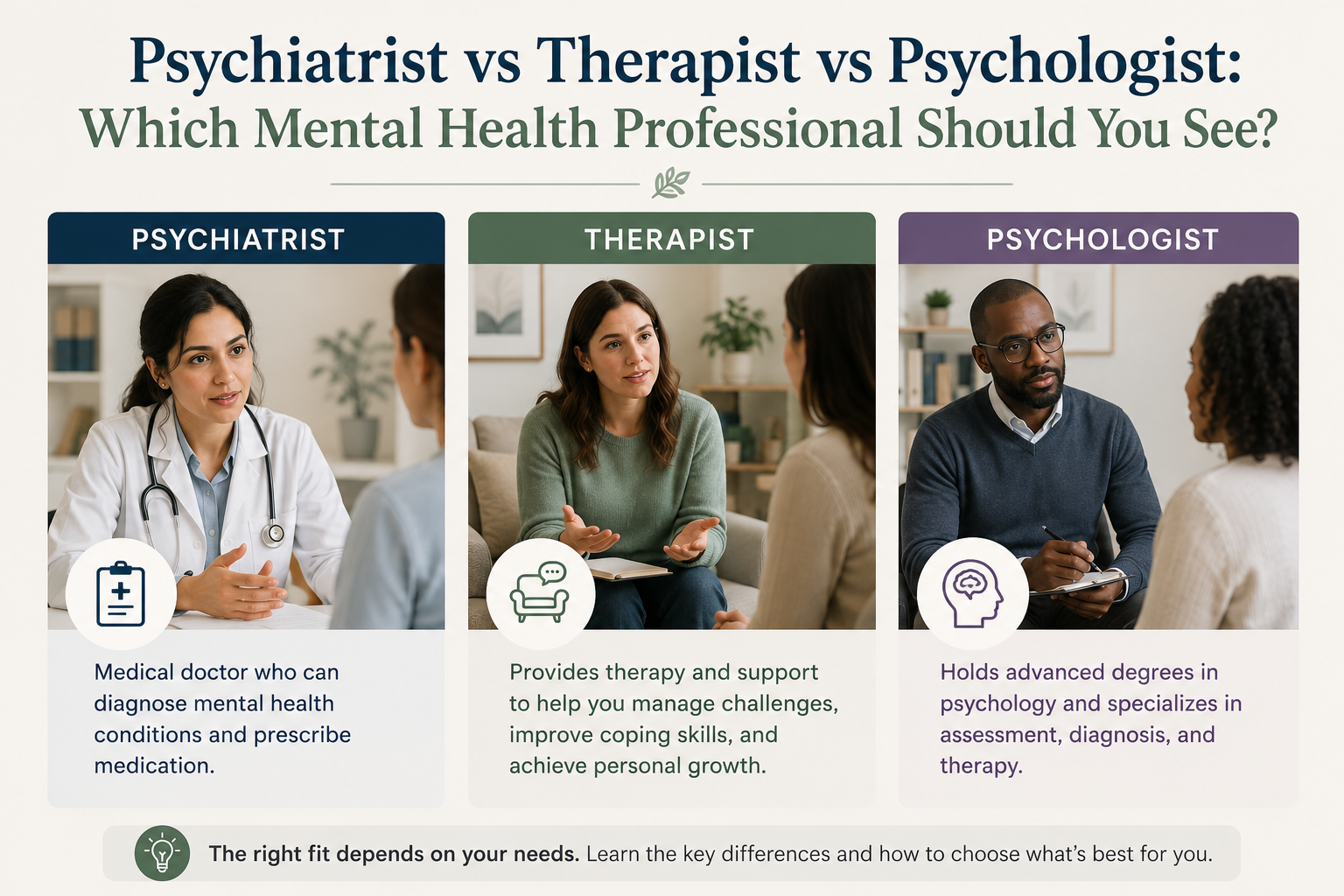
If you are struggling with your mental health, choosing the right provider can feel confusing. A psychiatrist is a medical doctor who can diagnose mental health conditions and prescribe medication. A psychologist specializes in psychological assessment and therapy but typically cannot prescribe medication. A therapist provides counseling and talk therapy to help individuals manage emotional, behavioral, and relationship challenges. Depending on the state and provider, psychiatric nurse practitioners can diagnose mental health conditions, provide treatment, and prescribe medication. The right choice depends on your symptoms, treatment goals, and whether medication may be part of your care plan.
Quick FAQs
Should I see a psychiatrist or therapist first?
Many people begin with either a therapist or a psychiatric evaluation. The best starting point depends on your symptoms, treatment goals, and whether medication may be beneficial.
Can a therapist diagnose mental health conditions?
Licensing requirements vary by state, but many therapists can identify and treat mental health conditions within their scope of practice.
Can a psychologist prescribe medication?
In most states, psychologists do not prescribe medication. They primarily focus on assessments, evaluations, and therapy.
What does a psychiatric nurse practitioner do?
A psychiatric nurse practitioner can evaluate mental health conditions, develop treatment plans, provide medication management, and offer ongoing mental health care.
Do I need medication to improve my mental health?
Not always. Some individuals benefit from therapy alone, while others achieve the best outcomes through a combination of therapy, medication, and lifestyle changes.
Why So Many People Are Confused About Mental Health Providers
One of the most common questions people ask before seeking mental health care is surprisingly simple:
“Who am I supposed to see?”
The mental health field includes psychiatrists, psychologists, therapists, counselors, psychiatric nurse practitioners, social workers, and other specialists. For someone seeking help for anxiety, depression, ADHD, trauma, stress, or mood changes, the number of options can feel overwhelming.
Many individuals spend weeks researching providers because they are afraid of choosing the wrong one. Others delay treatment entirely because they do not understand the differences between these professionals.
The good news is that you do not need to become an expert before seeking care. Understanding the role of each provider can help you make a more informed decision and feel more confident about taking the first step.
What Does a Psychiatrist Do?
A psychiatrist is a physician who specializes in mental health conditions. Because psychiatrists attend medical school and complete specialized psychiatric training, they are qualified to diagnose mental health disorders, prescribe medications, monitor medication effectiveness, and evaluate how physical health conditions may affect mental well-being.
Psychiatrists often work with individuals experiencing conditions such as anxiety disorders, depression, bipolar disorder, ADHD, PTSD, obsessive-compulsive disorder, panic disorder, and other psychiatric conditions.
One of the key differences between psychiatrists and many other mental health professionals is their ability to prescribe medication. This makes psychiatrists particularly valuable for individuals whose symptoms may require medication management as part of treatment.
However, contrary to popular belief, psychiatrists do far more than prescribe medication. They evaluate symptoms, monitor progress, adjust treatment plans, and help patients understand how biological, psychological, and environmental factors contribute to mental health challenges.
What Does a Therapist Do?
A therapist focuses on helping individuals understand, process, and manage emotional, behavioral, and relationship challenges through conversation-based treatment approaches.
Therapy can help people explore patterns of thinking, develop coping strategies, improve communication skills, process trauma, manage stress, and build healthier habits.
People often seek therapy for anxiety, depression, grief, relationship difficulties, work stress, self-esteem concerns, life transitions, trauma, and many other challenges.
One of the biggest misconceptions about therapy is that it is only for people experiencing severe mental health conditions. In reality, therapy can benefit anyone who wants support navigating life’s challenges, improving emotional well-being, or developing healthier coping skills.
Therapists come from various educational and licensing backgrounds, including counseling, social work, marriage and family therapy, and clinical mental health disciplines. While specific qualifications vary, the central focus remains helping individuals improve their emotional and psychological health through evidence-based therapeutic approaches.
What Does a Psychologist Do?
Psychologists specialize in understanding human thoughts, emotions, and behavior. They are often highly trained in psychological assessment, testing, diagnosis, and therapy.
Psychologists frequently conduct evaluations for conditions such as ADHD, learning disabilities, autism spectrum disorders, personality disorders, anxiety disorders, depression, and other mental health concerns.
Because psychological testing can provide valuable insights into how a person thinks, learns, behaves, and experiences emotions, psychologists often play an important role in comprehensive mental health evaluations.
Many psychologists also provide therapy and counseling services. However, unlike psychiatrists, psychologists generally do not prescribe medication in most states.
For individuals seeking detailed psychological assessments or specialized testing, a psychologist may be the most appropriate professional to consult.
What Does a Psychiatric Nurse Practitioner Do?
Psychiatric nurse practitioners have become an increasingly important part of modern mental health care.
A psychiatric nurse practitioner is an advanced practice registered nurse with specialized training in mental health assessment, diagnosis, treatment, and medication management.
Depending on state regulations, psychiatric nurse practitioners can evaluate symptoms, diagnose mental health conditions, prescribe medication, monitor treatment progress, and collaborate with other healthcare professionals.
Many patients appreciate the holistic approach that psychiatric nurse practitioners often bring to mental health care. They frequently consider both physical and emotional health factors when developing treatment plans and may spend significant time discussing lifestyle influences, stressors, and overall wellness.
As demand for mental health services continues to grow, psychiatric nurse practitioners play a vital role in improving access to care.
Comparison Table: Which Mental Health Professional Is Right for You?
| Provider | Can Diagnose Conditions | Can Prescribe Medication | Provides Therapy |
| Psychiatrist | Yes | Yes | Sometimes |
| Psychologist | Yes | Usually No | Yes |
| Therapist | Often Within Scope | No | Yes |
| Psychiatric Nurse Practitioner | Yes | Yes | Sometimes |
When Should You See a Psychiatrist?
A psychiatric evaluation may be especially helpful if symptoms are significantly affecting your daily life or if medication may be appropriate.
Individuals experiencing severe anxiety, persistent depression, panic attacks, mood instability, ADHD symptoms, intrusive thoughts, sleep disturbances, or difficulty functioning at work or school often benefit from a comprehensive psychiatric assessment.
A psychiatrist can help determine whether medication, therapy, lifestyle changes, or a combination of treatments may be most effective.
When Should You See a Therapist?
Therapy can be beneficial for a wide range of concerns, even when symptoms are not severe.
People commonly seek therapy to improve coping skills, process grief, manage stress, navigate relationship challenges, work through trauma, improve self-esteem, or gain greater insight into emotional patterns.
Therapy can also be an excellent complement to medication treatment. For many individuals, the combination of therapy and medication produces better outcomes than either approach alone.
When Might You Need More Than One Provider?
Many people assume they must choose between medication and therapy, but mental health treatment is not always an either-or decision.
In many situations, patients work with multiple professionals as part of a collaborative care approach. For example, a psychiatrist or psychiatric nurse practitioner may manage medications while a therapist provides ongoing counseling and emotional support.
This team-based approach allows each provider to focus on their area of expertise while working toward shared treatment goals.
Common Mistakes People Make When Choosing a Mental Health Provider
One common mistake is waiting until symptoms become overwhelming before seeking help. Early intervention often leads to better outcomes and may prevent symptoms from becoming more severe.
Another mistake is assuming medication is the only solution or, conversely, believing medication should never be considered. Effective mental health treatment is highly individualized, and recommendations should be based on each person’s specific situation.
Many individuals also spend too much time worrying about choosing the perfect provider. While finding a good fit matters, taking action is often more important than finding a flawless solution immediately.
Seeking help from a qualified professional is usually a positive first step regardless of where the process begins.
How to Choose the Right Mental Health Provider
The best provider is often the one who aligns with your current needs.
If you are primarily interested in counseling, emotional support, or learning coping strategies, therapy may be an excellent starting point.
If you are concerned that medication may be necessary or your symptoms feel difficult to manage, a psychiatric evaluation may provide valuable clarity.
If comprehensive testing or psychological assessments are needed, a psychologist may be the most appropriate choice.
If you are unsure where to start, a mental health evaluation can help determine which services may be most beneficial.
Why Trust Sunny Skies Healthcare?
At Sunny Skies Healthcare, we understand that navigating mental health care can feel overwhelming, especially when you are unsure which provider is right for your situation.
Our approach focuses on understanding each patient’s unique needs, symptoms, goals, and concerns. By taking the time to evaluate the complete picture, we help individuals access appropriate care and develop personalized treatment plans that support long-term mental wellness.
Whether you are exploring treatment for anxiety, depression, ADHD, trauma-related concerns, mood disorders, or other mental health challenges, our team is committed to helping you move forward with confidence.
Frequently Asked Questions
Yes. Mental health treatment is a personal journey, and it is completely acceptable to seek a provider who feels like a better fit.
Some psychiatrists provide therapy, but many primarily focus on evaluations and medication management.
For many individuals, therapy alone can be highly effective. Treatment recommendations depend on the specific condition and severity of symptoms.
A mental health evaluation can help determine the most appropriate type of care based on your symptoms and goals.
Yes. Collaborative care involving therapists, psychiatrists, psychologists, and psychiatric nurse practitioners is common and often beneficial.
Conclusion
Understanding the differences between psychiatrists, therapists, psychologists, and psychiatric nurse practitioners can make seeking mental health care far less intimidating. While each professional has a unique role, they all share a common goal: helping individuals improve their mental health and quality of life. The most important decision is not choosing the perfect provider on the first try—it is taking the first step toward getting support. If you’ve been putting off care because you weren’t sure where to start, could this be the information you needed to move forward?