If you have been researching advanced treatment options for depression, OCD, or other mental health conditions, you have probably come across two similar terms:
TMS.
And Deep TMS.
At first glance, they may appear identical.
Both treatments use magnetic stimulation.
Both are non-invasive.
Both are designed to help patients struggling with conditions that have not responded adequately to traditional treatment approaches.
Yet many patients find themselves asking an important question:
“What is the difference between Deep TMS and traditional TMS?”
Understanding that difference can help patients make more informed decisions about their treatment journey.
Why More Patients Are Looking Beyond Medication
For decades, antidepressant medications have been one of the most common treatment options for depression.
For many people, medication provides meaningful relief.
However, not every patient experiences the same results.
Some individuals:
• Experience limited improvement
• Develop unwanted side effects
• Stop responding to medications over time
• Continue experiencing symptoms despite treatment
When this happens, patients often begin exploring alternative options.
This growing demand for non-medication treatments has contributed to the increasing popularity of Transcranial Magnetic Stimulation therapies.
Instead of affecting the entire body through medication, these treatments focus directly on specific brain networks involved in mood regulation.
What Is Traditional TMS?
Traditional Transcranial Magnetic Stimulation (TMS) is a non-invasive procedure that uses magnetic pulses to stimulate targeted areas of the brain associated with depression and emotional regulation.
The treatment is performed while the patient remains awake and comfortable.
A magnetic coil is positioned against the scalp.
The device delivers carefully controlled magnetic pulses to stimulate brain activity in targeted regions.
Over a series of treatment sessions, this stimulation may help improve communication within neural networks associated with mood and behavior.
Traditional TMS has become an established treatment option for patients experiencing depression, particularly those who have not achieved adequate improvement through medication alone.
What Is Deep TMS?
Deep TMS builds upon the same fundamental concept of magnetic brain stimulation.
However, the technology used is different.
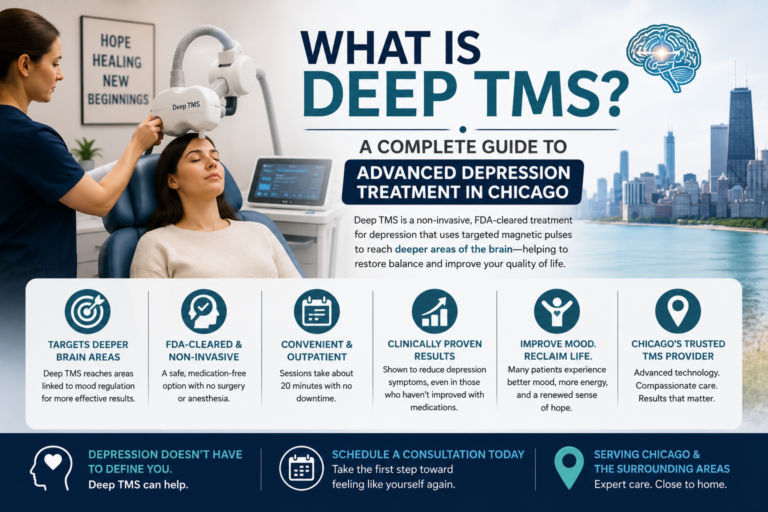
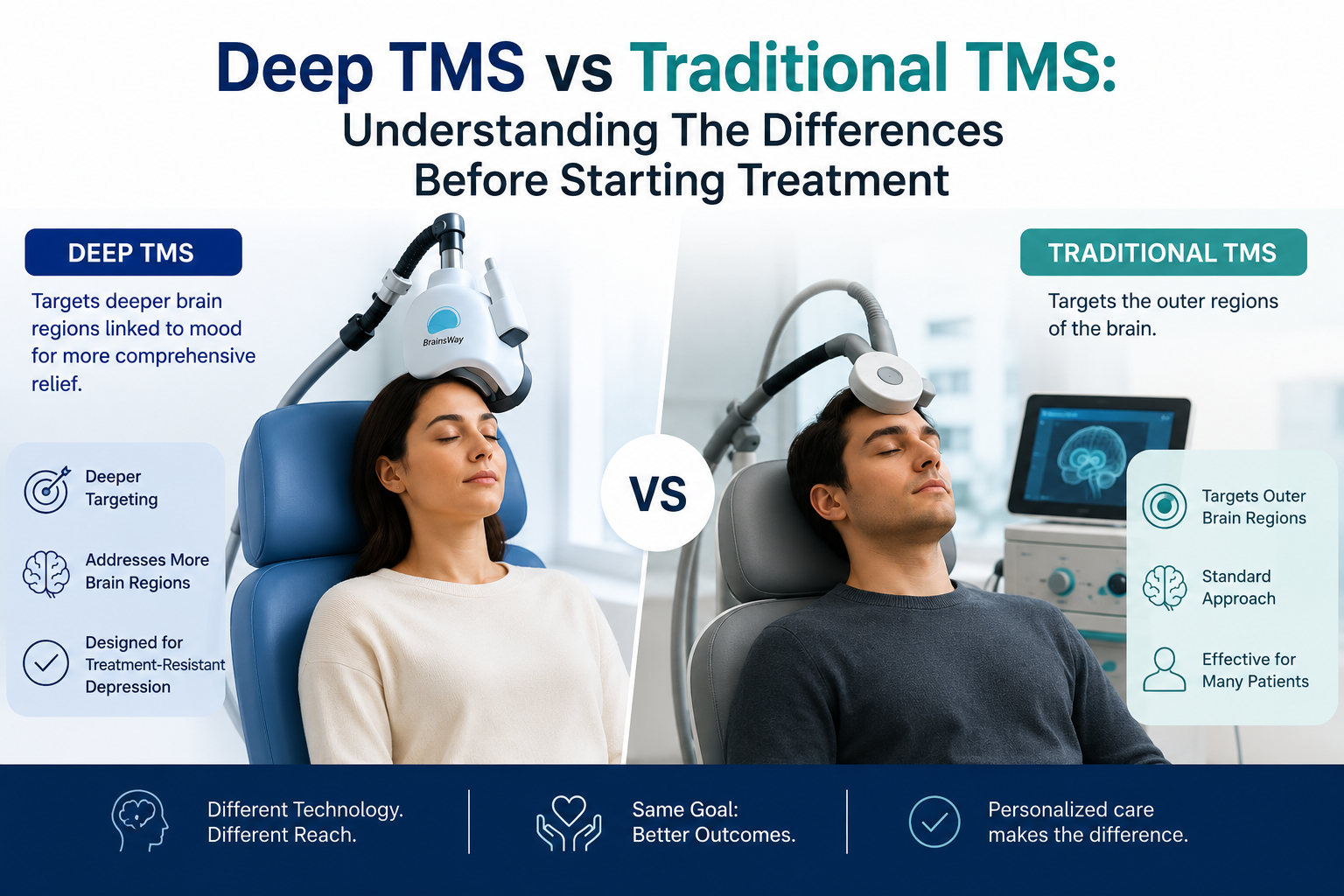
Deep TMS utilizes specialized H-Coil technology designed to stimulate broader and deeper neural networks within the brain.
Rather than focusing primarily on surface-level stimulation, Deep TMS is engineered to reach deeper structures associated with mental health conditions.
This expanded reach is one of the key differences between the two approaches.
The objective remains the same:
To help regulate brain activity associated with depression, OCD, and other approved conditions.
However, the pathway used to achieve that goal differs.
Why Brain Networks Matter
To understand why these technologies differ, it helps to understand how depression affects the brain.
Depression is not caused by a single area of the brain.
It involves multiple interconnected neural networks.
These networks influence:
• Mood
• Motivation
• Emotional processing
• Reward systems
• Decision-making
• Cognitive function
When these networks become dysregulated, symptoms of depression may develop.
Modern neuroscience increasingly views mental health conditions as network-based disorders rather than isolated brain-region problems.
This perspective has helped drive innovation in treatments like Deep TMS.
By targeting broader neural pathways, clinicians aim to support healthier brain network function.
Deep TMS vs Traditional TMS: Key Differences
Although both treatments use magnetic stimulation, several important differences exist.
Coil Technology
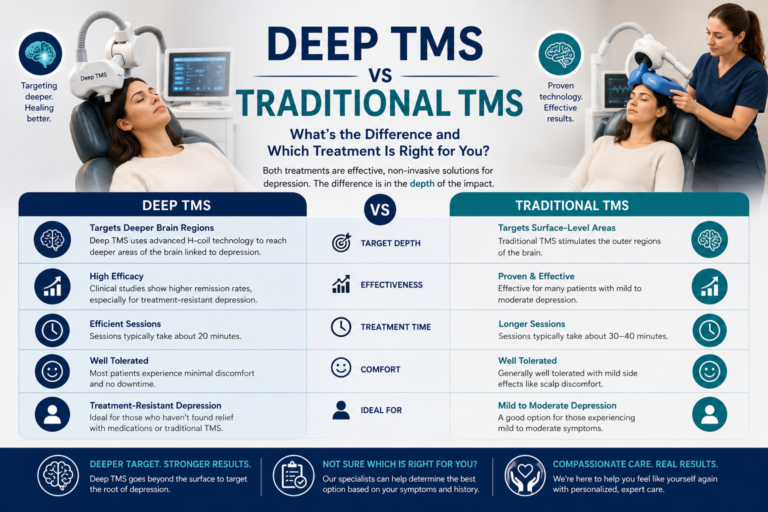
Traditional TMS typically uses figure-eight coils designed to stimulate specific cortical regions.
Deep TMS uses patented H-Coil technology engineered to reach broader and deeper brain networks.
Depth Of Stimulation
One of the most discussed differences involves treatment depth.
Deep TMS was specifically developed to stimulate deeper neural structures while maintaining patient comfort.
Coverage Area
Traditional TMS often focuses on targeted brain regions.
Deep TMS can stimulate wider neural networks involved in mental health conditions.
FDA-Cleared Applications
Deep TMS has received FDA clearance for multiple conditions, including:
• Major Depressive Disorder
• Obsessive-Compulsive Disorder (OCD)
• Smoking Addiction
Additional clinical research continues exploring other potential applications.
Why Patients Often Compare These Treatments
Patients researching treatment options are usually not interested in technology alone.
They want answers to practical questions.
Will this treatment help me?
What will the experience be like?
How soon could I notice improvement?
What option may be most appropriate for my situation?
These are valid questions.
The answer often depends on individual factors including:
• Diagnosis
• Treatment history
• Symptom severity
• Medical background
• Provider recommendations
This is why a personalized consultation remains one of the most important steps before beginning any treatment plan.
What Does Treatment Feel Like?
Many first-time patients worry that magnetic stimulation may be uncomfortable.
In reality, both traditional TMS and Deep TMS are generally well tolerated by many patients.
During treatment, individuals often describe feeling:
• Light tapping sensations
• Gentle stimulation
• Rhythmic pulses
Sessions are performed while patients remain awake.
No anesthesia is required.
No hospitalization is required.
And most patients return to their normal routine immediately afterward.
This convenience has contributed significantly to the growing adoption of TMS-based therapies.
Why Mental Health Treatment Is Becoming More Personalized
The future of mental health care is moving toward personalization.
Rather than applying the same treatment approach to every patient, providers increasingly consider:
• Individual symptoms
• Treatment history
• Brain-based interventions
• Lifestyle factors
• Patient preferences
Deep TMS represents part of this evolution.
Patients who once felt they had exhausted available options may now have access to innovative treatments designed around advances in neuroscience and brain stimulation technology.
For many individuals, simply knowing additional options exist can provide an important sense of hope.
The Growing Role Of Deep TMS In Modern Psychiatry
Mental health professionals continue searching for ways to help patients who have not found success through traditional treatments.
As research expands, Deep TMS has become an increasingly important tool within modern psychiatric care.
The treatment offers:
• A non-invasive approach
• No systemic medication effects
• Outpatient convenience
• Evidence-based technology
• Targeted brain stimulation
For patients experiencing treatment-resistant depression or OCD, these advantages have made Deep TMS an option worth discussing with qualified healthcare providers.
The decision should always be guided by a comprehensive clinical evaluation, but awareness of available treatment choices empowers patients to take a more active role in their mental health journey.
How Long Does Treatment Typically Take?
One of the first questions patients ask after learning about Deep TMS is:
“How long will the treatment process take?”
While every treatment plan is personalized, both traditional TMS and Deep TMS typically involve multiple sessions over several weeks.
This is because brain stimulation therapy works gradually.
Just as physical therapy requires repeated sessions to strengthen muscles and restore movement, TMS-based treatments rely on consistent stimulation to support changes within neural networks.
Many patients begin noticing improvements during treatment, while others may require additional time before significant changes occur.
Factors that may influence response include:
• Severity of symptoms
• Duration of illness
• Previous treatment history
• Individual brain chemistry
• Treatment consistency
The important thing to understand is that progress often happens gradually rather than overnight.
Which Treatment Is More Effective?
This is perhaps the most searched question among patients researching TMS therapies.
The reality is that effectiveness depends on the individual patient.
There is no universal answer that applies to everyone.
What works well for one person may not produce the same outcome for another.
Mental health treatment has always been highly individualized.
The goal of any evaluation is to determine which treatment option aligns best with a patient’s specific diagnosis, symptoms, and treatment history.
Rather than focusing solely on which treatment is “better,” patients should focus on which treatment may be most appropriate for their unique circumstances.
This is why consultations with qualified mental health professionals remain essential.
Can Deep TMS Help Patients With OCD?
While many people associate TMS with depression treatment, Deep TMS has also gained attention for its role in treating Obsessive-Compulsive Disorder (OCD).
OCD is a complex condition characterized by:
• Intrusive thoughts
• Obsessions
• Repetitive behaviors
• Compulsions
• Significant emotional distress
For some individuals, traditional treatment approaches may not provide sufficient symptom relief.
Deep TMS offers another option that targets brain networks associated with OCD symptoms.
As awareness continues growing, more patients are asking mental health providers whether Deep TMS may be appropriate as part of a comprehensive OCD treatment plan.
Understanding Potential Side Effects
Whenever patients explore a new treatment option, safety naturally becomes a major consideration.
Fortunately, both traditional TMS and Deep TMS are generally considered non-invasive procedures.
Many patients tolerate treatment well.
Some individuals may experience:
• Mild scalp discomfort
• Temporary headache
• Tingling sensations
• Sensitivity around the treatment area
These effects are often temporary and may decrease as treatment continues.
Compared with some medication-related side effects, many patients appreciate that TMS therapies do not involve systemic drug exposure.
However, every patient is unique.
A professional evaluation remains important before beginning treatment.
Is Deep TMS Covered By Insurance?
Cost concerns often prevent patients from exploring potentially beneficial treatments.
The good news is that insurance coverage for Deep TMS has expanded considerably.
Many insurance providers now recognize the value of advanced treatment options for qualifying patients.
Coverage often depends on factors such as:
• Diagnosis
• Treatment history
• Previous medication trials
• Clinical eligibility
Because every insurance plan differs, patients should verify benefits directly with their treatment provider.
Many individuals are surprised to discover that treatment may be more accessible than they originally assumed.
Who May Be A Candidate For Deep TMS?
Not every patient requires Deep TMS.
However, certain individuals may benefit from an evaluation.
Potential candidates often include people who:
• Have Major Depressive Disorder
• Experience treatment-resistant depression
• Have OCD symptoms
• Have not achieved adequate improvement with medication
• Cannot tolerate medication side effects
• Are interested in non-invasive treatment options
Eligibility is always determined through a clinical assessment performed by a qualified provider.
The purpose of the evaluation is to ensure that treatment recommendations align with the patient’s needs and goals.
Why More Patients Are Exploring Brain-Based Treatments
The conversation around mental health treatment is changing.
Patients today are becoming more informed.
They are asking better questions.
They are researching treatment options.
And they are seeking personalized approaches rather than one-size-fits-all solutions.
This shift has increased interest in brain-based therapies such as Deep TMS.
Instead of repeatedly trying treatments that may not be producing results, patients are exploring alternatives supported by advances in neuroscience.
For many individuals, this represents an opportunity to move forward with renewed optimism.
Frequently Asked Questions
What is the main difference between Deep TMS and traditional TMS?
Deep TMS uses specialized H-Coil technology designed to stimulate broader and deeper neural networks compared to traditional TMS systems.
Is Deep TMS FDA-cleared?
Yes. Deep TMS has received FDA clearance for several conditions, including Major Depressive Disorder and Obsessive-Compulsive Disorder.
Does Deep TMS require anesthesia?
No. Patients remain awake and alert throughout treatment.
Can I drive after a Deep TMS session?
Most patients can return to their normal daily activities immediately after treatment.
Can Deep TMS help treatment-resistant depression?
Many patients with treatment-resistant depression explore Deep TMS when traditional treatment approaches have not provided adequate relief.
How long does a Deep TMS session take?
Treatment sessions are generally brief and performed in an outpatient setting.
Is Deep TMS painful?
Most patients describe the treatment as manageable, though some may experience mild discomfort during early sessions.
Does insurance cover Deep TMS?
Many insurance providers offer coverage for qualifying patients, though eligibility requirements vary.
Can Deep TMS be used for OCD?
Yes. Deep TMS has been FDA-cleared for OCD and is increasingly used as part of comprehensive treatment plans.
Who should consider a Deep TMS consultation?
Individuals struggling with depression, OCD, or symptoms that have not improved through traditional treatments may benefit from a professional evaluation.
Conclusion
As mental health treatment continues evolving, patients have access to more options than ever before.
Both traditional TMS and Deep TMS represent important advances in non-invasive brain stimulation therapy.
While both approaches share the goal of improving mental health symptoms, Deep TMS introduces technology designed to stimulate broader and deeper neural networks associated with conditions such as depression and OCD.
The most important step is not choosing a treatment based solely on online research.
It is speaking with qualified professionals who can evaluate individual needs, review treatment history, and recommend the most appropriate path forward.
For many patients who have struggled to find relief, simply knowing additional options exist can be an important source of hope.
About Sunny Skies Healthcare
Sunny Skies Healthcare provides personalized psychiatric care and advanced treatment solutions for patients experiencing depression, OCD, and other mental health conditions.
Through comprehensive evaluations, evidence-based therapies, and innovative treatment options such as Deep TMS, Sunny Skies Healthcare helps individuals explore pathways toward improved mental wellness and long-term recovery.