
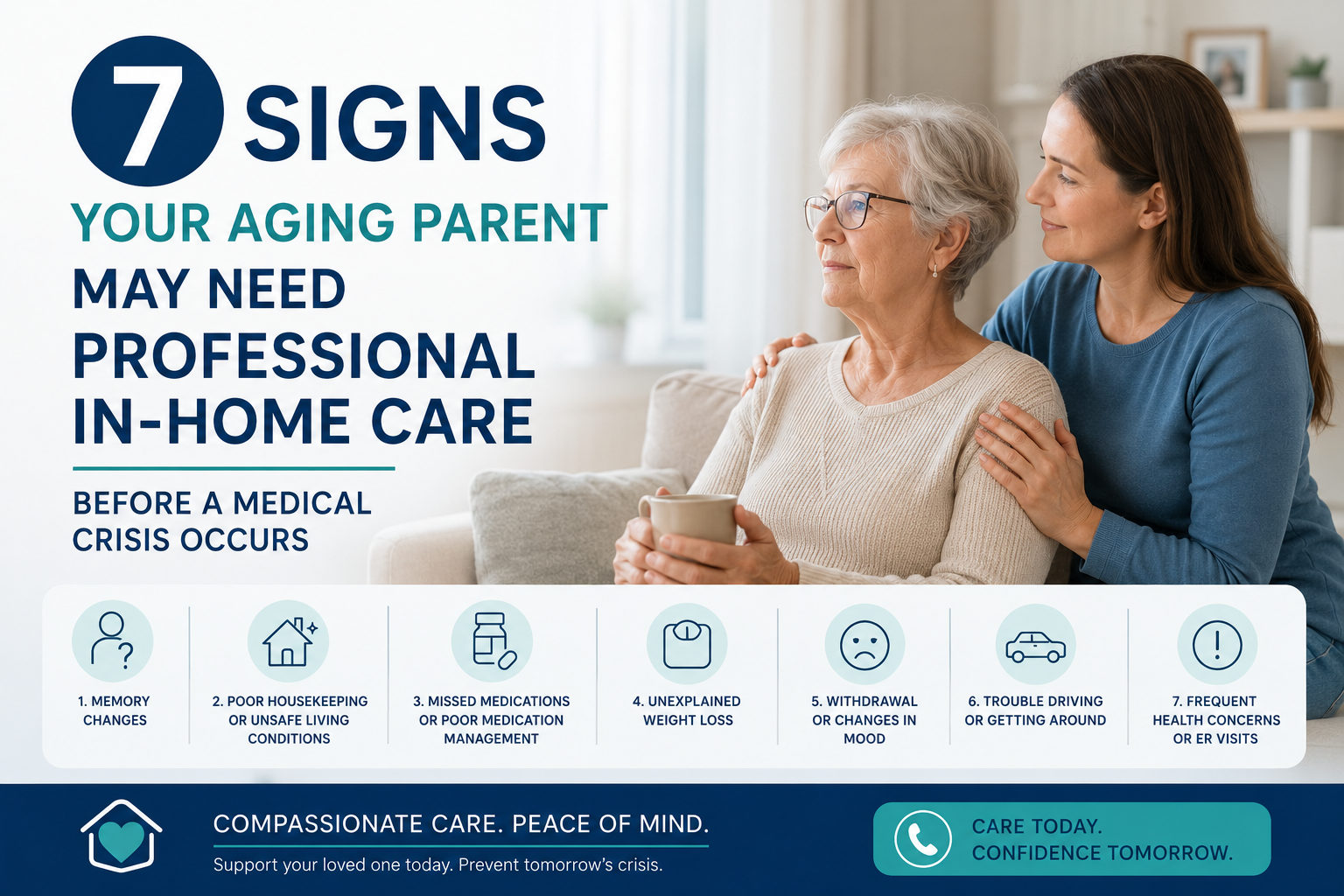
Many families assume they will immediately recognize when an aging parent needs help.
Unfortunately, that is rarely how the situation unfolds.
In most cases, changes happen gradually.
A missed medication here.
A forgotten appointment there.
A small fall that seems insignificant.
A refrigerator that suddenly contains expired food.
Individually, these situations may not appear alarming.
Together, however, they often indicate that an older adult may be struggling to manage daily life safely and independently.
One of the biggest mistakes families make is waiting for a crisis before exploring care options.
A serious fall.
A hospitalization.
A medical emergency.
A sudden decline in health.
By the time these events occur, the situation may have already become much more difficult to manage.
Professional in-home care is often most effective when introduced before a major crisis happens.
The goal is not to take away independence.
The goal is to help seniors maintain independence, safety, and quality of life for as long as possible.
Recognizing the warning signs early can help families make informed decisions and provide support before small challenges become serious problems.
Why Families Often Miss The Early Signs
Many older adults work hard to maintain their independence.
They may not want to worry their children.
They may feel uncomfortable asking for help.
Some seniors become skilled at hiding difficulties because they do not want to lose control over their daily lives.
As a result, family members may only notice problems after they have progressed significantly.
This is one reason regular observation becomes so important.
Changes in behavior, appearance, routines, and overall well-being often provide valuable clues about whether additional support may be needed.
Sign #1: Increasing Falls Or Mobility Challenges
Falls remain one of the leading causes of injury-related hospitalizations among older adults.
Even when a fall does not result in a serious injury, it should never be ignored.
Warning signs may include:
• Unexplained bruises
• Difficulty standing up
• Trouble climbing stairs
• Holding onto furniture while walking
• Fear of walking without assistance
• Reduced confidence with mobility
Many seniors begin limiting activities after experiencing mobility challenges.
This can lead to reduced physical activity, social isolation, and declining health.
Professional caregivers can help reduce fall risks by providing mobility assistance, monitoring safety concerns, and helping seniors remain active within their capabilities.
Sign #2: Medication Mistakes And Missed Doses
Managing medications becomes increasingly complex with age.
Many seniors take multiple prescriptions that require specific schedules and dosages.
Unfortunately, medication errors are common.
Family members may notice:
• Missed doses
• Duplicate doses
• Confusion about medications
• Unopened prescriptions
• Expired medications
• Missed refills
These issues can have serious consequences.
Medication errors can contribute to falls, hospitalizations, complications from chronic conditions, and avoidable health emergencies.
Professional in-home care providers can help seniors stay organized through medication reminders and routine monitoring.
Sign #3: Declining Personal Hygiene
Changes in personal hygiene often signal that daily tasks are becoming more difficult.
This can occur for many reasons.
Mobility limitations.
Arthritis.
Cognitive decline.
Depression.
Or general physical weakness.
Common warning signs include:
• Wearing the same clothes repeatedly
• Noticeable body odor
• Poor grooming habits
• Unwashed hair
• Neglected oral hygiene
• Difficulty bathing safely
These changes should not be dismissed as a normal part of aging.
They often indicate that additional support may be necessary.
In-home caregivers can assist with personal care while helping seniors maintain dignity and independence.
Sign #4: Household Tasks Are Being Neglected
A person’s home often reveals changes that family members may not immediately recognize elsewhere.
When daily responsibilities become overwhelming, the living environment may begin reflecting that struggle.
Families should pay attention to:
• Piles of unopened mail
• Dirty dishes accumulating
• Laundry left undone
• Clutter creating safety hazards
• Expired food in the refrigerator
• Missed bill payments
These issues may indicate that an aging parent is finding it increasingly difficult to manage routine responsibilities.
Professional caregivers can provide assistance with household tasks while helping seniors maintain a safer and more comfortable living environment.
Why Early Intervention Matters
One of the most important lessons families learn is that waiting rarely makes situations easier.
Small challenges often become larger challenges over time.
A minor balance issue can become a serious fall.
Occasional forgetfulness can become medication noncompliance.
A few missed meals can contribute to malnutrition and declining health.
Introducing support early often allows seniors to remain independent longer.
It also provides families with greater peace of mind.
Rather than reacting to emergencies, families can proactively create a care plan that supports long-term well-being.
The earlier concerns are identified, the more options families typically have available.
Sign #5: Memory Problems And Cognitive Changes
Occasional forgetfulness is a normal part of aging.
However, persistent memory problems may indicate a deeper issue.
Families should pay attention to changes that affect daily functioning rather than isolated moments of forgetfulness.
Potential warning signs include:
• Missing important appointments
• Frequently repeating questions
• Getting lost in familiar places
• Difficulty following conversations
• Confusion about dates or times
• Trouble managing finances
• Increased vulnerability to scams
Cognitive decline can make everyday tasks significantly more challenging.
Seniors may struggle to remember medications, prepare meals, or follow healthcare instructions.
Professional caregivers can provide routine, structure, and supervision that help seniors remain safe while maintaining as much independence as possible.
Sign #6: Social Isolation And Loneliness
One of the most overlooked signs that a senior may need support is increasing social isolation.
Many older adults experience major life changes that affect their social connections.
Retirement.
Loss of friends.
Reduced mobility.
Health challenges.
Transportation limitations.
Over time, these factors can lead to loneliness and isolation.
This issue goes far beyond emotional well-being.
Research consistently links social isolation to:
• Increased depression
• Anxiety
• Higher blood pressure
• Poor sleep quality
• Reduced physical activity
• Faster cognitive decline
• Increased dementia risk
Many families focus only on physical care needs.
However, emotional health is equally important.
Professional caregivers often provide companionship, conversation, social engagement, and emotional support that can significantly improve a senior’s quality of life.
Sometimes the presence of a caring and consistent companion can make a remarkable difference.
Sign #7: Frequent Health Issues Or Preventable Hospitalizations
Many hospital visits among older adults are linked to problems that could potentially be reduced through proper support and monitoring.
Some of the most common causes include:
• Falls and injuries
• Medication mistakes
• Dehydration
• Malnutrition
• Chronic disease complications
• Missed medical appointments
• Delayed treatment of emerging health issues
These situations often begin with small warning signs.
A senior forgets to drink enough water.
A prescription is missed.
Symptoms go unnoticed.
Without intervention, minor issues can quickly become medical emergencies.
Professional in-home caregivers provide an additional layer of observation.
They often notice changes in behavior, appetite, mobility, or health that family members may not immediately see.
Early identification can help families seek medical attention before a condition becomes more serious.
When Family Caregiving Becomes Overwhelming
Many adult children want to provide care themselves.
This comes from a place of love and commitment.
However, caregiving can become physically, emotionally, and mentally demanding.
Family caregivers frequently juggle:
• Careers
• Children
• Household responsibilities
• Personal health concerns
• Financial obligations
While also trying to support an aging parent.
Over time, this can lead to caregiver burnout.
Common signs include:
• Chronic stress
• Fatigue
• Anxiety
• Sleep problems
• Emotional exhaustion
• Feelings of guilt
Many families wait until burnout becomes severe before seeking help.
Professional in-home care can provide valuable relief.
Even a few hours of support each week can reduce stress while ensuring that seniors receive consistent care and attention.
Why Aging In Place Continues To Be A Preferred Choice
Most seniors want to remain in their own homes for as long as possible.
This preference is often referred to as aging in place.
Remaining at home offers several advantages:
• Familiar surroundings
• Established routines
• Greater independence
• Stronger community connections
• Emotional comfort
Professional home care helps make aging in place more realistic and sustainable.
Instead of forcing seniors to leave their homes prematurely, families can introduce support that adapts as needs change.
This approach often creates better outcomes for both seniors and their loved ones.
The Benefits Of Addressing Care Needs Early
Many families delay conversations about care because they feel uncomfortable.
Unfortunately, postponing these discussions often limits available options.
Early planning provides several advantages.
Families can:
• Evaluate care options carefully
• Build trust with caregivers
• Create personalized care plans
• Reduce emergency situations
• Improve overall quality of life
The best time to explore support is often before it becomes urgently necessary.
Proactive planning allows families to make decisions from a position of confidence rather than crisis.
Frequently Asked Questions
What are the biggest signs that an aging parent needs in-home care?
Common warning signs include falls, medication mistakes, memory problems, declining hygiene, social isolation, difficulty managing household tasks, and increasing health concerns.
When should families consider professional home care?
Families should consider home care when daily activities become difficult, safety concerns emerge, or caregiving responsibilities become overwhelming.
Can home care help prevent hospitalizations?
Professional caregivers can help reduce risks by supporting medication management, monitoring health changes, encouraging hydration, assisting with mobility, and helping seniors follow care plans.
How does companionship care help seniors?
Companionship care provides social interaction, emotional support, mental stimulation, and meaningful engagement that can improve overall well-being.
Is social isolation harmful to seniors?
Yes. Social isolation has been linked to depression, cognitive decline, cardiovascular problems, and reduced quality of life.
Can home care help seniors remain independent?
Absolutely. The goal of home care is often to support independence by helping seniors safely manage daily activities within their own homes.
What causes caregiver burnout?
Caregiver burnout often results from prolonged stress, emotional demands, lack of support, and balancing multiple responsibilities simultaneously.
What services do professional home care providers offer?
Services may include personal care, companionship, meal preparation, medication reminders, transportation assistance, light housekeeping, and support with daily activities.
Why do many seniors prefer aging in place?
Many seniors feel more comfortable in familiar surroundings and value the independence, routines, and emotional connection associated with remaining at home.
How can families start the conversation about care?
The best approach is usually open, respectful communication focused on safety, independence, and quality of life rather than limitations.
Conclusion
Recognizing the signs that an aging parent may need additional support is not always easy.
Changes often happen gradually.
What begins as a few missed medications or minor mobility issues can eventually lead to more serious challenges if left unaddressed.
The good news is that families do not need to wait for a crisis before seeking help.
Professional in-home care can provide support, companionship, safety, and peace of mind while helping seniors maintain the independence they value.
By paying attention to early warning signs and taking proactive steps, families can create a safer and more comfortable future for their loved ones.
Often, the most effective care begins long before an emergency occurs.
About Sunny Skies Healthcare
Sunny Skies Healthcare provides compassionate in-home care services designed to help seniors maintain independence, dignity, and quality of life in the comfort of their own homes.
From personal care and companionship to daily living support and caregiver assistance, Sunny Skies Healthcare works closely with families to create personalized care plans that meet each individual’s unique needs.