For decades, assisted living communities were often viewed as the default solution when older adults needed additional support.
Today, that mindset is changing.
Across the United States, more families are exploring alternatives that allow seniors to remain in the comfort of their own homes while receiving the assistance they need.
This approach is commonly known as aging in place.
Rather than relocating to a residential care facility, seniors receive personalized support within their existing home environment.
For many families, the appeal is easy to understand.
Home represents familiarity.
Comfort.
Independence.
And a lifetime of memories.
As home care services continue evolving, aging in place has become a realistic option for a growing number of older adults.
The conversation is no longer simply about where care is provided.
It is about how care impacts quality of life, independence, emotional well-being, and long-term health outcomes.
What Does Aging In Place Mean?
Aging in place refers to the ability of older adults to remain safely and comfortably in their own homes as they age.
Rather than moving into an assisted living community or nursing facility, seniors receive support services that help them continue living independently.
These services may include:
• Personal care assistance
• Companionship care
• Meal preparation
• Medication reminders
• Transportation support
• Light housekeeping
• Mobility assistance
• Daily living support
The level of care can be adjusted as needs change over time.
This flexibility is one of the reasons aging in place has become increasingly popular.
Why Most Seniors Prefer Staying At Home
When researchers ask older adults where they want to live as they age, the answer is remarkably consistent.
Most seniors prefer to remain at home.
The reasons extend far beyond convenience.
Home provides:
• Familiar surroundings
• Established routines
• Emotional comfort
• Community connections
• Greater independence
• Personal freedom
Moving into a new environment can be emotionally challenging.
Seniors may leave behind neighbors, routines, and spaces that hold decades of memories.
Remaining at home helps preserve continuity and stability during a stage of life that often involves significant change.
The Emotional Benefits Of Aging In Place
One of the most significant advantages of aging in place is emotional well-being.
A familiar environment can help reduce stress and anxiety.
Seniors often feel more comfortable making decisions, maintaining routines, and participating in activities they enjoy when they remain in their own homes.
This sense of control matters.
Maintaining independence can contribute to:
• Higher life satisfaction
• Improved confidence
• Better emotional health
• Stronger sense of identity
• Reduced feelings of displacement
For many older adults, home is not simply a location.
It represents security, familiarity, and personal history.
In-Home Care Provides Personalized Support
One of the biggest differences between aging in place and assisted living is the level of personalization.
In-home care focuses on the individual.
Care plans can be tailored to a person’s specific needs, preferences, and schedule.
This may include assistance with:
• Bathing and grooming
• Dressing
• Meal preparation
• Transportation
• Medication reminders
• Household tasks
• Companionship
Rather than adapting to a facility schedule, support is designed around the senior’s lifestyle.
This personalized approach often improves both comfort and satisfaction.
Comparing Aging In Place And Assisted Living
Families often find themselves comparing two primary options.
Aging in place with home care.
Or assisted living.
Both can provide valuable support.
However, there are important differences.
| Aging In Place | Assisted Living |
| Remain in familiar surroundings | Move into a residential facility |
| One-on-one personalized support | Shared staff attention |
| Flexible schedules | Structured daily routines |
| Maintain existing community ties | New social environment |
| Care adapts to individual needs | Standardized service models |
| Greater control over daily activities | Facility-based policies and schedules |
The right choice depends on individual circumstances.
However, many families find that aging in place offers a level of flexibility and personalization that is difficult to replicate elsewhere.
Why Independence Matters So Much
Independence remains one of the strongest priorities for older adults.
Many seniors worry that accepting help means giving up control.
In reality, professional home care often helps preserve independence rather than reduce it.
Support allows seniors to continue performing many activities while receiving assistance where necessary.
Instead of replacing independence, home care helps protect it.
This shift in perspective is one reason more families are embracing aging in place.
Family Involvement Often Becomes Easier
When a loved one remains at home, family members often find it easier to stay involved in daily life.
Visits can feel more natural.
Schedules remain familiar.
Family traditions can continue without major disruption.
Professional caregivers also help reduce pressure on family members by providing support that complements, rather than replaces, family involvement.
This creates a collaborative approach to care that benefits everyone involved.
Why Aging In Place Continues To Grow In Popularity
Several factors are contributing to the growing popularity of aging in place.
These include:
• Longer life expectancy
• Advances in home care services
• Greater focus on personalized care
• Increased desire for independence
• Improved technology supporting home-based care
Families today have more options than ever before.
As a result, aging in place is becoming an increasingly attractive solution for seniors who want to maintain both independence and quality of life.
The decision ultimately depends on each family’s unique circumstances.
However, for many older adults, remaining at home while receiving professional support offers the ideal balance between safety, comfort, and independence.
Understanding The Financial Differences Between Aging In Place And Assisted Living
Cost is often one of the biggest factors families consider when evaluating care options.
Many people automatically assume that aging in place is always less expensive than assisted living.
The reality is more nuanced.
The total cost depends on:
• The level of care required
• The number of support hours needed
• The senior’s health condition
• Existing living arrangements
• Local care costs
For seniors who require only part-time assistance, aging in place can often be a highly cost-effective solution.
Families pay only for the support they need.
This may include:
• A few hours of personal care
• Transportation assistance
• Meal preparation
• Companionship services
• Household support
As care needs increase, costs naturally rise.
However, many families still value the flexibility that home care provides because services can be adjusted based on changing circumstances.
Rather than paying for a full residential care model, support can be customized around the individual’s actual needs.
Looking Beyond Cost Alone
While financial considerations are important, they are rarely the only factor influencing a family’s decision.
Many families ultimately focus on questions such as:
• Where will my loved one be happiest?
• Which option provides the most independence?
• What environment feels safest?
• How can we maintain quality of life?
• What level of family involvement is possible?
The answers vary from one situation to another.
This is why the decision between aging in place and assisted living should never be based solely on monthly expenses.
Quality of life often becomes the deciding factor.
How Social Isolation Affects Senior Health
One topic receiving increasing attention among healthcare professionals is social isolation.
Loneliness is not simply an emotional challenge.
It can also affect physical and cognitive health.
Research continues to connect social isolation with:
• Depression
• Anxiety
• Cognitive decline
• Increased dementia risk
• Cardiovascular problems
• Poor sleep quality
• Reduced physical activity
Many seniors experience isolation gradually.
Mobility limitations make it harder to leave the house.
Friends relocate or pass away.
Family members become busy with work and other responsibilities.
Over time, social interaction may become less frequent.
Unfortunately, prolonged isolation can have serious consequences.
This is one reason companionship care has become such an important component of modern home care services.
Why Companionship Care Matters
Families often think of home care primarily in terms of physical assistance.
While personal care is important, emotional well-being deserves equal attention.
Companionship care focuses on creating meaningful social interaction and engagement.
This may include:
• Conversation
• Shared meals
• Walks
• Games and activities
• Transportation to community events
• Accompaniment to appointments
• Emotional support
Regular social interaction provides mental stimulation and helps seniors maintain a sense of connection.
For many older adults, companionship becomes one of the most valuable aspects of receiving care at home.
Aging In Place Supports Independence
One of the primary reasons seniors prefer aging in place is the ability to maintain control over daily life.
Within their own homes, older adults can often continue:
• Following familiar routines
• Choosing meal schedules
• Participating in favorite activities
• Spending time with neighbors
• Maintaining personal preferences
These seemingly small freedoms contribute significantly to overall well-being.
Assisted living communities provide important services.
However, they often operate according to facility schedules and procedures.
Home care allows support to adapt around the individual rather than requiring the individual to adapt to the environment.
How Home Care Reduces Family Caregiver Stress
Family caregiving can be deeply rewarding.
It can also be incredibly demanding.
Many caregivers balance:
• Careers
• Parenting responsibilities
• Household obligations
• Financial commitments
• Personal health needs
While simultaneously caring for an aging loved one.
This balancing act can become overwhelming.
Over time, chronic stress may contribute to:
• Burnout
• Anxiety
• Fatigue
• Sleep problems
• Emotional exhaustion
Professional home care provides families with valuable support.
Caregivers gain time to rest, manage responsibilities, and focus on their own well-being while knowing their loved one is receiving quality care.
This often improves outcomes for both the senior and the family.
The Future Of Senior Care Is Becoming More Personalized
The senior care industry continues evolving.
Families increasingly seek care solutions that are:
• Flexible
• Personalized
• Relationship-focused
• Adaptable
• Centered on individual preferences
Aging in place aligns naturally with these priorities.
Rather than applying a one-size-fits-all model, home care can evolve alongside a senior’s changing needs.
Support may begin with companionship and transportation.
Later, additional services can be added as circumstances change.
This flexibility helps seniors maintain independence while ensuring appropriate support remains available.
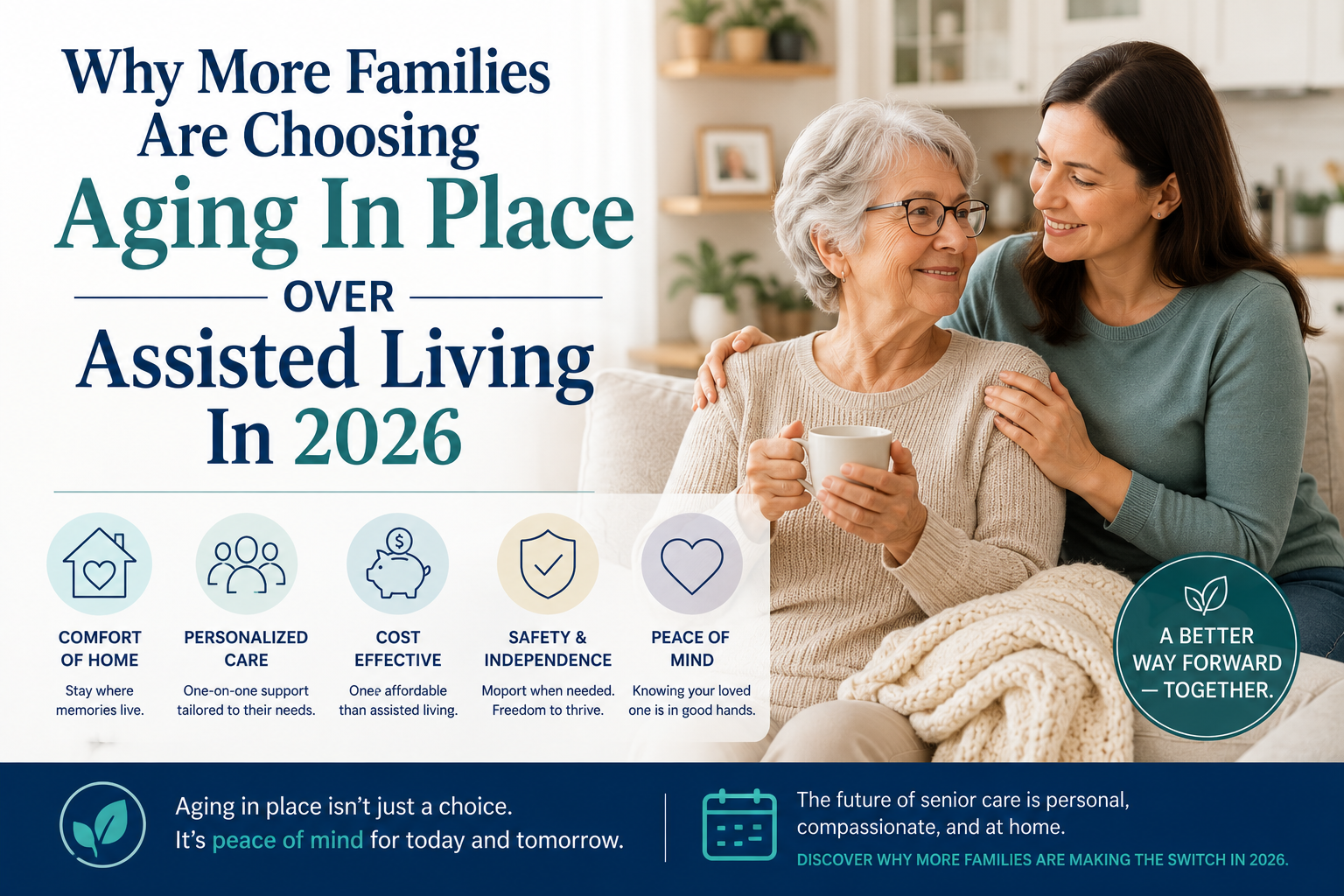
Why More Families Are Choosing Aging In Place
The growing popularity of aging in place reflects a larger shift in how families think about aging.
People want options.
They want flexibility.
And they want care solutions that support both safety and independence.
For many seniors, remaining at home provides:
• Greater comfort
• Familiar surroundings
• Personalized support
• Stronger family connections
• Improved emotional well-being
Combined with professional home care, aging in place often offers a balance that many families find appealing.
Frequently Asked Questions
What does aging in place mean?
Aging in place refers to remaining in one’s own home while receiving the support necessary to live safely and comfortably as needs change over time.
Why do many seniors prefer aging in place?
Most seniors value familiarity, independence, established routines, and the emotional comfort associated with remaining at home.
Is aging in place less expensive than assisted living?
It depends on the level of care required. For many seniors needing part-time assistance, aging in place can be more cost-effective, while extensive care needs may change the financial comparison.
What services are included in home care?
Services often include personal care, companionship, meal preparation, transportation, medication reminders, light housekeeping, and support with daily activities.
How does companionship care help seniors?
Companionship care provides social interaction, emotional support, mental stimulation, and meaningful engagement that can improve overall quality of life.
Can aging in place help reduce loneliness?
Yes. Professional caregivers often provide regular companionship and social interaction that help reduce isolation and support emotional well-being.
Does home care help family caregivers?
Absolutely. Professional support can reduce caregiver stress, prevent burnout, and provide families with peace of mind.
Is home care personalized?
Yes. Care plans are typically customized to match the individual’s needs, preferences, schedule, and goals.
When should families consider aging in place?
Families often begin exploring aging in place when a loved one needs assistance with daily activities but wishes to remain independent at home.
Can home care needs change over time?
Yes. One of the advantages of home care is flexibility. Services can increase or decrease as circumstances evolve.
Conclusion
Choosing between aging in place and assisted living is one of the most important decisions many families will face.
While every situation is unique, more families are discovering that professional home care can provide a powerful combination of independence, safety, flexibility, and personalized support.
Aging in place allows seniors to remain connected to their homes, communities, and routines while receiving the assistance they need to maintain quality of life.
For many families, that balance makes all the difference.
As senior care continues to evolve, aging in place is likely to remain one of the most preferred and effective care options available.
About Sunny Skies Healthcare
Sunny Skies Healthcare provides compassionate in-home care services that help seniors maintain independence, dignity, and comfort in their own homes.
From companionship and personal care to daily living support and caregiver assistance, Sunny Skies Healthcare partners with families to create personalized care plans that support both safety and quality of life.