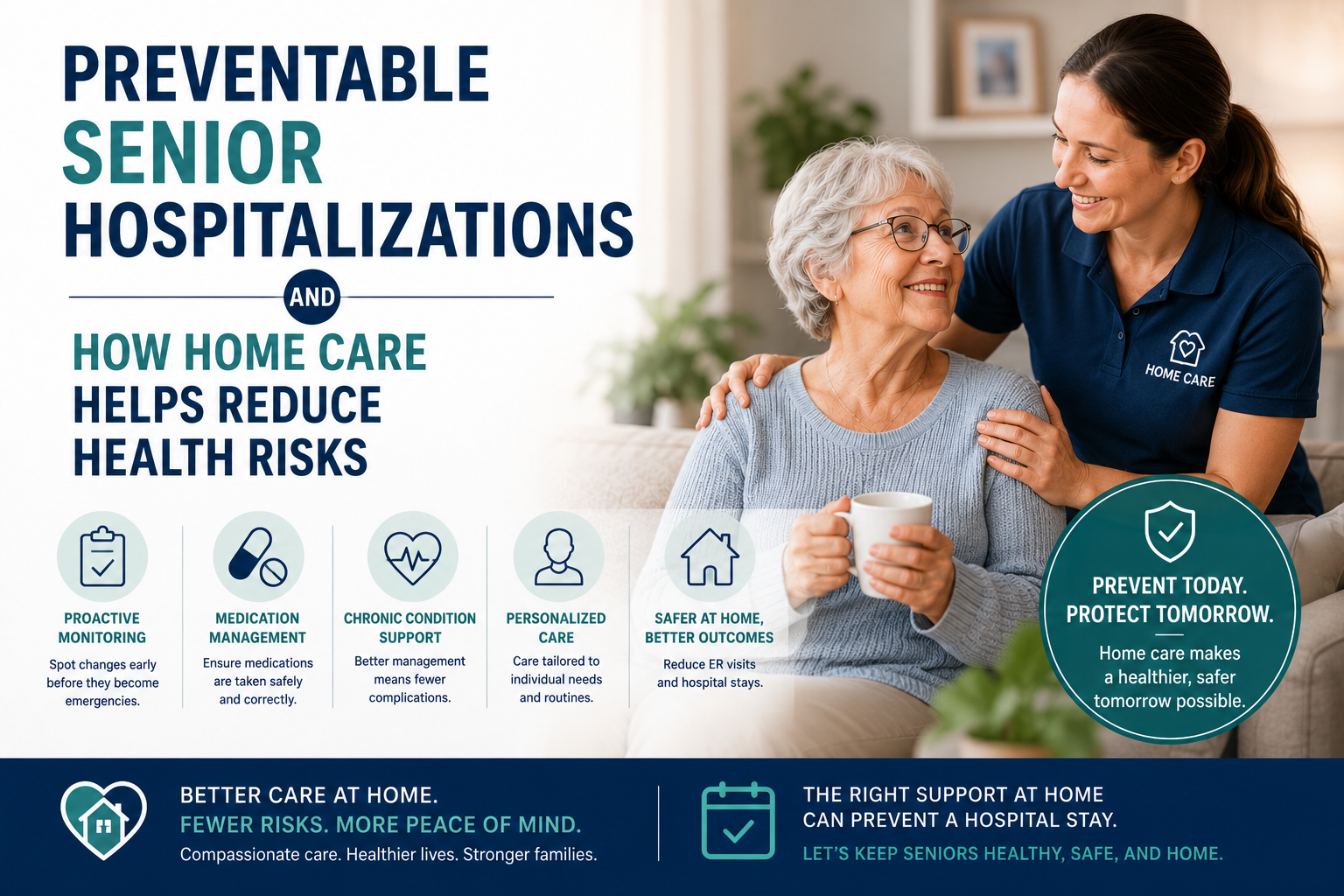
Hospitalizations can be life-changing events for older adults.
While some hospital admissions are unavoidable, many occur because of health issues that could potentially have been detected, managed, or prevented earlier.
For seniors, a hospital stay often involves more than treating an immediate medical concern.
Hospitalizations can lead to:
• Reduced mobility
• Increased fall risk
• Longer recovery periods
• Higher healthcare costs
• Emotional stress
• Loss of independence
For families, an unexpected hospitalization can be frightening and overwhelming.
Many wonder afterward whether there were warning signs they missed.
The reality is that numerous senior hospital admissions are linked to challenges that develop gradually over time.
Medication errors.
Falls.
Poor nutrition.
Dehydration.
Missed medical appointments.
Chronic disease complications.
These issues often begin as small problems before turning into medical emergencies.
Professional home care can play a critical role in reducing these risks.
By providing regular observation, daily support, and personalized assistance, caregivers often identify concerns before they become serious enough to require hospitalization.
Why Hospitalizations Are More Serious For Older Adults
As people age, recovery becomes more complicated.
A younger individual may recover from an illness or injury relatively quickly.
Older adults often face additional challenges.
Hospital stays may contribute to:
• Muscle loss
• Reduced strength
• Increased confusion
• Sleep disruption
• Reduced independence
• Greater risk of future health complications
Even a short hospitalization can have lasting effects.
This is why healthcare professionals increasingly focus on prevention whenever possible.
Helping seniors remain healthy and safe at home can reduce many avoidable health crises.
Understanding Preventable Hospitalizations
A preventable hospitalization occurs when a health issue escalates to the point of requiring emergency care but might have been avoided through earlier intervention.
While not every hospitalization can be prevented, many common causes are linked to factors that can be monitored and managed at home.
Examples include:
• Falls
• Medication mistakes
• Dehydration
• Malnutrition
• Chronic disease complications
• Infections
• Missed follow-up care
Professional caregivers often serve as an additional layer of support that helps identify these risks early.
Falls Remain One Of The Leading Causes Of Hospitalization
Falls are one of the most common reasons older adults visit emergency departments.
A fall may result in:
• Broken hips
• Fractures
• Head injuries
• Loss of mobility
• Long-term disability
Unfortunately, fall risks often increase gradually.
Seniors may experience:
• Muscle weakness
• Balance issues
• Vision changes
• Medication side effects
• Environmental hazards
Family members may not always recognize these warning signs.
Professional caregivers frequently assist with mobility and monitor for changes that increase fall risk.
They may also identify safety concerns such as:
• Loose rugs
• Poor lighting
• Cluttered walkways
• Unsafe bathroom conditions
Addressing these issues early can significantly improve safety.
Medication Errors Can Quickly Become Medical Emergencies
Medication management becomes increasingly complex as individuals age.
Many seniors take multiple prescriptions every day.
Even minor mistakes can lead to serious complications.
Common medication-related issues include:
• Missed doses
• Duplicate doses
• Incorrect timing
• Drug interactions
• Confusion about prescriptions
Medication errors can contribute to:
• Dizziness
• Falls
• Blood pressure problems
• Hospital admissions
• Emergency room visits
Home care providers often help seniors maintain consistent medication routines through reminders and monitoring.
This additional oversight can reduce the likelihood of potentially dangerous mistakes.
Dehydration Is More Dangerous Than Many Families Realize
Dehydration is one of the most overlooked health risks among older adults.
As people age, the sensation of thirst often decreases.
Some seniors simply do not realize they need additional fluids.
Others avoid drinking because they worry about frequent bathroom trips.
Dehydration can contribute to:
• Weakness
• Confusion
• Dizziness
• Urinary tract infections
• Falls
• Hospitalization
Professional caregivers often monitor hydration habits throughout the day and encourage healthy fluid intake.
This simple intervention can have a meaningful impact on overall health.
Poor Nutrition Increases Health Risks
Nutrition plays a major role in maintaining health and preventing illness.
Unfortunately, many seniors struggle to prepare balanced meals.
Common challenges include:
• Difficulty cooking
• Grocery shopping limitations
• Reduced appetite
• Memory problems
• Physical limitations
Poor nutrition may contribute to:
• Weight loss
• Fatigue
• Weak immune function
• Increased infection risk
• Delayed healing
Caregivers can assist with meal planning, grocery shopping, meal preparation, and monitoring eating habits.
Consistent nutrition often supports stronger overall health outcomes.
Chronic Disease Management Requires Daily Attention
Many older adults live with chronic conditions such as:
• Diabetes
• Heart disease
• COPD
• Arthritis
• Hypertension
Managing these conditions successfully often requires daily consistency.
Missing medications.
Ignoring symptoms.
Skipping appointments.
Poor dietary choices.
These factors can contribute to worsening health and emergency hospital visits.
Professional caregivers help support treatment plans and encourage adherence to physician recommendations.
They may also notice subtle changes that suggest a condition is becoming more serious.
Early intervention often prevents larger complications.
Infections Can Escalate Quickly In Older Adults
Infections are another common reason seniors require hospitalization.
Conditions such as:
• Pneumonia
• Respiratory infections
• Wound infections
• Urinary tract infections
can become serious very quickly.
Older adults sometimes experience unusual symptoms.
For example, a urinary tract infection may present as confusion rather than pain.
Without regular observation, these warning signs may go unnoticed.
Home caregivers frequently identify changes in behavior, appetite, energy levels, or physical condition that suggest a developing infection.
Prompt medical attention can often prevent hospitalization.
Missed Medical Appointments Create Additional Risks
Regular medical care plays an important role in preventing serious health complications.
However, many seniors struggle with:
• Transportation challenges
• Memory issues
• Scheduling confusion
• Mobility limitations
Missed appointments can delay diagnosis and treatment.
Caregivers often assist by:
• Scheduling appointments
• Providing transportation
• Tracking follow-up visits
• Supporting communication with healthcare providers
This helps ensure seniors remain connected to the medical care they need.
The Value Of Daily Observation
One of the greatest benefits of professional home care is something many families overlook.
Observation.
Caregivers spend time with seniors on a regular basis.
As a result, they often notice subtle changes before anyone else.
For example:
• Reduced appetite
• Increased fatigue
• Changes in walking patterns
• New confusion
• Mood changes
• Difficulty breathing
These early warning signs frequently appear long before a medical emergency develops.
Daily observation allows concerns to be addressed quickly and appropriately.
How Home Care Supports Recovery After Hospital Discharge
One of the most vulnerable periods for seniors occurs immediately after leaving the hospital.
Many older adults return home with:
• New medications
• Updated treatment plans
• Follow-up appointments
• Mobility limitations
• Increased care needs
Unfortunately, the transition from hospital to home can be challenging.
Research consistently shows that many readmissions occur within the first few weeks following discharge.
Common reasons include:
• Medication confusion
• Missed follow-up care
• Falls
• Poor nutrition
• Lack of support
Professional home care helps bridge this gap.
Caregivers can assist seniors during recovery while helping families navigate new routines and healthcare recommendations.
This additional support often improves confidence and reduces stress for everyone involved.
Why The First 72 Hours Matter
Healthcare professionals frequently emphasize the importance of the first few days after discharge.
During this period, seniors may still be adjusting to:
• New prescriptions
• Physical limitations
• Pain management
• Rehabilitation plans
• Lifestyle modifications
Without adequate support, small mistakes can quickly become serious problems.
For example:
A missed medication dose.
A skipped follow-up appointment.
A fall while attempting daily activities.
These situations can increase the likelihood of readmission.
Home caregivers help monitor daily routines and provide practical assistance that promotes safer recovery.
The Connection Between Social Support And Better Health Outcomes
Health is not determined solely by medical treatment.
Social support also plays a significant role.
Seniors who feel isolated often experience:
• Increased stress
• Reduced motivation
• Depression
• Poor medication adherence
• Lower activity levels
Companionship care addresses these challenges by providing meaningful interaction and emotional support.
A caregiver may assist with daily activities, but they also provide conversation, encouragement, and human connection.
These seemingly simple interactions can positively influence both physical and emotional well-being.
Preventing Hospitalizations Through Routine Monitoring
Many serious medical events develop gradually.
Symptoms often appear long before an emergency occurs.
Unfortunately, seniors who live alone may not recognize these warning signs.
Even when symptoms are noticed, they may be ignored or minimized.
Professional caregivers frequently observe:
• Changes in appetite
• Altered sleep patterns
• Increased fatigue
• Reduced mobility
• Mood changes
• Signs of confusion
Because caregivers spend time with seniors regularly, they often recognize patterns that indicate a developing problem.
Early communication with family members and healthcare providers can lead to faster intervention and better outcomes.
The Importance Of Personalized Care Plans
Every senior has unique needs.
A person recovering from surgery may require different support than someone living with heart disease or dementia.
This is why personalized care plans are so important.
Professional home care services are often tailored based on:
• Health conditions
• Physical limitations
• Cognitive status
• Family involvement
• Personal preferences
• Daily routines
Rather than applying a one-size-fits-all approach, caregivers provide support that reflects the individual’s circumstances.
This personalized attention often improves both safety and quality of life.
How Home Care Helps Family Caregivers
When discussing hospitalization prevention, it is important to recognize the role of family caregivers.
Many adult children serve as primary caregivers for aging parents.
While they provide invaluable support, the responsibilities can become overwhelming.
Family caregivers often manage:
• Medication schedules
• Appointments
• Transportation
• Household responsibilities
• Emotional support
• Medical communication
Over time, these demands may lead to burnout.
Caregiver burnout can contribute to stress, exhaustion, and decreased ability to provide consistent care.
Professional home care offers relief by sharing responsibilities and providing dependable support.
This benefits both the senior and the family.
Common Warning Signs Families Should Never Ignore
Many preventable hospitalizations are preceded by subtle warning signs.
Families should pay attention to:
Physical Changes
• Frequent falls
• Unexplained bruises
• Weight loss
• Weakness
• Difficulty walking
Cognitive Changes
• Increased confusion
• Forgetfulness
• Missed medications
• Difficulty following conversations
Behavioral Changes
• Social withdrawal
• Loss of interest in activities
• Mood swings
• Increased anxiety
Household Changes
• Spoiled food
• Unopened mail
• Missed bill payments
• Poor housekeeping
These indicators often suggest that additional support may be needed.
Early intervention frequently prevents more serious complications.
Why Prevention Is Better Than Crisis Management
Many families begin researching home care after an emergency occurs.
However, prevention is often more effective than reacting to a crisis.
Proactive support can help:
• Maintain independence
• Improve health outcomes
• Reduce emergency room visits
• Lower hospitalization risks
• Improve quality of life
• Reduce caregiver stress
By addressing concerns early, families can avoid many of the challenges associated with unexpected health emergencies.
Frequently Asked Questions
What are the most common preventable causes of senior hospitalization?
Falls, medication errors, dehydration, malnutrition, chronic disease complications, infections, and missed medical care are among the most common causes.
Can home care really reduce hospitalization risks?
Professional caregivers help monitor health, support daily routines, and identify concerns early, which may reduce certain preventable risks.
Why are falls such a major concern for seniors?
Falls can lead to fractures, head injuries, reduced mobility, and long recovery periods that often require hospitalization.
How does home care help with medication management?
Caregivers provide reminders, support routines, and help reduce confusion surrounding medications.
Can dehydration cause hospitalization?
Yes. Dehydration can contribute to confusion, weakness, dizziness, infections, and other serious health complications.
How does home care support chronic disease management?
Caregivers encourage treatment adherence, support healthy routines, and monitor for changes that may require medical attention.
Why are infections more dangerous for older adults?
Older adults may experience atypical symptoms and often have weaker immune responses, allowing infections to become serious quickly.
Can companionship care improve health?
Social interaction and emotional support can positively affect mental well-being, activity levels, and overall quality of life.
What should families watch for after a hospital discharge?
Medication confusion, falls, reduced mobility, poor nutrition, and missed follow-up appointments are important concerns.
When should families consider professional home care?
Families should explore home care when daily activities become challenging, health risks increase, or caregiving responsibilities become difficult to manage alone.
Conclusion
Many senior hospitalizations are caused by issues that develop slowly over time.
Falls.
Medication mistakes.
Poor nutrition.
Dehydration.
Chronic disease complications.
Infections.
These challenges often begin as manageable concerns before escalating into medical emergencies.
Professional home care provides an important layer of support that helps seniors remain safer, healthier, and more independent.
Through routine monitoring, personalized assistance, and proactive intervention, caregivers frequently identify warning signs before they become serious problems.
For families, this support offers reassurance and peace of mind.
For seniors, it provides the opportunity to continue aging in place while receiving the care and attention needed to maintain health and quality of life.
The goal is not simply avoiding hospitalization.
The goal is helping older adults live safer, healthier, and more fulfilling lives every day.