Everyone experiences sadness.
It is a natural part of being human.
Life brings challenges, disappointments, losses, and difficult moments that can trigger emotional pain. Whether it’s the end of a relationship, the loss of a loved one, financial stress, workplace challenges, or personal setbacks, sadness is a normal emotional response to life’s circumstances.
Most people can identify moments when they have felt sad.
Perhaps it lasted a few hours.
Maybe a few days.
Sometimes even a few weeks after a significant event.
Yet despite feeling emotionally painful, sadness is generally considered a healthy and expected reaction.
Depression is different.
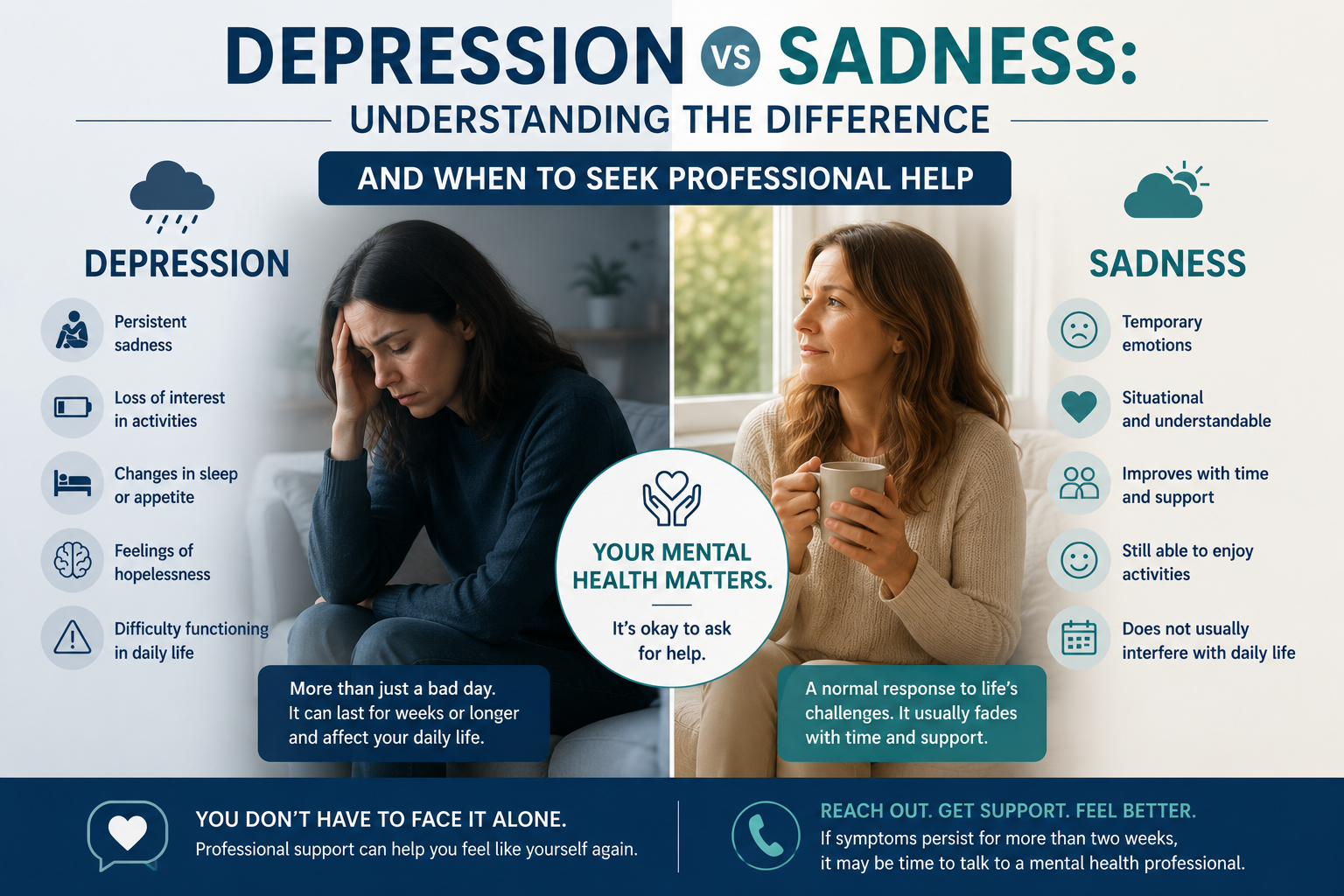
While depression may include sadness, it extends far beyond feeling temporarily down or emotionally affected by a difficult situation.
Depression is a medical condition that can impact thoughts, emotions, behaviors, physical health, relationships, and overall quality of life.
One of the challenges many individuals face is recognizing the difference between normal sadness and clinical depression.
People often dismiss symptoms as stress.
Others assume they simply need to “push through” difficult emotions.
Some wait months or even years before seeking professional help.
Understanding the distinction between sadness and depression is an important first step toward recognizing when additional support may be beneficial.
Mental health conditions are common, treatable, and nothing to be ashamed of.
The more people understand these conditions, the more likely they are to seek help when they need it.
What Is Sadness?
Sadness is a normal human emotion.
It typically occurs in response to a specific event, experience, or situation.
Common triggers include:
• Relationship difficulties
• Family conflicts
• Work challenges
• Disappointment
• Loss
• Personal setbacks
• Major life changes
Sadness serves an important psychological purpose.
It allows people to process difficult experiences and adapt to changing circumstances.
Although sadness can feel intense, it often improves gradually with time.
Support from friends, family members, and healthy coping strategies frequently helps individuals recover.
Importantly, sadness does not usually prevent someone from functioning entirely.
A person may still:
• Attend work
• Maintain relationships
• Enjoy positive moments
• Look forward to future events
• Experience emotional ups and downs
The presence of sadness alone does not necessarily indicate depression.
What Is Depression?
Depression is a mental health disorder that affects far more than mood.
It can influence nearly every aspect of daily life.
Unlike temporary sadness, depression often persists for extended periods and may occur even when no obvious trigger exists.
Depression can affect:
• Emotions
• Thoughts
• Motivation
• Energy levels
• Sleep
• Appetite
• Physical health
• Relationships
• Work performance
Many individuals with depression describe feeling emotionally numb rather than simply sad.
Some report feeling disconnected from activities they once enjoyed.
Others struggle with overwhelming fatigue, hopelessness, or difficulty concentrating.
Depression is not a sign of weakness.
It is not laziness.
And it is not something a person can simply “snap out of.”
Like many medical conditions, depression often requires appropriate treatment and support.
Why People Confuse Depression And Sadness
The confusion is understandable.
Depression and sadness share certain similarities.
Both can involve:
• Tearfulness
• Emotional pain
• Low mood
• Reduced motivation
However, the intensity, duration, and overall impact are often very different.
A person experiencing sadness may still find comfort in positive experiences.
Someone with depression may struggle to experience pleasure even during activities they once loved.
This distinction becomes particularly important when symptoms begin interfering with daily life.
Common Symptoms Of Depression
Depression affects individuals differently.
Symptoms may vary from person to person.
However, several signs frequently appear.
Persistent Low Mood
A depressed mood often lasts most of the day and continues for weeks or longer.
Loss Of Interest
Activities that once felt enjoyable may no longer bring satisfaction.
Examples include:
• Hobbies
• Social events
• Exercise
• Family activities
• Career goals
Fatigue
Many people with depression experience significant physical and mental exhaustion.
Even simple tasks may feel overwhelming.
Changes In Sleep
Sleep disturbances are common.
Some individuals experience:
• Insomnia
• Difficulty staying asleep
• Early waking
Others may sleep excessively.
Appetite Changes
Depression may lead to:
• Reduced appetite
• Increased appetite
• Weight loss
• Weight gain
Difficulty Concentrating
People often report:
• Brain fog
• Reduced focus
• Memory difficulties
• Trouble making decisions
Feelings Of Hopelessness
Negative thoughts about the future frequently accompany depression.
Low Self-Worth
Individuals may become highly self-critical or experience feelings of guilt.
When several of these symptoms persist for an extended period, professional evaluation may be appropriate.
The Physical Effects Of Depression
Many people think of depression as purely emotional.
In reality, depression often creates physical symptoms as well.
These may include:
• Headaches
• Digestive problems
• Muscle tension
• Fatigue
• Sleep disturbances
• Chronic pain
Researchers increasingly recognize the strong connection between mental and physical health.
Depression can affect the entire body.
Likewise, physical health challenges can sometimes contribute to depression.
This relationship highlights the importance of comprehensive healthcare approaches.
What Causes Depression?
Depression rarely results from a single cause.
Instead, multiple factors often contribute.
Biological Factors
Brain chemistry may play a role.
Neurotransmitters help regulate mood and emotional functioning.
Genetics
Family history can influence depression risk.
Having a close relative with depression does not guarantee someone will develop it, but it may increase vulnerability.
Life Events
Certain experiences may contribute to depression, including:
• Trauma
• Grief
• Chronic stress
• Relationship difficulties
• Financial hardship
Medical Conditions
Some physical health conditions can influence mood and mental health.
Lifestyle Factors
Sleep, exercise, nutrition, and social connection can all affect emotional well-being.
Understanding these contributing factors helps healthcare providers develop effective treatment plans.
When Should Someone Seek Professional Help?
Many individuals wonder whether their symptoms are severe enough to justify professional support.
A useful guideline is to consider how symptoms affect daily functioning.
Seeking help may be appropriate when:
• Symptoms persist for several weeks
• Daily responsibilities become difficult
• Relationships are affected
• Work performance declines
• Motivation disappears
• Feelings of hopelessness increase
• Emotional distress becomes overwhelming
Early intervention often improves outcomes.
People do not need to wait until symptoms become severe before seeking support.
Mental health care can be beneficial at many stages.
Why Early Treatment Matters
One of the biggest misconceptions surrounding depression is the belief that symptoms will simply disappear with enough willpower.
While some emotional struggles improve naturally, untreated depression can sometimes worsen over time.
Early treatment may help:
• Reduce symptom severity
• Improve quality of life
• Strengthen relationships
• Restore functioning
• Prevent symptom progression
Mental health professionals work with individuals to identify appropriate treatment options based on their unique needs and circumstances.
Depression Is More Common Than Many People Realize
Millions of people experience depression each year.
Despite its prevalence, stigma sometimes prevents individuals from seeking help.
People may fear judgment.
They may worry others will not understand.
They may believe asking for help represents weakness.
The opposite is often true.
Recognizing symptoms and seeking appropriate support demonstrates self-awareness and strength.
Mental health deserves the same level of attention and care as physical health.
When people receive proper treatment, many experience significant improvement and regain a sense of balance, purpose, and well-being.
How Depression Is Diagnosed
One of the most common concerns people have is whether what they are experiencing is actually depression.
A proper diagnosis begins with a comprehensive evaluation conducted by a qualified mental health professional.
During an assessment, providers often discuss:
• Current symptoms
• Emotional experiences
• Medical history
• Family history
• Sleep patterns
• Stress levels
• Lifestyle habits
• Previous treatment experiences
The goal is not simply to assign a label.
The goal is to understand the whole person and identify factors contributing to their symptoms.
Because depression can affect individuals differently, treatment plans are often personalized.
What Happens During A Psychiatric Evaluation?
Many people feel nervous before meeting with a psychiatrist for the first time.
This is completely normal.
However, psychiatric evaluations are typically conversational and designed to help providers gain a deeper understanding of a person’s experiences.
A psychiatrist may ask questions about:
Emotional Well-Being
Including:
• Mood changes
• Stress levels
• Emotional challenges
• Daily functioning
Physical Health
Mental and physical health are closely connected.
Providers may review:
• Medical conditions
• Current medications
• Sleep patterns
• Physical symptoms
Personal History
Understanding life experiences can provide valuable context for current symptoms.
Treatment Goals
Every individual has unique goals.
Some may want symptom relief.
Others may seek improved relationships, better sleep, or increased emotional resilience.
The evaluation helps establish a roadmap for treatment and recovery.
Treatment Options For Depression
Depression treatment is not one-size-fits-all.
Effective care often depends on symptom severity, individual preferences, and overall health.
Several evidence-based approaches are commonly used.
Psychotherapy
Talk therapy helps individuals:
• Understand thoughts and emotions
• Develop coping skills
• Improve communication
• Address negative thinking patterns
Therapy remains one of the most effective tools for managing depression.
Medication Management
For some individuals, medication may be recommended as part of treatment.
Psychiatrists carefully evaluate:
• Symptoms
• Medical history
• Previous treatment responses
• Potential side effects
Medication management involves ongoing monitoring and adjustments when necessary.
The goal is always to find the safest and most effective approach for each person.
Combined Treatment Approaches
Research often shows that combining multiple treatment strategies can be highly effective.
Examples include:
• Therapy and medication
• Lifestyle changes and therapy
• Advanced treatments alongside traditional care
This comprehensive approach addresses multiple aspects of mental health simultaneously.
Understanding Medication Management
Medication management is an important component of psychiatric care for many individuals.
Unfortunately, there are numerous misconceptions surrounding psychiatric medications.
Some people worry that medication changes who they are.
Others fear becoming dependent.
In reality, medication management is a carefully monitored process designed to support symptom improvement while prioritizing safety.
Psychiatrists evaluate:
• Medication effectiveness
• Side effects
• Dosage adjustments
• Long-term treatment goals
Regular follow-up appointments help ensure treatment remains appropriate as needs evolve.
Medication is not the right solution for everyone, but for many individuals it can play a valuable role in recovery.
What Is Deep TMS Therapy?
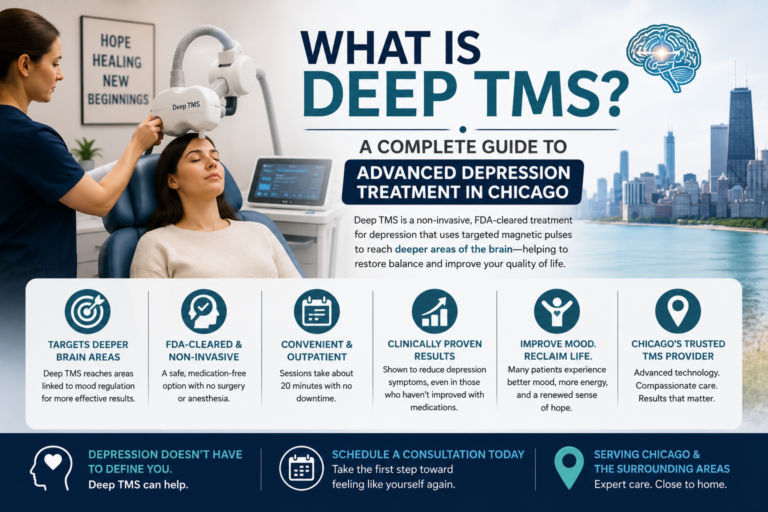
One of the most exciting advances in mental health treatment is Deep Transcranial Magnetic Stimulation (Deep TMS).
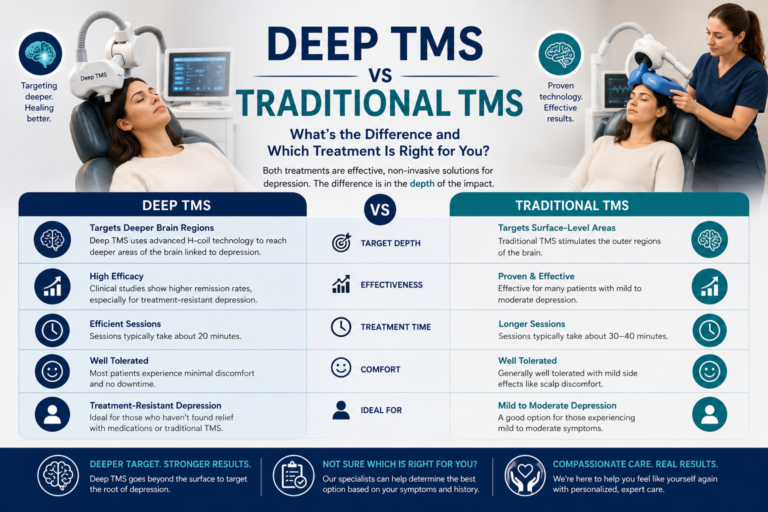
Deep TMS is a non-invasive treatment that uses magnetic pulses to stimulate specific areas of the brain associated with mood regulation.
Unlike surgical procedures, Deep TMS does not require:
• Anesthesia
• Incisions
• Hospitalization
Patients remain awake and alert during treatment sessions.
Deep TMS has gained attention because it offers another option for individuals who may not have experienced sufficient improvement through traditional treatments alone.
How Does Deep TMS Work?
The brain contains complex networks involved in emotional processing and mood regulation.
Deep TMS uses targeted magnetic stimulation to influence these neural pathways.
During treatment:
• A specialized helmet-like device is positioned on the patient’s head
• Magnetic pulses are delivered to targeted brain regions
• Sessions are conducted in a clinical setting
• Patients can resume normal activities afterward
The procedure is designed to be comfortable and non-invasive.
Many individuals appreciate that treatment does not require downtime.
Potential Benefits Of Deep TMS For Depression
Deep TMS has become an important treatment option for many individuals struggling with depression.
Potential benefits may include:
• Improvement in depressive symptoms
• Enhanced mood
• Better daily functioning
• Increased motivation
• Improved quality of life
• Non-invasive treatment approach
• No anesthesia required
• Ability to continue daily activities after sessions
For some patients, Deep TMS offers hope when previous treatments have not produced desired results.
A mental health professional can determine whether Deep TMS may be an appropriate option based on individual circumstances.
How Long Does Deep TMS Treatment Take?
Treatment schedules vary depending on individual needs and provider recommendations.
Many treatment programs involve:
• Multiple sessions per week
• Several weeks of treatment
• Ongoing monitoring of progress
Each session is generally relatively brief.
Providers evaluate outcomes throughout the treatment process and adjust recommendations as needed.
Patients often appreciate the structured and manageable nature of treatment schedules.
The Connection Between Sleep And Mental Health
Sleep plays a critical role in emotional well-being.
Poor sleep can contribute to:
• Increased stress
• Irritability
• Reduced concentration
• Mood changes
• Emotional vulnerability
At the same time, depression can also interfere with sleep.
This creates a cycle where sleep difficulties and mental health symptoms reinforce one another.
Improving sleep habits often becomes an important component of comprehensive treatment plans.
Healthy sleep practices may include:
• Maintaining consistent sleep schedules
• Reducing screen exposure before bed
• Creating a relaxing bedtime routine
• Limiting caffeine late in the day
Small improvements in sleep quality can have meaningful effects on emotional health.
Lifestyle Habits That Support Brain Health
Mental health is influenced by many aspects of daily life.
While professional treatment may be necessary for depression, lifestyle habits can also support overall well-being.
Regular Physical Activity
Exercise has been associated with improved mood and reduced stress.
Balanced Nutrition
Nutritious foods provide fuel for both the body and brain.
Social Connection
Supportive relationships contribute significantly to emotional health.
Stress Management
Healthy coping strategies can reduce the impact of daily stressors.
Consistent Sleep
Quality sleep remains one of the most important foundations of mental wellness.
These habits are not replacements for professional treatment when needed, but they can complement broader care plans.
Why Seeking Help Is A Sign Of Strength
Many people delay treatment because they worry about how others may perceive them.
Unfortunately, mental health stigma continues to exist.
Yet seeking help demonstrates courage, not weakness.
Just as individuals seek medical care for physical conditions, mental health concerns deserve professional attention.
Early intervention often improves outcomes and can help individuals regain control over their lives sooner.
No one should feel they must face depression alone.
Support is available.
Treatment works.
Recovery is possible.
Frequently Asked Questions
Sadness is a normal emotional response to life events, while depression is a medical condition that affects mood, thoughts, behavior, and daily functioning.
Sadness often improves as circumstances change and individuals process their emotions.
If symptoms persist for several weeks, interfere with daily life, or create significant distress, professional evaluation may be beneficial.
Yes. Many individuals experience significant improvement through therapy, medication management, lifestyle changes, and other evidence-based treatments.
A psychiatrist reviews symptoms, medical history, lifestyle factors, and treatment goals to develop an individualized care plan.
Deep TMS is a non-invasive treatment that uses magnetic stimulation to target brain regions associated with mood regulation.
Deep TMS has received regulatory clearance for specific mental health conditions and treatment indications.
Yes. Sleep and mental health are closely connected, and sleep difficulties can contribute to emotional challenges.
Exercise, nutrition, sleep, stress management, and social connection all influence emotional well-being.
No. Seeking help is a proactive step toward improving health and well-being.
Conclusion
Understanding the difference between sadness and depression is essential for recognizing when additional support may be needed.
Sadness is a natural part of life.
Depression is a medical condition that can affect every aspect of a person’s emotional, physical, and social well-being.
Fortunately, depression is highly treatable.
Through psychiatric evaluations, therapy, medication management, lifestyle support, and advanced treatments such as Deep TMS, individuals have access to more resources than ever before.
The most important step is recognizing that help is available.
No one needs to navigate depression alone.
With appropriate care and support, recovery is possible, hope can return, and individuals can move forward toward healthier and more fulfilling lives.