Many people experience periods of stress, sadness, worry, or emotional challenges throughout life.
These experiences are normal.
However, there are times when emotional or mental health concerns become more persistent and begin affecting daily life.
When this happens, professional support may be beneficial.
Unfortunately, many individuals delay seeking help because they are unsure whether their symptoms are serious enough.
Others believe they should simply “push through” their struggles on their own.
The reality is that mental health concerns deserve the same attention as physical health concerns.
Just as people visit a doctor when physical symptoms interfere with daily life, seeking support for emotional well-being can be an important step toward feeling better.
One of the most common questions people ask is:
“How do I know if I should see a psychiatrist?”
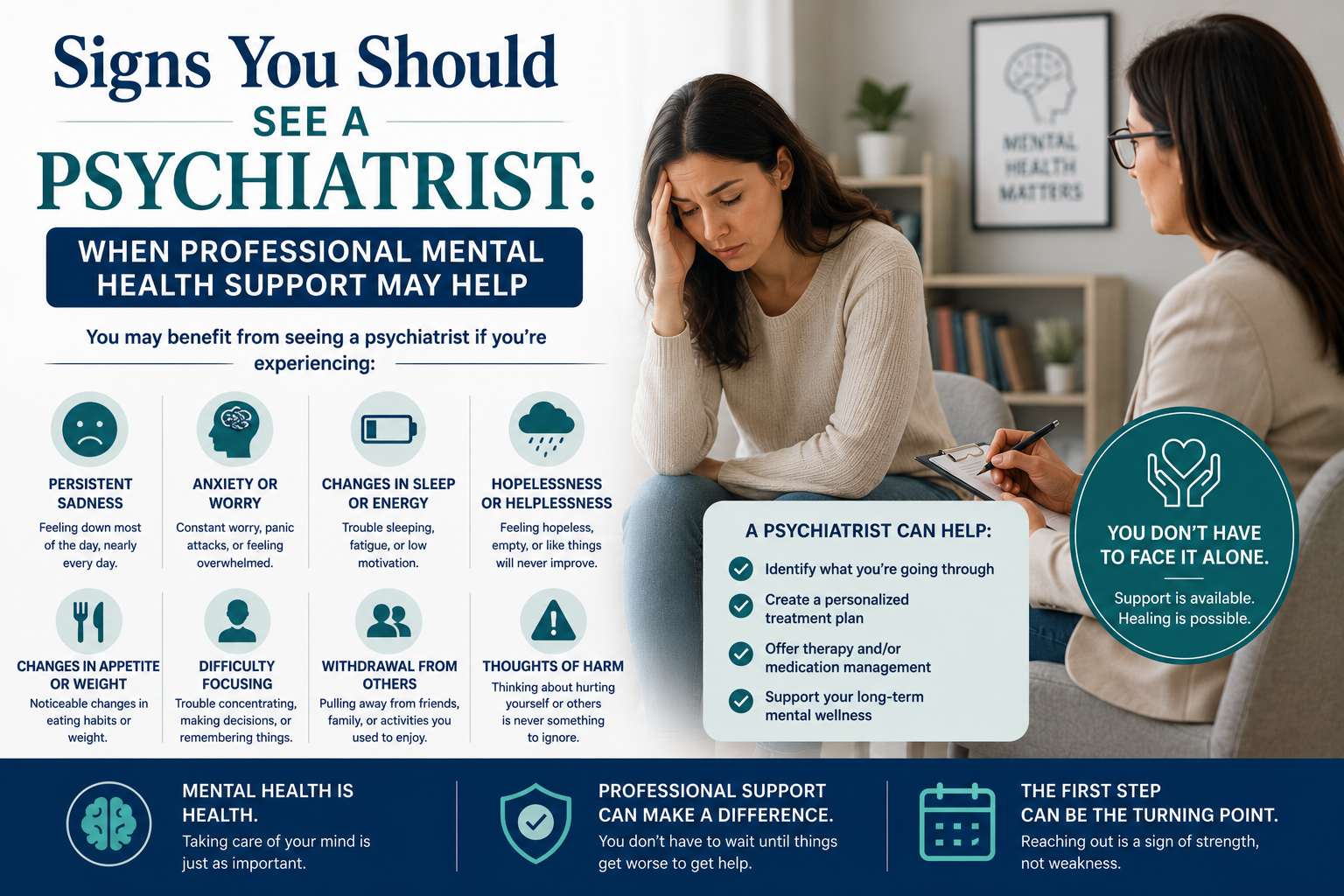
The answer varies from person to person, but there are several common signs that may indicate professional evaluation could be helpful.
Understanding The Role Of A Psychiatrist
Before discussing warning signs, it is important to understand what a psychiatrist does.
Psychiatrists are medical professionals who specialize in mental health.
They evaluate, diagnose, and help manage a variety of mental health conditions.
Their work may involve:
- Mental health evaluations
- Diagnosis
- Treatment planning
- Medication management
- Ongoing support
Psychiatrists often work alongside therapists, counselors, and other healthcare professionals to provide comprehensive care.
Mental Health Challenges Are More Common Than Many People Realize
Mental health concerns affect people from all backgrounds.
Students.
Professionals.
Parents.
Retirees.
Mental health challenges do not discriminate.
Many individuals experience periods where emotional difficulties begin affecting:
- Work performance
- School responsibilities
- Relationships
- Physical health
- Daily functioning
Recognizing these challenges early can help individuals seek support before symptoms become more disruptive.
Persistent Feelings Of Sadness
Everyone experiences sadness from time to time.
However, persistent sadness may indicate a deeper concern.
Warning signs may include:
- Feeling down most days
- Losing interest in activities
- Feeling emotionally numb
- Difficulty finding enjoyment in life
When these feelings continue for weeks or longer, it may be helpful to speak with a mental health professional.
Excessive Anxiety And Constant Worry
Stress is a normal part of life.
Anxiety becomes more concerning when it feels overwhelming or difficult to control.
Signs may include:
- Constant worry
- Racing thoughts
- Difficulty relaxing
- Restlessness
- Feeling on edge most of the time
When anxiety begins interfering with daily activities, professional evaluation may provide valuable insight and support.
Significant Changes In Sleep Patterns
Sleep and mental health are closely connected.
Changes in sleep can sometimes be an early indicator of emotional distress.
Examples include:
Difficulty Falling Asleep
Struggling to quiet the mind at night.
Frequent Waking
Interrupted sleep throughout the night.
Sleeping Excessively
Needing significantly more sleep than usual.
Feeling Unrested
Waking up tired despite getting enough sleep.
Persistent sleep issues may warrant further evaluation.
Difficulty Concentrating
Many mental health conditions can affect focus and concentration.
Individuals may notice:
- Trouble completing tasks
- Difficulty staying organized
- Problems remembering information
- Reduced productivity
These symptoms can affect work, school, and personal responsibilities.
Increased Irritability
Mental health concerns do not always present as sadness.
Sometimes individuals become:
- Easily frustrated
- More reactive
- Short-tempered
- Emotionally overwhelmed
Increased irritability may be a sign that emotional stress is becoming difficult to manage.
Loss Of Interest In Activities
One common warning sign is losing interest in activities that were once enjoyable.
This may include:
- Hobbies
- Social events
- Exercise
- Family activities
When people begin withdrawing from activities they previously enjoyed, it may indicate an underlying mental health concern.
Changes In Daily Functioning
Mental health symptoms often affect everyday life.
Warning signs may include:
Workplace Challenges
Difficulty maintaining productivity or focus.
Academic Struggles
Problems completing assignments or concentrating in class.
Relationship Difficulties
Increased conflict or social withdrawal.
Household Responsibilities
Difficulty managing daily routines.
When symptoms begin interfering with normal functioning, professional support may be beneficial.
Frequent Feelings Of Overwhelm
Many people describe feeling emotionally overwhelmed before seeking help.
They may feel unable to manage:
- Responsibilities
- Stress
- Relationships
- Daily demands
Over time, these feelings can become exhausting.
A psychiatrist can help identify contributing factors and explore treatment options.
Physical Symptoms Without Clear Medical Causes
Mental health concerns sometimes appear as physical symptoms.
Examples may include:
- Headaches
- Fatigue
- Muscle tension
- Digestive issues
While physical symptoms should always be evaluated medically, emotional stress can sometimes contribute to these experiences.
Persistent Stress That Never Seems To Go Away
Stress is a normal response to life’s challenges.
However, chronic stress can affect overall well-being.
Individuals experiencing ongoing stress may notice:
- Emotional exhaustion
- Difficulty relaxing
- Constant worry
- Reduced enjoyment of life
Professional support can help individuals develop strategies for managing stress more effectively.
Why Early Intervention Matters
Many people wait until symptoms become severe before seeking help.
However, early intervention often provides several benefits.
Potential advantages include:
- Earlier support
- Better symptom management
- Improved daily functioning
- Greater quality of life
Seeking help early does not mean symptoms are severe.
It simply means someone is taking proactive steps to support their mental health.
Mental Health Is Just As Important As Physical Health
One reason people hesitate to seek psychiatric support is stigma.
Fortunately, attitudes toward mental health continue improving.
Today, more people recognize that emotional wellness is an essential part of overall health.
Seeking help is not a sign of weakness.
It is a sign of self-awareness and a commitment to personal well-being.
When Anxiety May Require Professional Support
Anxiety is one of the most common reasons people seek psychiatric care.
Occasional worry is normal.
However, anxiety may require professional attention when it begins affecting daily life.
Common signs include:
- Constant worry
- Difficulty relaxing
- Restlessness
- Trouble sleeping
- Avoiding situations due to fear
A psychiatric evaluation can help determine whether symptoms are related to an anxiety disorder or another mental health concern.
When Depression May Be More Than Sadness
Many people mistakenly assume depression is simply feeling sad.
In reality, depression can affect multiple aspects of life.
Common symptoms may include:
Low Energy
Feeling exhausted even after rest.
Loss Of Motivation
Struggling to complete everyday tasks.
Changes In Sleep
Sleeping too much or too little.
Reduced Interest
No longer enjoying favorite activities.
Difficulty Concentrating
Challenges with focus and decision-making.
When these symptoms persist, professional evaluation may be beneficial.
Understanding OCD And Related Symptoms
Obsessive-Compulsive Disorder (OCD) is another condition that may lead individuals to seek psychiatric care.
OCD often involves:
Obsessions
Unwanted and recurring thoughts.
Compulsions
Repetitive behaviors performed to reduce anxiety.
Examples may include:
- Excessive checking
- Repeated cleaning
- Counting rituals
- Repetitive reassurance-seeking
A psychiatrist can help evaluate symptoms and recommend appropriate treatment options.
What Happens During A Psychiatric Evaluation?
Many individuals feel nervous before scheduling an appointment because they are unsure what to expect.
A psychiatric evaluation typically involves discussing:
- Current symptoms
- Medical history
- Mental health history
- Daily functioning
- Personal concerns
The goal is to better understand the individual’s experiences and develop a personalized treatment plan.
Evaluations are designed to be supportive and informative.
They are not tests that patients can pass or fail.
Common Treatment Recommendations
After completing an evaluation, a psychiatrist may discuss several possible approaches.
Recommendations vary based on individual needs.
Possible treatment options may include:
Therapy
Working with a licensed mental health professional.
Lifestyle Changes
Improving sleep, stress management, and daily routines.
Medication Management
When appropriate, medication may be discussed as part of treatment.
Ongoing Monitoring
Regular appointments to assess progress and adjust treatment plans when needed.
Every treatment plan is personalized based on the patient’s goals and circumstances.
The Importance Of Seeking Help Early
One of the most valuable lessons in mental health care is that people do not need to wait until symptoms become severe before seeking support.
Early intervention often allows individuals to:
- Address concerns sooner
- Develop coping strategies
- Improve daily functioning
- Reduce emotional distress
Many patients later report wishing they had sought help earlier.
Common Misconceptions About Seeing A Psychiatrist
Several myths continue preventing people from seeking support.
“My Problems Aren’t Serious Enough”
Mental health support is not only for severe situations.
Many people seek help for moderate concerns before symptoms worsen.
“I Should Be Able To Handle This Alone”
Seeking support is not a sign of weakness.
Professional guidance can provide valuable tools and insights.
“Psychiatrists Only Treat Severe Conditions”
Psychiatrists help individuals with a wide range of concerns, including anxiety, depression, stress, OCD, sleep difficulties, and emotional wellness challenges.
“Getting Help Means Something Is Wrong With Me”
Mental health care is simply healthcare.
Seeking support demonstrates a commitment to overall well-being.
How Mental Health Care Supports Long-Term Wellness
Mental health affects every aspect of life.
It influences:
- Relationships
- Work performance
- Physical health
- Sleep quality
- Daily functioning
Addressing mental health concerns can help individuals build healthier routines and improve overall quality of life.
Many people discover that treatment not only helps manage symptoms but also strengthens long-term emotional resilience.
Frequently Asked Questions
If emotional or mental health symptoms are affecting daily life, professional evaluation may be helpful.
Yes. Many people feel anxious before their first psychiatric visit.
Yes. Anxiety is one of the most common concerns psychiatrists evaluate and treat.
Many individuals experience significant improvement with appropriate treatment and support.
A psychiatric evaluation can provide clarity and help determine appropriate next steps.
Mental health professionals are trained to provide compassionate and confidential care.
Psychiatrists help individuals experiencing anxiety, depression, OCD, mood disorders, sleep concerns, and many other mental health conditions.
Initial evaluations often last between 45 and 90 minutes depending on individual circumstances.
Yes. Persistent stress that affects daily functioning may warrant professional support.
Addressing concerns early often leads to better outcomes and improved quality of life.
Conclusion
Recognizing when to seek professional mental health support can be challenging.
Many people spend months or even years wondering whether their symptoms are serious enough to discuss with a psychiatrist.
The truth is that mental health concerns do not need to reach a crisis point before help is appropriate.
Persistent sadness, anxiety, sleep difficulties, emotional overwhelm, loss of interest in activities, and challenges with daily functioning are all signs that professional evaluation may be beneficial.
Psychiatrists provide valuable support by helping individuals better understand their symptoms and develop personalized treatment plans designed to improve emotional well-being.
Seeking help is not a sign of weakness.
It is an important step toward better health, greater self-awareness, and improved quality of life.