Most people have experienced both stress and anxiety at some point in their lives.
A major work deadline.
Financial concerns.
Family responsibilities.
Health issues.
Unexpected life changes.
These situations can trigger emotional and physical reactions that affect how we think, feel, and behave.
Because stress and anxiety often share similar symptoms, many people use the terms interchangeably.
However, stress and anxiety are not exactly the same.
Understanding the differences between them is important because it can help individuals recognize when normal life pressures may be evolving into something that requires additional support.
Mental health awareness continues to grow, and one of the most common questions people ask is:
“Am I stressed, or am I experiencing anxiety?”
The answer is not always simple.
However, understanding the characteristics of each can provide valuable insight.
What Is Stress?
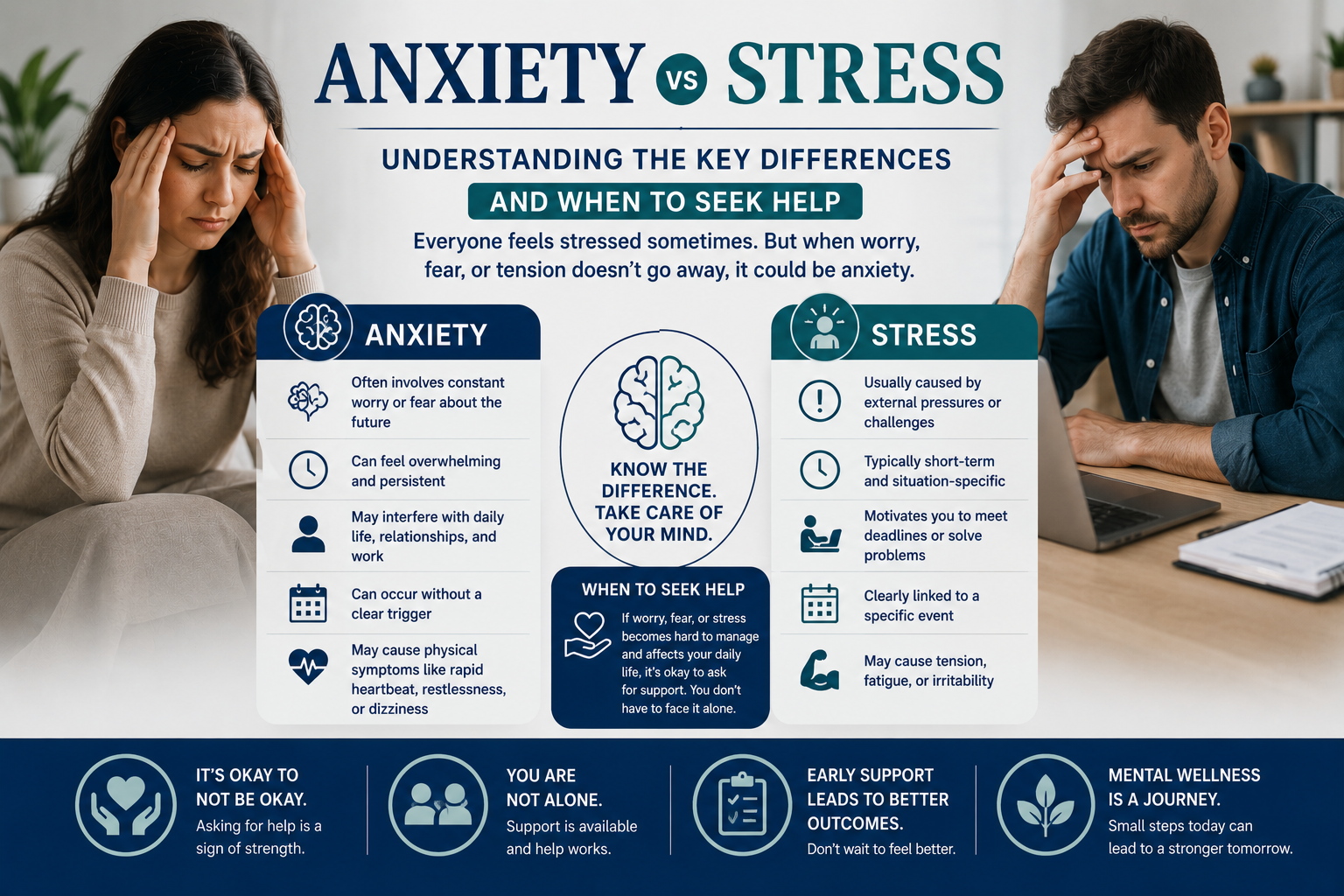
Stress is the body’s natural response to challenges, demands, or pressures.
It often develops in response to a specific situation or event.
Examples of common stressors include:
- Work deadlines
- Academic pressure
- Financial difficulties
- Relationship challenges
- Family responsibilities
- Major life changes
Stress is not always negative.
In some situations, stress can motivate people to take action, solve problems, and meet important goals.
However, excessive or prolonged stress can affect both mental and physical well-being.
How Stress Affects The Body
When people experience stress, the body activates its natural stress response.
This may lead to symptoms such as:
Increased Heart Rate
The body prepares to respond to perceived challenges.
Muscle Tension
Stress often causes muscles to tighten.
Irritability
People may become more easily frustrated.
Difficulty Sleeping
Stress can make it difficult to relax at night.
Trouble Concentrating
Mental focus may become more difficult.
These reactions are common and often improve when the stressful situation is resolved.
What Is Anxiety?
Anxiety involves feelings of worry, nervousness, fear, or apprehension.
While anxiety can develop in response to stress, it may also occur without an obvious trigger.
Unlike stress, anxiety often continues even after the original concern has passed.
Many individuals experiencing anxiety report:
- Persistent worry
- Difficulty relaxing
- Racing thoughts
- Feelings of unease
- Ongoing nervousness
Anxiety can range from mild to severe and may significantly affect daily functioning.
Why Anxiety And Stress Are Often Confused
The confusion is understandable because both experiences share several symptoms.
Common symptoms of both anxiety and stress may include:
- Difficulty sleeping
- Restlessness
- Fatigue
- Trouble concentrating
- Increased irritability
Because these symptoms overlap, many people find it difficult to determine which experience they are having.
A mental health professional can help evaluate symptoms and provide clarity when needed.
The Biggest Difference Between Stress And Anxiety
One of the most important distinctions involves the source of the symptoms.
Stress Usually Has A Clear Trigger
Stress often develops in response to a specific challenge or pressure.
For example:
- An upcoming exam
- A demanding project
- Financial concerns
When the situation improves, stress often decreases.
Anxiety Can Persist Without A Clear Cause
Individuals experiencing anxiety may continue worrying even when there is no immediate threat or obvious problem.
The worry itself can become difficult to control.
This persistence is one reason anxiety may require professional evaluation.
Common Signs Of Stress
Stress can affect people differently.
Some common symptoms include:
Feeling Overwhelmed
Struggling to manage responsibilities.
Irritability
Becoming easily frustrated.
Temporary Sleep Problems
Difficulty falling asleep during stressful periods.
Physical Tension
Headaches, muscle tightness, or fatigue.
Difficulty Focusing
Trouble concentrating on tasks.
Many of these symptoms improve when the stressful situation is addressed.
Common Signs Of Anxiety
Anxiety often involves more persistent symptoms.
Examples include:
Constant Worry
Excessive concern about everyday situations.
Racing Thoughts
Difficulty quieting the mind.
Restlessness
Feeling unable to relax.
Persistent Nervousness
Feeling on edge even when circumstances seem manageable.
Avoidance Behaviors
Avoiding situations that trigger worry or fear.
When these symptoms persist, professional support may be beneficial.
How Stress Affects Daily Life
Short-term stress is common.
However, prolonged stress can affect:
- Work performance
- Relationships
- Sleep quality
- Physical health
- Emotional well-being
Many people underestimate the impact chronic stress can have on overall wellness.
Recognizing stress early can help individuals develop healthier coping strategies.
How Anxiety Affects Daily Life
Anxiety can interfere with many aspects of everyday functioning.
Some individuals experience difficulty:
At Work
Struggling with concentration and productivity.
In Relationships
Experiencing increased worry or communication challenges.
During Social Situations
Feeling uncomfortable or overwhelmed.
While Making Decisions
Overthinking and uncertainty can make decision-making more difficult.
Over time, anxiety may begin limiting activities that were once enjoyable.
Why Mental Health Awareness Matters
Understanding stress and anxiety helps individuals recognize symptoms earlier.
Many people delay seeking support because they assume their experiences are normal or temporary.
While occasional stress is expected, persistent emotional distress should not be ignored.
Awareness allows people to make informed decisions about their mental health and seek support when appropriate.
When Stress Can Lead To Anxiety
In some situations, ongoing stress may contribute to anxiety.
For example:
- Long-term work pressure
- Financial difficulties
- Chronic health concerns
- Family challenges
When stress continues without adequate coping mechanisms, individuals may become increasingly vulnerable to anxiety-related symptoms.
Recognizing this connection can be an important step toward improving emotional well-being.