Quick Answer
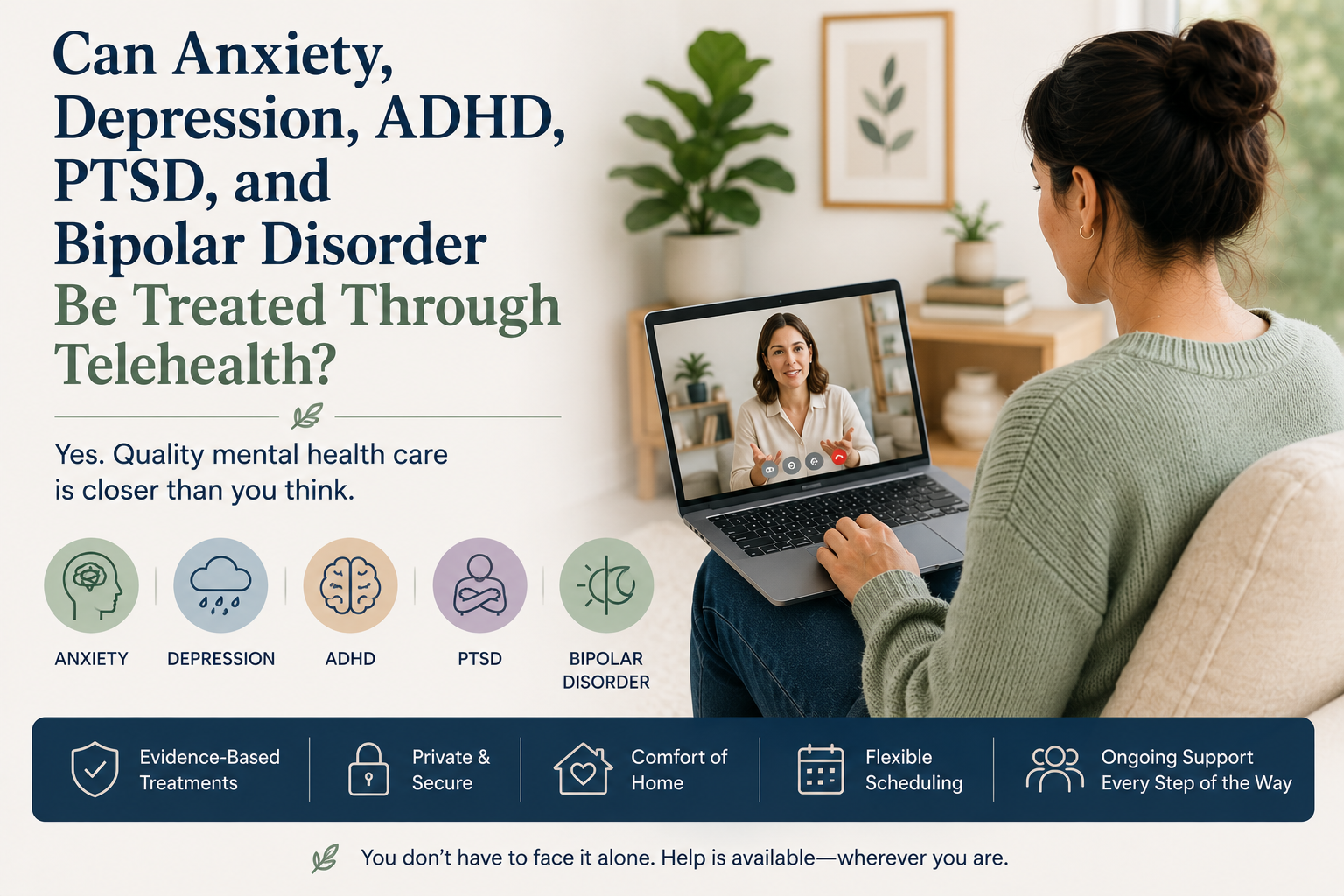
Yes, many mental health conditions can be evaluated, monitored, and treated through telehealth. Conditions such as anxiety disorders, depression, ADHD, PTSD, and bipolar disorder are commonly managed through secure virtual appointments. Telehealth allows patients to meet with mental health providers from home, discuss symptoms, receive treatment recommendations, participate in therapy, and, when appropriate, receive medication management. The effectiveness of treatment depends on individual needs, the quality of care provided, and consistent follow-up, not simply whether appointments occur online or in person.
Quick FAQs
Can anxiety be treated through telehealth?
Yes. Anxiety is one of the most commonly treated mental health conditions through telehealth services.
Can depression be treated online?
Many individuals receive effective depression treatment through virtual therapy, medication management, and ongoing telehealth support.
Can ADHD be treated through telehealth?
ADHD evaluations, treatment planning, symptom monitoring, and follow-up care are often available through telehealth.
Is telehealth effective for PTSD?
Telehealth has become an important option for many individuals seeking trauma-informed care and PTSD treatment.
Can bipolar disorder be managed through telehealth?
Many patients with bipolar disorder successfully participate in telehealth appointments for evaluation, medication management, monitoring, and ongoing treatment.
Why More People Are Choosing Telehealth for Mental Health Care
Mental health care has changed dramatically over the past decade. What once required frequent office visits can now often be accessed through secure video appointments from home.
For many individuals, telehealth removes barriers that previously made treatment difficult to access. Long commutes, transportation issues, demanding work schedules, childcare responsibilities, physical limitations, and provider shortages have historically prevented people from receiving the care they needed.
Today, virtual mental health services allow patients to connect with qualified providers more conveniently while maintaining privacy and continuity of care.
Despite the growing popularity of telehealth, many people still wonder whether mental health conditions can truly be treated effectively online. They question whether virtual appointments provide the same level of support as traditional office visits and whether certain conditions require in-person treatment.
The answer is more nuanced than a simple yes or no. Understanding how telehealth works for different mental health conditions can help patients make informed decisions about their care.
How Telehealth Mental Health Treatment Works
Telehealth appointments are designed to provide many of the same services offered during in-person visits.
Patients meet with providers through secure virtual platforms where they can discuss symptoms, treatment progress, medication concerns, life challenges, and mental health goals. Providers assess symptoms, monitor changes over time, answer questions, adjust treatment plans when necessary, and provide ongoing support.
The technology itself is simply a tool. The quality of care depends on the provider’s expertise, the patient’s engagement in treatment, and the effectiveness of the overall care plan.
For many individuals, telehealth creates opportunities for more consistent care because appointments are easier to attend and integrate into daily life.
Can Anxiety Be Treated Through Telehealth?
Anxiety disorders are among the most common mental health conditions treated through telehealth.
People experiencing excessive worry, panic attacks, social anxiety, health anxiety, generalized anxiety, or persistent feelings of nervousness often seek virtual treatment because it provides a convenient and accessible way to receive support.
Telehealth appointments allow providers to explore anxiety triggers, symptom patterns, physical manifestations of anxiety, sleep disturbances, avoidance behaviors, and the impact symptoms have on daily functioning.
Treatment may include therapy, medication management, coping strategies, stress reduction techniques, lifestyle recommendations, or a combination of approaches.
Many individuals find that discussing anxiety from the comfort of home reduces some of the stress associated with seeking treatment.
Can Depression Be Treated Through Telehealth?
Depression is another condition commonly managed through virtual mental health services.
Symptoms such as sadness, low motivation, loss of interest in activities, fatigue, sleep disturbances, concentration difficulties, feelings of hopelessness, and changes in appetite can often be evaluated and monitored effectively through telehealth.
Providers use appointments to understand how symptoms affect daily life, relationships, work performance, emotional health, and overall well-being.
Treatment plans may involve therapy, medication management, behavioral interventions, lifestyle changes, or ongoing symptom monitoring.
For many patients, telehealth improves access to consistent care, which plays an important role in long-term recovery.
Can ADHD Be Treated Through Telehealth?
ADHD has become one of the most frequently discussed mental health conditions in recent years, particularly among adults who are recognizing symptoms later in life.
Telehealth allows providers to assess challenges related to attention, organization, impulsivity, time management, forgetfulness, task completion, and executive functioning.
Because ADHD symptoms often overlap with anxiety, stress, sleep deprivation, and depression, providers conduct thorough evaluations before developing treatment recommendations.
Ongoing telehealth appointments can help monitor symptom improvement, discuss treatment effectiveness, address challenges, and adjust care plans when necessary.
For individuals managing busy work schedules, school responsibilities, or family obligations, virtual care can make ongoing ADHD treatment significantly more accessible.
Can PTSD Be Treated Through Telehealth?
Post-traumatic stress disorder and trauma-related conditions can also be addressed through telehealth.
Many trauma survivors prefer virtual appointments because participating from a familiar environment can feel safer and more comfortable than visiting a clinic.
Telehealth allows providers to discuss trauma-related symptoms such as intrusive memories, flashbacks, nightmares, emotional distress, avoidance behaviors, hypervigilance, and difficulty regulating emotions.
Trauma treatment often requires trust, consistency, and a supportive therapeutic relationship. While treatment approaches vary, many individuals successfully engage in trauma-focused care through virtual platforms.
The ability to access specialized providers regardless of geographic location can be especially valuable for individuals seeking trauma-informed treatment.
Can Bipolar Disorder Be Managed Through Telehealth?
Bipolar disorder is a complex condition that often requires ongoing monitoring and long-term treatment.
Telehealth appointments can play an important role in evaluating symptoms, monitoring mood changes, assessing treatment effectiveness, reviewing medication concerns, and identifying potential warning signs that may require attention.
Because bipolar disorder involves shifts in mood, energy levels, activity patterns, and behavior, consistent follow-up is often essential. Virtual appointments can help patients maintain regular contact with providers while reducing barriers to ongoing care.
For many individuals, telehealth becomes an important part of a comprehensive treatment plan that may also include therapy, medication management, lifestyle interventions, and support systems.
When Telehealth May Be Especially Helpful
Telehealth is not simply about convenience. For many people, it provides access to care that might otherwise be unavailable.
Individuals living in rural communities often have fewer mental health providers nearby. Others may have physical health conditions that make travel difficult. Some people work schedules that make traditional office appointments challenging. Parents may struggle to arrange childcare, while students may have limited transportation options.
In these situations, telehealth helps remove practical barriers that can delay treatment.
Access to care is one of the most important factors influencing mental health outcomes, and telehealth has expanded opportunities for many individuals to receive support sooner.
Are Virtual Mental Health Appointments as Effective as In-Person Care?
This is one of the most frequently asked questions about telehealth.
For many conditions, virtual appointments can be highly effective when patients receive appropriate evaluations, evidence-based treatment, and consistent follow-up care.
The effectiveness of treatment depends on factors such as the accuracy of the assessment, the provider’s expertise, patient engagement, treatment adherence, and the strength of the therapeutic relationship.
Rather than focusing solely on whether care occurs online or in person, patients often benefit more from focusing on whether they are receiving comprehensive, personalized, and consistent support.
For many people, telehealth improves treatment adherence because appointments are easier to attend and maintain.
Situations Where In-Person Care May Still Be Recommended
While telehealth has expanded access to mental health services, certain situations may still require in-person care.
Some individuals may benefit from specialized assessments, medical evaluations, emergency services, intensive treatment programs, or other resources that cannot be fully provided through virtual appointments alone.
Mental health providers evaluate each situation individually and recommend the most appropriate level of care based on symptoms, safety concerns, and treatment needs.
Telehealth and in-person care should not be viewed as competing options. In many cases, they work together as part of a comprehensive treatment strategy.
Common Misconceptions About Telehealth Treatment
One common misconception is that virtual appointments are less personal than in-person visits. In reality, many patients develop strong therapeutic relationships through telehealth and appreciate the comfort of receiving care from home.
Another misconception is that telehealth is only appropriate for mild symptoms. While treatment recommendations vary by individual circumstance, many patients with complex mental health conditions successfully participate in virtual care.
Some people also assume that providers simply prescribe medication during telehealth visits without conducting proper evaluations. Ethical and responsible mental health care requires comprehensive assessment regardless of how the appointment is conducted.
Understanding these misconceptions can help patients approach telehealth with realistic expectations and greater confidence.
Why Trust Sunny Skies Healthcare?
At Sunny Skies Healthcare, we believe that quality mental health care should be accessible, compassionate, and tailored to each individual’s needs. Our providers work closely with patients to understand their symptoms, challenges, goals, and treatment preferences while developing personalized care plans that support long-term wellness.
Through secure telehealth services, we help individuals access professional mental health support without unnecessary barriers. Whether you are seeking care for anxiety, depression, ADHD, PTSD, bipolar disorder, or another mental health concern, our focus is on providing thoughtful, patient-centered treatment that helps you move forward with confidence.
Frequently Asked Questions
Many individuals begin evaluations, treatment planning, therapy, and follow-up care entirely through telehealth services.
Mental health providers are trained to assess symptoms through conversation, observation, and clinical evaluation during virtual appointments.
Medication management is often available through telehealth when clinically appropriate and permitted by applicable regulations.
Licensed providers use secure platforms designed to protect patient privacy and confidentiality.
Many patients transition between telehealth and in-person services based on their needs and preferences.
A mental health provider can help determine whether virtual care is appropriate based on your symptoms, treatment goals, and individual circumstances.
Conclusion
Telehealth has transformed how people access mental health care, making treatment more convenient, flexible, and accessible than ever before. Conditions such as anxiety, depression, ADHD, PTSD, and bipolar disorder can often be evaluated and managed effectively through virtual appointments when patients receive comprehensive assessments, personalized treatment plans, and ongoing support. While every situation is unique, telehealth has become a valuable tool for connecting individuals with the care they need. If access, convenience, or uncertainty have prevented you from seeking help in the past, could telehealth be the option that finally makes mental health care feel within reach?