Depression is one of the most common mental health conditions in the United States.
For many people, treatment begins with antidepressant medications, therapy, lifestyle changes, or a combination of approaches. While these treatments help millions of patients, they do not work for everyone.
Some individuals try one medication.
Then another.
Then another.
They attend therapy consistently.
They follow treatment recommendations.
Yet the symptoms remain.
The sadness remains.
The lack of motivation remains.
The exhaustion remains.
The feeling of being stuck remains.
When this happens, patients often begin asking an important question:
“What happens when depression treatment isn’t working?”
The answer may be something called Treatment-Resistant Depression.
And for many patients facing this challenge, Deep TMS therapy has become an increasingly important treatment option.
What Is Treatment-Resistant Depression?
Treatment-Resistant Depression (TRD) is a term used when depression symptoms continue despite trying standard treatment approaches.
While definitions may vary slightly between healthcare providers, treatment-resistant depression generally refers to patients who have tried multiple antidepressant medications without experiencing sufficient improvement.
This situation is more common than many people realize.
Millions of people struggle with depression every year.
A significant percentage of those individuals do not achieve full symptom relief through medication alone.
For these patients, the problem is not a lack of effort.
It is not a lack of motivation.
And it is not because they are doing something wrong.
Depression is a complex medical condition involving multiple brain networks, neurotransmitters, and biological factors.
Sometimes traditional treatments simply do not produce the desired response.
That is why specialists often explore additional treatment options.
Why Some Depression Treatments Stop Working
One of the most frustrating experiences for patients is feeling hopeful about a new treatment only to see little or no improvement.
Patients often ask:
“Why aren’t my antidepressants working?”
There is no single answer.
Every brain functions differently.
Some individuals respond well to the first medication they try.
Others may need several medication adjustments.
Some patients experience side effects that make continuing treatment difficult.
Others notice only minimal improvement even after months of treatment.
In these situations, healthcare providers may begin evaluating alternative approaches.
This is where advanced treatments such as Deep TMS enter the conversation.
What Is Deep TMS Therapy?
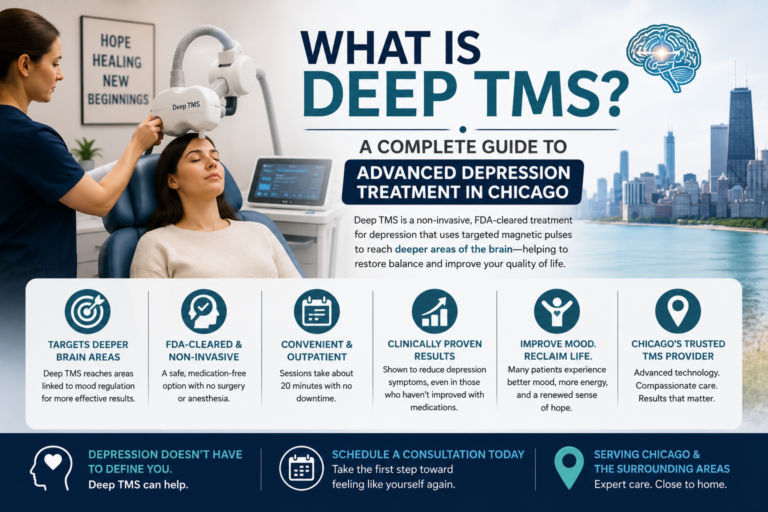
Deep Transcranial Magnetic Stimulation, commonly known as Deep TMS, is a non-invasive treatment that uses magnetic pulses to stimulate specific areas of the brain associated with mood regulation.
Unlike medications that travel through the bloodstream and affect the entire body, Deep TMS works directly on targeted brain networks.
The treatment uses specialized H-Coil technology designed to reach deeper brain regions involved in depression and other mental health conditions.
Patients remain awake throughout treatment.
There are no needles.
There is no anesthesia.
There is no hospitalization.
Most sessions take approximately twenty minutes.
Patients can typically return to work, school, or normal daily activities immediately after treatment.
Because Deep TMS does not rely on medication, it has become an attractive option for individuals who have struggled with antidepressant side effects or inadequate treatment responses.
How Deep TMS Works Inside The Brain
To understand why Deep TMS may help treatment-resistant depression, it is helpful to understand what happens inside the brain.
Depression is not simply a feeling.
It involves changes within specific neural circuits responsible for mood, motivation, reward processing, decision-making, and emotional regulation.
Research has shown that certain brain regions may become underactive in people experiencing depression.
Deep TMS delivers magnetic stimulation designed to activate these networks.
The magnetic pulses generate small electrical currents that help stimulate brain activity.
Over time, repeated stimulation may help strengthen communication between neural pathways involved in emotional regulation.
Think of it as helping important brain networks function more effectively.
This process does not happen overnight.
Just like physical rehabilitation requires multiple sessions, Deep TMS relies on repeated treatment sessions to encourage meaningful changes within the brain.
Who May Be A Good Candidate For Deep TMS?
Not every patient with depression requires Deep TMS.
However, certain individuals may be strong candidates.
Patients often considered for Deep TMS include those who:
• Have been diagnosed with Major Depressive Disorder
• Have tried one or more antidepressant medications without sufficient improvement
• Experience ongoing symptoms despite therapy
• Cannot tolerate medication side effects
• Are looking for a non-invasive treatment option
• Want an alternative to more intensive interventions
The decision is always made through a comprehensive clinical evaluation.
Mental health providers review medical history, previous treatments, current symptoms, and individual goals before determining whether Deep TMS may be appropriate.
What Symptoms Can Deep TMS Potentially Improve?
Depression affects people differently.
Some patients struggle primarily with sadness.
Others experience emotional numbness.
Some feel constant fatigue.
Others lose interest in activities they once enjoyed.
Patients who respond positively to Deep TMS may notice improvements in areas such as:
• Mood
• Motivation
• Energy levels
• Daily functioning
• Concentration
• Sleep quality
• Emotional resilience
One of the most common descriptions from patients is that the emotional “fog” begins to lift.
Tasks that previously felt overwhelming may start to feel manageable again.
Activities that once brought joy may gradually become enjoyable.
These improvements can significantly impact quality of life.
Why More Patients Are Exploring Deep TMS
Mental health treatment continues to evolve.
Patients today have access to more options than ever before.
Rather than repeatedly cycling through medications that may not be producing results, many individuals are exploring advanced treatment approaches supported by growing clinical research.
Deep TMS has gained attention because it offers a different path forward.
Instead of introducing another medication into the body, the treatment focuses directly on the neural networks involved in depression.
For individuals who feel stuck after multiple treatment attempts, this approach often provides a renewed sense of hope.
The important thing to understand is that treatment-resistant depression does not mean untreatable depression.
It simply means that different strategies may be needed.
And for many patients, Deep TMS has become one of those strategies.
How Long Does Deep TMS Take To Work?
One of the most common questions patients ask is:
“How quickly will I feel better?”
The answer varies from person to person.
Just as depression develops differently in every individual, treatment responses can also vary.
Some patients begin noticing changes within the first few weeks.
Others may require additional sessions before experiencing significant improvements.
Deep TMS is not designed to provide an instant cure.
Instead, it works gradually by stimulating targeted brain networks over a series of treatments.
Most treatment plans involve multiple sessions per week over several weeks.
As treatment progresses, many patients report:
• Improved mood
• Better focus
• Increased motivation
• More emotional stability
• Greater ability to engage in daily activities
The process requires consistency, but many patients find that gradual improvement can lead to meaningful long-term benefits.
What Happens During A Deep TMS Session?
For patients considering Deep TMS, uncertainty about the treatment process is completely normal.
Fortunately, the procedure is straightforward.
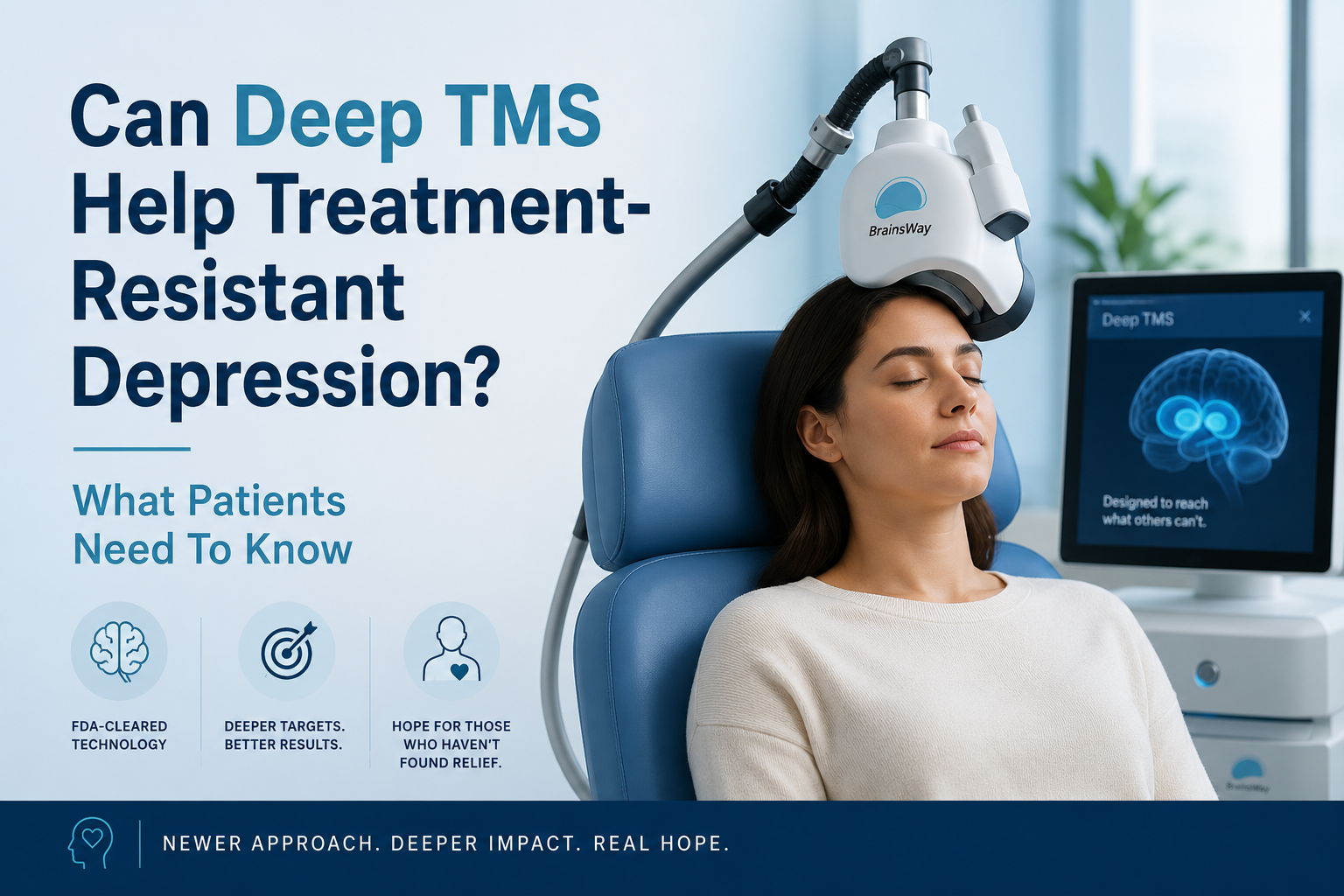
A typical session begins with the patient sitting comfortably in a treatment chair.
A specialized Deep TMS helmet containing advanced magnetic coil technology is positioned over the head.
The system then delivers magnetic pulses to targeted brain regions associated with depression.
During treatment, patients remain fully awake and alert.
Many people:
• Read
• Listen to music
• Relax
• Speak with staff
There is no sedation.
There are no surgical procedures.
And there is typically no recovery period afterward.
Most individuals are able to continue their normal daily routine immediately following treatment.
This convenience is one reason many busy professionals and working adults find Deep TMS appealing.
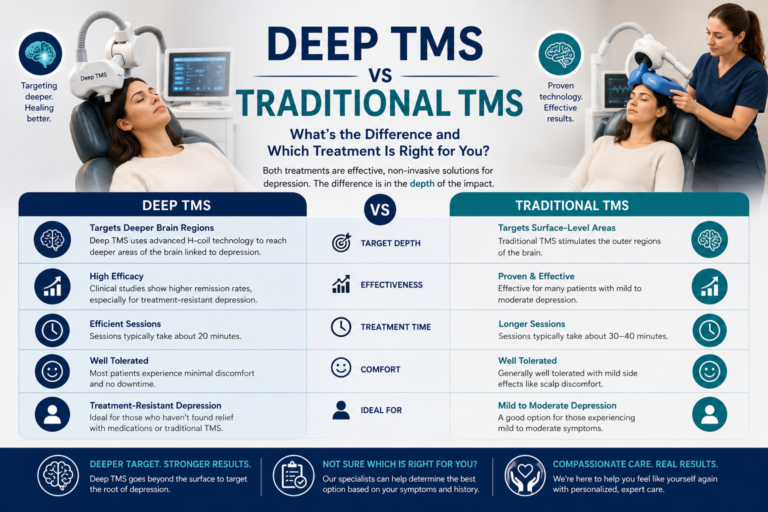
Deep TMS Vs Traditional TMS: What’s The Difference?
As patients research treatment options, they often encounter both traditional TMS and Deep TMS.
Naturally, many wonder about the difference.
Both treatments use magnetic stimulation.
Both target brain regions associated with depression.
Both are non-invasive.
However, Deep TMS utilizes specialized H-Coil technology designed to stimulate broader and deeper neural networks.
This ability to reach deeper brain structures is one of the reasons Deep TMS has gained significant attention within the mental health field.
The goal is not simply to stimulate the brain.
The goal is to target the networks involved in mood regulation more effectively.
For patients exploring advanced treatment options, understanding these differences can help guide discussions with healthcare providers.
What Are The Potential Side Effects Of Deep TMS?
Safety is understandably a major concern for anyone considering a new treatment.
Deep TMS has been studied extensively and is generally well tolerated by many patients.
Some individuals may experience temporary side effects such as:
• Mild scalp discomfort
• Headache
• Tingling sensations during treatment
• Temporary sensitivity at the treatment site
These effects are typically mild and often decrease as treatment continues.
Compared to some medication-related side effects, many patients find Deep TMS easier to tolerate.
However, every patient is different.
This is why a thorough evaluation and consultation with a qualified provider remains essential.
Can Deep TMS Replace Antidepressant Medication?
This is another question frequently asked by patients.
The answer depends on the individual.
For some people, Deep TMS may be used alongside medication.
For others, healthcare providers may explore adjustments to medication plans during treatment.
Deep TMS should never be viewed as a decision patients make on their own.
Treatment plans are personalized.
The goal is always to identify the safest and most effective approach based on each patient’s unique circumstances.
The most important point is that patients who have not achieved success with medication alone may have additional options available.
Is Deep TMS Covered By Insurance?
Cost concerns prevent many people from exploring treatment options.
The good news is that insurance coverage for Deep TMS has expanded significantly in recent years.
Many insurance providers now cover Deep TMS treatment for qualifying patients diagnosed with Major Depressive Disorder and other approved conditions.
Coverage requirements vary depending on:
• Insurance provider
• Medical history
• Previous treatment attempts
• Clinical eligibility
Because policies differ, patients should speak directly with treatment providers to verify coverage and determine eligibility.
Understanding insurance options often makes treatment more accessible than many people initially expect.
Why Hope Matters For Patients With Treatment-Resistant Depression
One of the most difficult parts of treatment-resistant depression is the feeling that nothing will work.
Patients often spend years searching for answers.
They try medications.
They try therapy.
They make lifestyle changes.
Yet symptoms continue affecting every aspect of life.
This experience can create frustration, discouragement, and hopelessness.
But treatment-resistant does not mean impossible to treat.
It simply means a different approach may be needed.
The mental health field continues advancing.
New technologies continue emerging.
And treatment options continue expanding.
Deep TMS represents one of those advances.
For many patients, it offers an opportunity to explore a treatment that works differently from traditional approaches.
Frequently Asked Questions
Yes. Deep TMS is commonly used for individuals who have not achieved sufficient improvement from antidepressant medications or other traditional treatments.
How long does Deep TMS treatment take?
Individual sessions generally last around 20 minutes, though complete treatment plans often involve multiple sessions over several weeks.
Is Deep TMS painful?
Most patients tolerate treatment well. Some may experience mild scalp discomfort or temporary headaches, particularly during the early stages of treatment.
Do I need anesthesia for Deep TMS?
No. Patients remain fully awake and alert throughout treatment.
Can I return to work after a Deep TMS session?
In most cases, yes. Patients can usually resume normal daily activities immediately following treatment.
Is Deep TMS covered by insurance?
Many insurance providers offer coverage for qualifying patients, although eligibility requirements vary.
What makes Deep TMS different from traditional TMS?
Deep TMS uses specialized H-Coil technology designed to stimulate deeper and broader brain networks associated with depression.
Who may be a candidate for Deep TMS?
Individuals diagnosed with Major Depressive Disorder who have not responded adequately to medication or other traditional treatments may be candidates.
Conclusion
Living with treatment-resistant depression can feel overwhelming.
When traditional treatments fail to provide relief, many patients begin to wonder whether they will ever feel like themselves again.
Fortunately, mental health care continues evolving.
Deep TMS offers a non-invasive treatment option designed to target the brain networks involved in depression directly.
For patients who have struggled despite medication, therapy, or other approaches, Deep TMS may provide a different path forward.
The most important message is simple:
Treatment-resistant depression does not mean there are no options left.
It means there may be new options worth exploring.
About Sunny Skies Healthcare
Sunny Skies Healthcare provides compassionate mental health care with a focus on innovative treatment options, including Deep TMS therapy for depression and other mental health conditions.
Through personalized care, comprehensive evaluations, and evidence-based treatment .