Receiving a diagnosis of Obsessive-Compulsive Disorder (OCD) can feel overwhelming.
For many individuals, the diagnosis is accompanied by numerous questions.
What exactly does treatment involve?
Can symptoms improve?
Will life ever feel normal again?
These concerns are completely understandable.
The encouraging news is that OCD is a treatable mental health condition.
With appropriate professional care, many individuals learn effective ways to manage symptoms, improve daily functioning and lead productive, fulfilling lives.
Although OCD can significantly affect work, education, relationships and emotional wellbeing, treatment provides an opportunity to better understand the condition while developing practical strategies for long-term symptom management.
Learning about available treatment options often helps reduce uncertainty and gives individuals greater confidence when taking the next step towards professional support.
Quick Answer
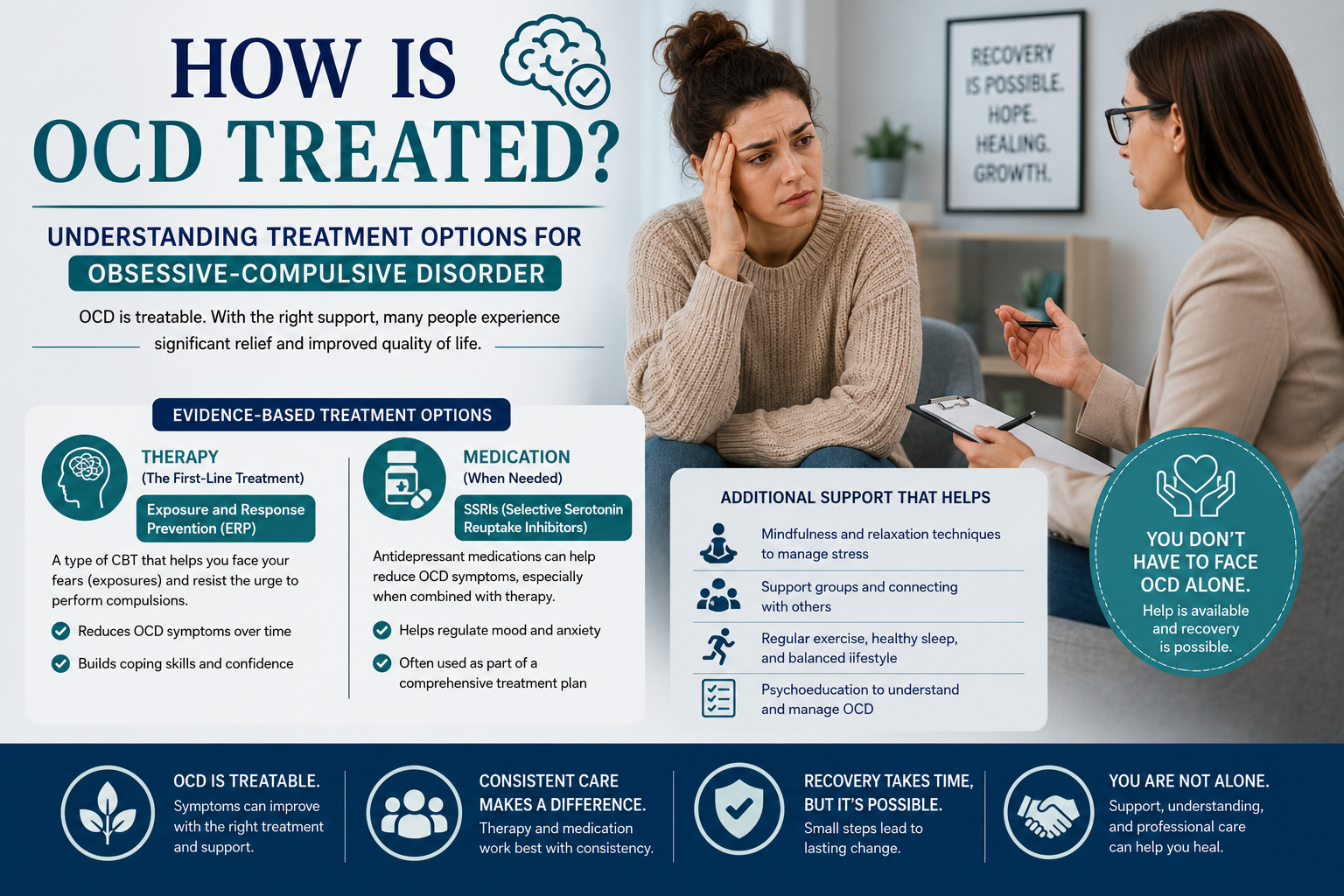
OCD is commonly treated through a personalised combination of professional therapy, medication management when appropriate, healthy lifestyle habits and ongoing follow-up care.
Treatment plans are tailored to each individual’s symptoms, medical history and personal goals.
Many people experience meaningful improvement through evidence-based treatment provided by qualified mental health professionals.
Quick Questions About OCD Treatment
Can OCD be treated?
Yes.
OCD is a treatable mental health condition, and many individuals experience significant improvement with appropriate professional care.
Is therapy commonly recommended?
Yes.
Therapy is considered one of the primary treatment approaches and helps individuals better understand symptoms while developing effective coping strategies.
Will everyone require medication?
Not necessarily.
Medication may be recommended for some individuals depending on symptom severity, medical history and overall treatment goals.
Does treatment work immediately?
Managing OCD usually takes time.
Progress often occurs gradually as individuals develop new skills and continue working with their treatment team.
Why is early treatment important?
Early intervention may help reduce the impact symptoms have on everyday life while supporting better long-term outcomes.
Understanding OCD Before Exploring Treatment
Before discussing treatment options, it is helpful to understand what Obsessive-Compulsive Disorder involves.
OCD is characterised by two closely connected components.
The first involves obsessions, which are unwanted thoughts, urges or mental images that repeatedly create anxiety or emotional distress.
The second involves compulsions, which are repetitive behaviours or mental rituals performed in an attempt to reduce that anxiety.
Although compulsions may provide temporary relief, they often reinforce the cycle of OCD rather than resolving it.
Understanding this relationship helps explain why professional treatment focuses on addressing both obsessive thoughts and compulsive behaviours.
| Core Components of OCD | Description |
| Obsessions | Unwanted thoughts, fears, urges or mental images that repeatedly create emotional distress. |
| Compulsions | Repetitive behaviours or mental rituals performed to reduce anxiety created by obsessions. |
Recognising how these two components interact provides an important foundation for understanding treatment.
Why Professional Treatment Matters
Many individuals attempt to manage OCD symptoms on their own before seeking professional support.
Some hope symptoms will gradually disappear.
Others believe the thoughts are simply part of their personality or worry about discussing them with someone else.
Unfortunately, OCD often becomes more disruptive without appropriate intervention.
Professional treatment provides individuals with the opportunity to better understand their symptoms while receiving evidence-based recommendations tailored to their specific needs.
Mental health professionals have specialised training in recognising OCD patterns and developing personalised treatment plans designed to improve daily functioning and emotional wellbeing.
| Benefits of Professional Treatment | How It Helps |
| Better understanding of symptoms | Clarifies how OCD affects everyday life. |
| Personalised coping strategies | Helps individuals respond more effectively to symptoms. |
| Reduced emotional distress | Supports improved mental wellbeing. |
| Improved daily functioning | Enhances work, school and personal relationships. |
| Better quality of life | Supports long-term symptom management. |
Professional guidance often provides reassurance while helping individuals develop realistic and achievable treatment goals.
Why Early Intervention Can Make a Difference
Like many mental health conditions, OCD often responds more effectively when recognised early.
Unfortunately, some individuals live with symptoms for many years before seeking professional help.
Embarrassment, fear of being misunderstood or believing symptoms are simply personality traits can all delay treatment.
Early evaluation provides an opportunity to identify symptoms before they become increasingly disruptive.
It also allows individuals to begin learning practical strategies that may improve emotional wellbeing and everyday functioning sooner.
| Benefits of Early Intervention | Potential Impact |
| Earlier symptom recognition | Helps individuals understand what they are experiencing. |
| Timely professional support | Allows treatment to begin sooner. |
| Reduced disruption | Helps minimise the impact on work, school and relationships. |
| Better long-term outcomes | Supports ongoing symptom management and quality of life. |
Seeking help early is often one of the most important steps an individual can take.
How OCD Is Diagnosed
Before treatment begins, a qualified mental health professional typically performs a comprehensive psychiatric evaluation.
Rather than relying on a single test, the evaluation focuses on developing a complete understanding of the individual’s symptoms and how they affect daily life.
During the assessment, the clinician may discuss current thoughts, behaviours, emotional concerns and the overall impact symptoms have on work, education, relationships and daily routines.
Medical history and previous mental health experiences may also be reviewed to ensure recommendations are based on a complete understanding of the person’s circumstances.
| Areas Reviewed During Evaluation | Purpose |
| Current symptoms | Understand obsessive thoughts and compulsive behaviours. |
| Symptom frequency | Assess how often symptoms occur. |
| Symptom severity | Evaluate the level of distress experienced. |
| Daily functioning | Determine the impact on work, school and relationships. |
| Medical and mental health history | Develop an appropriate treatment plan. |
A thorough evaluation helps mental health professionals recommend the most appropriate treatment options for each individual.
Why OCD Treatment Is Personalised
No two individuals experience OCD in exactly the same way.
Some people primarily struggle with intrusive thoughts.
Others experience more noticeable compulsive behaviours.
The severity of symptoms, personal goals, medical history and previous treatment experiences all influence the development of an effective treatment plan.
Because of these differences, mental health professionals create personalised treatment strategies rather than using the same approach for everyone.
Individualised care allows treatment to focus on each person’s unique needs while supporting long-term progress.
| Factors That Influence Treatment | Why They Matter |
| Symptom severity | Determines the level of support required. |
| Personal goals | Helps shape treatment priorities. |
| Medical history | Supports safe and appropriate recommendations. |
| Previous treatment experiences | Guides future treatment planning. |
| Daily functioning | Identifies areas requiring additional support. |
Personalised treatment recognises that successful care should reflect the individual rather than the diagnosis alone.
Therapy as an Important Part of OCD Treatment
Therapy remains one of the most widely used treatment approaches for individuals living with OCD.
It provides a structured and supportive environment where individuals can better understand their symptoms while working with a qualified mental health professional to develop practical coping strategies.
Therapy also encourages greater awareness of symptom patterns, helping individuals recognise situations that may contribute to obsessive thoughts or compulsive behaviours.
Over time, many people develop increased confidence in managing symptoms while improving emotional resilience and everyday functioning.
For many individuals, therapy becomes an important part of long-term recovery and ongoing mental wellness.
Understanding the Role of Medication Management
Medication may also be discussed as part of a comprehensive treatment plan for some individuals.
Whether medication is appropriate depends on several factors, including symptom severity, medical history, treatment goals and personal preferences.
Mental health professionals carefully evaluate each individual’s circumstances before making recommendations.
Medication decisions are highly personalised and are always made in consultation with qualified healthcare providers.
For some individuals, medication becomes one component of a broader treatment approach that also includes therapy and lifestyle support.
Lifestyle Habits That Complement Professional Treatment
Professional treatment often works best when supported by healthy daily routines.
Although lifestyle habits do not replace therapy or medical care, they may contribute to overall emotional wellbeing and help individuals maintain greater consistency during treatment.
Healthy sleep, regular physical activity, effective stress management and supportive relationships all play valuable roles in maintaining mental wellness.
Establishing structured daily routines may also help improve organisation while reducing unnecessary stress.
| Healthy Lifestyle Habit | How It May Support Wellbeing |
| Consistent sleep | Supports emotional and physical health. |
| Regular physical activity | Promotes overall mental wellbeing. |
| Stress management | Helps reduce emotional strain. |
| Social support | Encourages connection and ongoing encouragement. |
| Structured routines | Supports stability in everyday life. |
These habits work alongside professional care to support long-term symptom management.
Why OCD Treatment Takes Time
Many individuals hope treatment will produce immediate results.
While improvement certainly occurs for many people, OCD treatment is often a gradual process rather than an overnight change.
Learning new coping strategies.
Recognising symptom patterns.
Attending regular appointments.
Practising new skills in everyday situations.
All of these steps require time and consistency.
Progress may occur gradually, with individuals building confidence as they continue working closely with their mental health professionals.
Patience and ongoing commitment often become important parts of successful long-term treatment.
Treatment is not simply about reducing symptoms.
It is about helping individuals regain confidence, improve daily functioning and build lasting strategies that support emotional wellbeing for years to come.
Common Challenges During OCD Treatment
Beginning treatment for Obsessive-Compulsive Disorder is an important step, but it is also important to recognise that progress is rarely perfectly linear.
Many individuals experience periods where symptoms improve, followed by times when they feel more challenging again.
This is a normal part of the recovery process and does not necessarily indicate that treatment is unsuccessful.
Adjusting to new coping strategies, confronting long-standing fears and developing healthier behavioural patterns can sometimes feel emotionally uncomfortable.
These experiences are often part of the therapeutic journey rather than signs of failure.
With continued professional guidance and consistency, many individuals continue making meaningful progress over time.
| Common Treatment Challenges | Why They May Occur |
| Fear of change | New coping strategies may initially feel unfamiliar or uncomfortable. |
| Frustration with symptoms | Progress often occurs gradually rather than immediately. |
| Emotional discomfort | Addressing difficult thoughts may temporarily increase emotional challenges. |
| Uncertainty about progress | Improvements are often gradual and may not always be immediately noticeable. |
Understanding that setbacks may occur helps individuals maintain realistic expectations throughout treatment.
Why Seeking Professional Help Demonstrates Strength
Some people hesitate to seek treatment because they worry about stigma or believe they should be able to manage symptoms independently.
Others fear being misunderstood or judged because of their intrusive thoughts.
In reality, reaching out for professional support demonstrates self-awareness and a commitment to personal wellbeing.
Recognising that symptoms are affecting daily life and taking action to address them reflects courage rather than weakness.
Mental health care should be viewed in the same way as any other form of healthcare.
Seeking professional support allows individuals to better understand their symptoms while receiving evidence-based guidance that can improve their quality of life.
| Why Seeking Help Matters | Positive Outcome |
| Self-awareness | Recognising when professional support is needed. |
| Courage | Taking positive steps toward better mental health. |
| Commitment to wellbeing | Prioritising long-term emotional wellness. |
| Desire for improvement | Working towards healthier daily functioning. |
Seeking support is often the beginning of meaningful long-term progress.
Building Long-Term Success
Successful OCD management extends beyond reducing symptoms in the short term.
Long-term wellbeing often depends on maintaining healthy habits, continuing professional care when appropriate and developing practical coping strategies that can be used throughout everyday life.
Many individuals discover that lasting progress comes from building a strong foundation rather than searching for a quick solution.
Professional guidance, emotional awareness and consistent daily routines often work together to support long-term recovery.
As confidence grows, individuals frequently become better equipped to recognise challenges early and respond in healthier ways.
| Foundations for Long-Term Success | How They Support Recovery |
| Ongoing mental health support | Encourages continued progress and professional guidance. |
| Healthy daily habits | Supports emotional and physical wellbeing. |
| Strong support systems | Reduces feelings of isolation and provides encouragement. |
| Continued self-awareness | Helps recognise changes in symptoms early. |
Long-term success is often built through small, consistent improvements maintained over time.
What Should Individuals Expect From OCD Treatment?
One of the first questions many people ask after receiving an OCD diagnosis is how long treatment will take.
The answer varies because every individual’s experience is different.
Several factors influence treatment progress, including symptom severity, how long symptoms have been present, overall mental health, personal treatment goals and consistency with professional recommendations.
Some individuals notice meaningful improvements relatively early.
Others benefit from longer-term support while gradually developing new coping strategies.
Rather than comparing progress with others, it is often more helpful to focus on individual improvement and ongoing consistency.
The most important message is that improvement is possible, even if progress occurs gradually.
| Factors That Influence Treatment Progress | Why They Matter |
| Symptom severity | More severe symptoms may require additional support. |
| Duration of symptoms | Long-standing symptoms may take longer to manage. |
| Personal treatment goals | Treatment is tailored to individual priorities. |
| Consistency with treatment | Regular participation often supports better outcomes. |
| Overall mental health | Other factors may influence recovery and progress. |
Every treatment journey is unique, and meaningful improvement often develops steadily over time.
Long-Term Management of OCD
For many individuals, OCD is best understood as a condition that benefits from ongoing management rather than a one-time solution.
Long-term care focuses on maintaining progress while recognising early signs that symptoms may become more noticeable again.
Regular appointments with mental health professionals, when appropriate, provide opportunities to review progress and adjust treatment strategies as circumstances change.
Many individuals also continue practising coping strategies learned during treatment while maintaining healthy daily routines that support emotional wellbeing.
| Long-Term Management Strategies | Purpose |
| Regular mental health care | Supports ongoing symptom management. |
| Monitoring symptoms | Helps identify changes early. |
| Practising coping strategies | Reinforces skills learned during treatment. |
| Maintaining healthy routines | Supports long-term emotional wellness. |
Long-term management helps individuals respond more confidently to challenges while maintaining progress over time.
Why Consistency Matters Throughout Treatment
Consistency often plays one of the most important roles in successful OCD management.
Although meaningful improvement may occur gradually, regular participation in treatment frequently produces lasting results.
Attending appointments, following professional recommendations and maintaining healthy daily routines all contribute to long-term progress.
Open communication with healthcare providers also allows treatment plans to be adjusted whenever necessary.
Rather than expecting dramatic overnight improvements, many individuals benefit from recognising that consistent effort often produces meaningful change over time.
How OCD Can Affect Different Areas of Life
Treatment does not simply focus on reducing symptoms.
It also aims to improve everyday functioning across multiple areas of life.
Obsessive thoughts and compulsive behaviours can influence concentration, productivity, relationships and routine responsibilities.
As treatment progresses, many individuals notice greater confidence in managing work responsibilities, academic demands and personal relationships.
Improved symptom management often allows people to spend less time responding to intrusive thoughts and more time participating in meaningful daily activities.
| Area of Life | How OCD May Affect It |
| Work | Difficulty concentrating or completing responsibilities. |
| Education | Challenges maintaining focus and academic performance. |
| Relationships | Increased stress related to obsessions or compulsions. |
| Daily routines | Time-consuming rituals that interrupt everyday activities. |
Improving daily functioning remains one of the primary goals of effective OCD treatment.
The Important Role of Family Support
Support from family members and loved ones can play a valuable role throughout the treatment process.
When family members understand OCD, they are often better prepared to provide encouragement while responding more effectively to the challenges their loved one may experience.
Education helps reduce misunderstandings and promotes healthier communication within families.
Supportive relationships may also reduce feelings of isolation while helping individuals remain motivated throughout treatment.
Professional guidance can sometimes include family education so that everyone develops a clearer understanding of the condition.
Common Myths About OCD Treatment
Several misconceptions continue preventing individuals from seeking professional care.
Some people believe OCD cannot be treated.
Others expect immediate results after beginning therapy or assume treatment is only necessary for severe symptoms.
These beliefs are inaccurate.
Many individuals experience significant improvement through evidence-based treatment, although progress usually develops gradually rather than instantly.
Even moderate symptoms deserve professional attention if they begin interfering with everyday life.
| Common Myth | Reality |
| OCD cannot be treated. | Many individuals improve with appropriate professional care. |
| Treatment works immediately. | Progress usually develops gradually over time. |
| Only severe OCD requires treatment. | Any symptoms affecting daily life deserve evaluation. |
| Seeking help shows weakness. | Seeking support demonstrates strength and self-awareness. |
Correcting these misconceptions encourages more individuals to access the care they need.
Why Mental Health Support Makes a Difference
Mental health conditions affect much more than emotional wellbeing alone.
They can influence relationships, employment, education, confidence and overall quality of life.
Professional support provides individuals with practical strategies, emotional guidance and personalised treatment recommendations that address their specific circumstances.
Mental health professionals work collaboratively with each individual, helping them understand symptoms while building skills that support long-term recovery.
Receiving appropriate care often provides reassurance while improving confidence in managing everyday challenges.
Living a Full and Meaningful Life With OCD
An OCD diagnosis does not define a person’s future.
Many individuals successfully build rewarding careers, maintain meaningful relationships and achieve important personal goals while managing their symptoms.
Professional treatment provides valuable tools that help individuals respond more effectively to obsessive thoughts and compulsive behaviours.
Combined with healthy routines, supportive relationships and ongoing self-awareness, these strategies allow many people to lead productive and fulfilling lives.
Improvement is not measured by perfection.
It is measured by increased confidence, greater independence and a better quality of life.
When Should Someone Seek Professional Help?
Although occasional unwanted thoughts are a normal part of life, professional evaluation may be beneficial when obsessive thoughts or compulsive behaviours begin interfering with everyday functioning.
Symptoms that consume large amounts of time, create significant emotional distress or negatively affect work, education or relationships should not be ignored.
Early assessment helps individuals better understand what they are experiencing while providing access to evidence-based treatment recommendations.
Seeking professional guidance early often creates the greatest opportunity for effective long-term symptom management and improved emotional wellbeing.
Frequently Asked Questions
Can OCD be treated?
Yes.
Obsessive-Compulsive Disorder is a treatable mental health condition, and many individuals experience meaningful improvement through evidence-based treatment and ongoing professional support.
Although every treatment journey is different, personalised care can help reduce symptoms and improve overall quality of life.
How is OCD diagnosed?
OCD is typically diagnosed through a comprehensive psychiatric or psychological evaluation conducted by a qualified mental health professional.
During the assessment, the clinician evaluates intrusive thoughts, compulsive behaviours, symptom severity and the overall impact symptoms have on daily life before recommending an appropriate treatment plan.
Is therapy commonly used to treat OCD?
Yes.
Therapy is one of the most common and effective components of OCD treatment.
It helps individuals better understand their symptoms, recognise behavioural patterns and develop practical coping strategies that support long-term symptom management.
Can medication be part of OCD treatment?
For some individuals, yes.
Medication may be recommended as part of a personalised treatment plan depending on symptom severity, medical history, treatment goals and the recommendations of a qualified healthcare provider.
Medication decisions are always made on an individual basis.
How long does OCD treatment usually take?
There is no single timeline that applies to everyone.
Treatment progress depends on several factors, including the severity of symptoms, how long they have been present, individual goals and consistency with professional recommendations.
Some individuals notice improvement relatively quickly, while others benefit from ongoing long-term support.
Can OCD affect personal relationships?
Yes.
Obsessive thoughts and compulsive behaviours can sometimes create challenges within family relationships, friendships and romantic partnerships.
With professional treatment, education and supportive communication, many individuals are able to strengthen these relationships while managing their symptoms more effectively.
Is OCD only related to cleaning and organisation?
No.
Although contamination concerns are one possible symptom, OCD can involve many different themes, including intrusive thoughts, perfectionism, safety concerns, health anxiety, relationship doubts and an excessive need for certainty.
This diversity is one reason OCD is frequently misunderstood.
Should someone seek professional help if OCD symptoms interfere with daily life?
Yes.
If obsessive thoughts or compulsive behaviours begin affecting work, education, relationships or everyday activities, a professional mental health evaluation can help clarify symptoms and identify appropriate treatment options.
Early intervention often provides the greatest opportunity for effective long-term symptom management.
Can people living with OCD have fulfilling lives?
Absolutely.
Many individuals with OCD build successful careers, maintain meaningful relationships and achieve personal goals while effectively managing their symptoms.
Professional treatment, healthy daily routines and ongoing support often help individuals lead productive and rewarding lives.
Why is early treatment important?
Early recognition and professional intervention may reduce the impact OCD has on daily functioning while helping individuals develop effective coping strategies sooner.
Receiving appropriate care early often supports better long-term emotional wellbeing and quality of life.
Conclusion
Obsessive-Compulsive Disorder is a complex but highly treatable mental health condition.
As we have explored throughout this guide, effective OCD treatment extends beyond reducing symptoms.
It focuses on helping individuals better understand their condition, improve daily functioning and build practical strategies that support long-term emotional wellbeing.
Whether treatment includes therapy, medication management, healthy lifestyle habits or a personalised combination of approaches, every treatment plan is designed around the individual’s unique needs and goals.
Although progress may take time, many people experience meaningful improvement with evidence-based care and ongoing professional support.
The most important step is often the first one.
If obsessive thoughts or compulsive behaviours are beginning to interfere with your quality of life, relationships, work or everyday responsibilities, seeking a professional mental health evaluation can provide clarity, guidance and access to effective treatment options.
With the right support, many individuals successfully manage OCD and continue building healthy, productive and fulfilling lives.