Sleep is something most of us rarely think about until we begin struggling with it.
After a restless night, it is normal to feel tired, distracted, or less productive the next day. Many people assume these effects disappear after getting another good night’s sleep. While that may be true occasionally, ongoing sleep problems can affect much more than physical energy.
Sleep plays an important role in how we think, manage emotions, respond to stress, remember information, and cope with everyday challenges. When healthy sleep becomes difficult to maintain, emotional well-being often begins to suffer as well.
Modern life does not make quality sleep easy. Busy work schedules, family responsibilities, financial pressures, technology, shift work, and daily stress all compete for our attention. As a result, many people unintentionally sacrifice sleep without realizing how closely it is connected to their mental health.
The relationship works in both directions.
Poor sleep may increase emotional distress, while mental health conditions such as anxiety, depression, obsessive-compulsive disorder (OCD), and chronic stress can also make it more difficult to fall asleep or stay asleep. Over time, this creates a cycle that becomes increasingly difficult to break without understanding what is happening.
Learning how sleep influences emotional health is often the first step toward recognizing early warning signs and making positive changes that support both mental wellness and overall quality of life.
Quick Answer
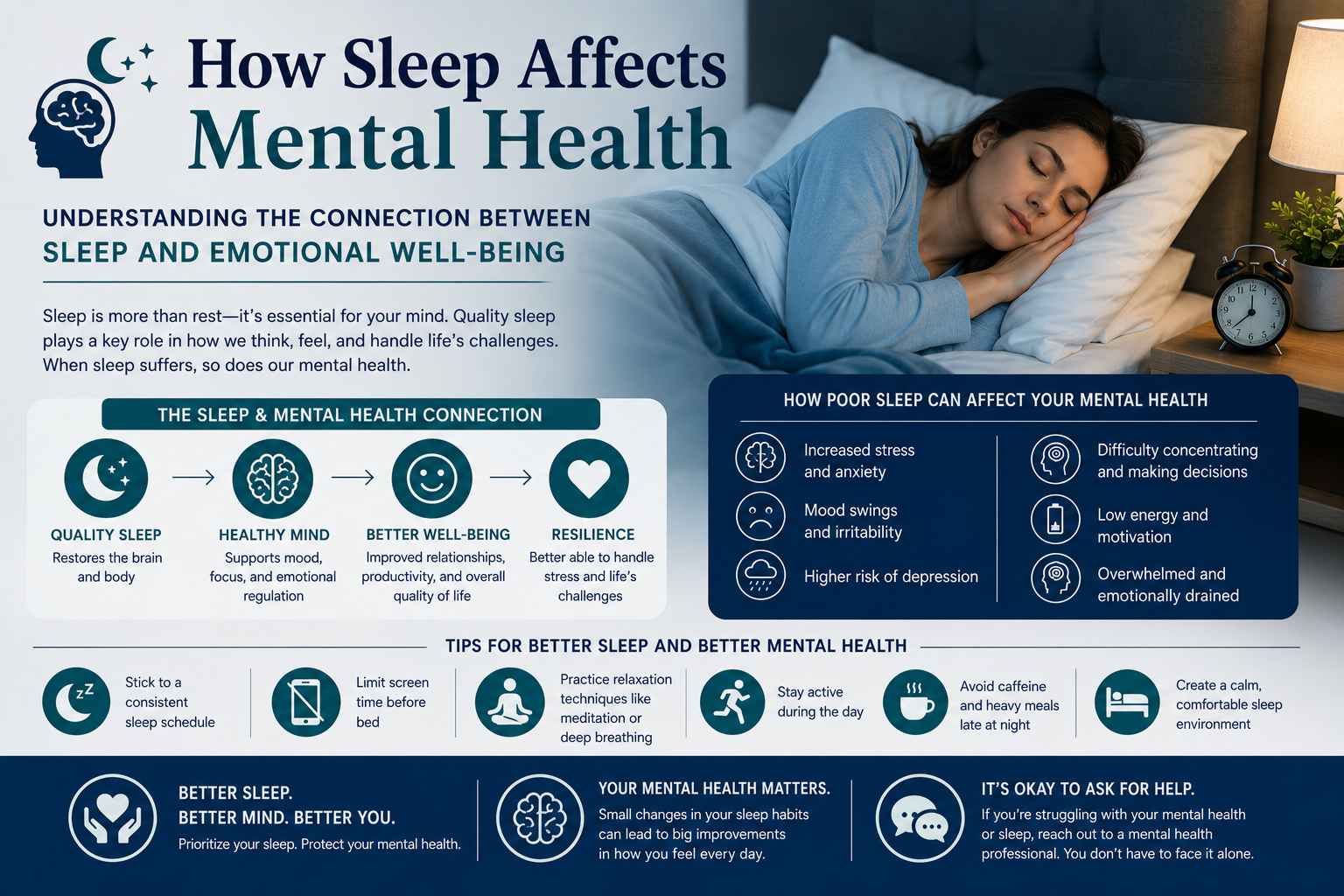
Sleep is one of the foundations of good mental health. During sleep, the brain regulates emotions, processes memories, restores cognitive function, and helps the body recover from daily physical and emotional stress. When sleep becomes consistently disrupted, these natural processes become less effective, increasing the risk of emotional instability, difficulty concentrating, higher stress levels, and worsening symptoms of anxiety or depression.
Although healthy sleep alone cannot prevent or treat every mental health condition, it remains one of the most important habits for supporting long-term emotional well-being.
Frequently Asked Questions
Can poor sleep affect mental health?
Yes. Ongoing sleep problems can contribute to increased stress, emotional changes, difficulty concentrating, and may worsen symptoms associated with anxiety or depression.
Does anxiety make it difficult to sleep?
It often does. Racing thoughts, excessive worry, and physical restlessness can make falling asleep or staying asleep much more difficult.
Why is sleep important for emotional health?
Sleep allows the brain to regulate emotions, process memories, manage stress responses, and restore normal cognitive functioning, helping people feel more balanced throughout the day.
Can improving sleep support better mental wellness?
For many people, healthier sleep habits improve mood, concentration, emotional resilience, and energy levels. Persistent sleep problems, however, should always be discussed with a qualified healthcare professional.
Why Sleep Is Essential for Mental Health
Sleep is far more than simply taking a break from the day.
While the body rests, the brain remains remarkably active. Throughout the night it performs several important tasks that directly influence emotional health, cognitive performance, and psychological well-being.
Healthy sleep allows the brain to organize memories, regulate emotional responses, process new information, and prepare the body for the challenges of the following day. These overnight recovery processes support clearer thinking, better decision-making, improved concentration, and healthier responses to stress.
When sleep becomes inconsistent or insufficient, these natural processes begin to slow down. Even small reductions in sleep quality can gradually affect mood, productivity, and emotional resilience.
| Brain Function Supported During Sleep | Why It Matters for Mental Health |
| Emotional regulation | Helps manage emotions and respond calmly to stressful situations. |
| Memory processing | Strengthens learning and improves memory retention. |
| Concentration | Supports focus and attention throughout the day. |
| Decision-making | Improves judgment and problem-solving abilities. |
| Stress regulation | Helps the brain and body recover from emotional and physical stress. |
Rather than influencing one area of health, sleep supports nearly every aspect of emotional and cognitive functioning simultaneously.
The Connection Between Sleep and Emotional Well-Being
Almost everyone has experienced feeling more emotional after sleeping poorly.
Small inconveniences seem larger.
Patience becomes limited.
Stress feels more difficult to manage.
These reactions are not simply the result of feeling tired. They occur because sleep directly affects the parts of the brain responsible for emotional regulation.
When sleep quality decreases, emotional reactions often become stronger while resilience becomes weaker. Situations that normally feel manageable may suddenly feel overwhelming. Over time, repeated sleep disruption may contribute to increased emotional distress and make it more difficult to cope with everyday life.
| Effect of Poor Sleep | Possible Impact on Everyday Life |
| Increased irritability | Everyday situations may feel more frustrating. |
| Reduced patience | Emotional reactions may become stronger than usual. |
| Higher stress levels | Daily responsibilities may feel more overwhelming. |
| Emotional fatigue | Individuals may feel emotionally drained more easily. |
| Lower resilience | Recovering from stressful situations may take longer. |
These emotional changes do not automatically indicate a mental health condition. However, when poor sleep continues for weeks or months, it can contribute to broader emotional and psychological challenges that affect work, relationships, and overall quality of life.
How Poor Sleep Affects Daily Functioning
The effects of poor sleep extend well beyond feeling tired.
Many people begin noticing changes in concentration, productivity, memory, and decision-making long before they recognize that sleep may be the underlying cause.
Without enough restorative sleep, the brain must work harder to complete tasks that would normally feel routine. This increased mental effort often creates additional stress throughout the day, making it even more difficult to unwind at night.
| Area of Daily Functioning | How Poor Sleep May Affect It |
| Concentration | Remaining focused becomes more difficult. |
| Productivity | Work and school performance may decline. |
| Memory | Learning and recalling information may require greater effort. |
| Decision-making | Thinking clearly and solving problems may become more challenging. |
| Attention to detail | Fatigue may increase the likelihood of mistakes. |
Over time, these challenges may influence confidence, relationships, workplace performance, and emotional well-being, creating another cycle where stress and sleep continue to affect one another.
Sleep, Stress, Anxiety, and Depression: A Two-Way Relationship
Sleep rarely exists in isolation.
Stress, anxiety, depression, and sleep continuously influence one another, often creating patterns that become difficult to break.
During periods of increased stress, many people find themselves lying awake thinking about work, finances, family responsibilities, or future uncertainties. As sleep becomes disrupted, the brain becomes less effective at regulating stress the following day, making even routine situations feel more overwhelming.
The same pattern often occurs with anxiety. Racing thoughts, persistent worry, restlessness, and difficulty relaxing can interfere with healthy sleep, while ongoing sleep deprivation may increase feelings of nervousness and emotional tension.
Depression also shares a close relationship with sleep. Some individuals struggle to fall asleep or wake frequently throughout the night, while others sleep for extended periods but continue feeling exhausted during the day.
| Mental Health Concern | Common Sleep-Related Changes |
| Stress | Difficulty falling asleep, restless sleep, early waking. |
| Anxiety | Racing thoughts, frequent waking, difficulty relaxing. |
| Depression | Sleeping too much, insomnia, daytime fatigue. |
| OCD | Intrusive thoughts that may delay or interrupt sleep. |
Recognizing this two-way relationship is important because improving sleep may support emotional well-being, while addressing underlying mental health concerns can also lead to healthier sleep patterns.
For many individuals, progress begins by addressing both together rather than viewing them as separate challenges.
Signs Your Sleep May Be Affecting Your Mental Health
Sleep-related mental health concerns do not always appear suddenly. In many cases, the warning signs develop gradually, making them easy to overlook or attribute to a busy lifestyle, work pressure, or everyday stress.
You may notice feeling more tired than usual, becoming impatient with situations that normally would not bother you, or struggling to stay focused throughout the day. While these changes can have many causes, persistent sleep difficulties often play a larger role than people realize.
Recognizing these early signs allows individuals to seek support before sleep problems begin affecting emotional well-being, relationships, work performance, and overall quality of life.
| Possible Warning Sign | How It May Affect Daily Life |
| Persistent fatigue | Feeling tired despite spending enough time in bed. |
| Increased irritability | Becoming frustrated more easily during everyday situations. |
| Difficulty concentrating | Finding it harder to stay focused at work or school. |
| Mood changes | Experiencing greater emotional ups and downs. |
| Reduced motivation | Losing interest in daily responsibilities or activities. |
| Increased stress | Feeling overwhelmed by situations that once felt manageable. |
| Excessive worry | Difficulty relaxing, especially during the evening or before bedtime. |
Experiencing one or two of these symptoms occasionally is common. However, when they continue for several weeks alongside ongoing sleep difficulties, it may be helpful to explore whether sleep is contributing to the problem.
Why Mental Health Professionals Ask About Sleep
One of the first questions many mental health professionals ask during an evaluation is, “How have you been sleeping?”
This question is important because sleep often reflects what is happening emotionally. Changes in sleep patterns frequently occur alongside anxiety, depression, chronic stress, trauma, and other behavioral health concerns.
Rather than viewing sleep as a separate issue, healthcare providers consider it an important part of understanding a person’s overall emotional well-being.
| Sleep Pattern | What It May Help Identify |
| Difficulty falling asleep | Elevated stress or anxiety symptoms. |
| Frequent waking during the night | Emotional distress or disrupted sleep quality. |
| Sleeping longer than usual | Possible changes associated with depression or fatigue. |
| Non-restorative sleep | Reduced physical and emotional recovery. |
| Irregular sleep schedule | Lifestyle factors or underlying mental health concerns. |
Discussing sleep gives providers a clearer understanding of how emotional health may be affecting daily life and helps them recommend the most appropriate next steps.
Why Seeking Help Matters
Many people assume that poor sleep is simply part of modern life.
Long workdays, family responsibilities, financial pressures, and constant digital distractions have made insufficient sleep increasingly common. However, that does not mean persistent sleep problems should be accepted as normal.
When sleep continues to affect mood, concentration, relationships, or overall quality of life, speaking with a healthcare professional can provide valuable answers.
A comprehensive evaluation may help identify:
| Area of Evaluation | Why It Matters |
| Possible causes of poor sleep | Helps determine whether emotional, lifestyle, or medical factors are involved. |
| Mental health concerns | Evaluates symptoms of anxiety, depression, stress, or other behavioral conditions. |
| Treatment options | Identifies therapies or interventions that may improve sleep and emotional wellness. |
| Lifestyle changes | Recommends practical habits that support healthier sleep over time. |
Early support often makes recovery easier than waiting until symptoms become more disruptive.
Practical Ways to Improve Sleep and Support Mental Well-Being
Although every person’s situation is unique, healthy sleep habits can often improve both physical rest and emotional wellness.
The goal is not simply sleeping longer. It is creating consistent routines that allow the brain and body to recover effectively each night.
| Healthy Habit | How It Supports Better Sleep |
| Maintain a consistent sleep schedule | Helps regulate the body’s internal clock. |
| Develop a relaxing bedtime routine | Encourages the brain to prepare for sleep naturally. |
| Reduce screen time before bed | May reduce mental stimulation that interferes with falling asleep. |
| Create a comfortable sleep environment | Supports deeper, less interrupted sleep. |
| Practice stress-management techniques | Helps calm the mind before bedtime. |
Small improvements practiced consistently often produce greater long-term results than dramatic changes that are difficult to maintain.
When Should You Consider Professional Support?
Occasional sleep difficulties are a normal part of life. Most people experience restless nights from time to time.
However, ongoing sleep problems deserve attention when they begin affecting emotional health, relationships, work performance, or daily responsibilities.
Professional support may be beneficial if your sleep concerns:
| Situation | Why It May Be Time to Seek Help |
| Continue for several weeks | Persistent symptoms may require further evaluation. |
| Affect work or school performance | Fatigue begins interfering with everyday responsibilities. |
| Increase emotional distress | Anxiety, stress, or depression become more difficult to manage. |
| Affect personal relationships | Mood changes begin impacting family or social interactions. |
| Occur alongside other mental health symptoms | Sleep may be one part of a larger behavioral health concern. |
Seeking help is not a sign of weakness. It is an important step toward understanding what may be affecting both your sleep and your overall mental health.
What to Expect During a Mental Health Evaluation
Many people are surprised to learn that conversations about sleep are a routine part of behavioral health assessments.
Rather than focusing only on one symptom, healthcare professionals evaluate how sleep fits into a person’s broader emotional and physical well-being.
A typical evaluation may include:
| Assessment Area | Purpose |
| Sleep patterns | Understanding sleep quality, duration, and consistency. |
| Daily functioning | Evaluating how fatigue affects work, school, and personal responsibilities. |
| Emotional well-being | Discussing symptoms of stress, anxiety, depression, or mood changes. |
| Lifestyle habits | Reviewing routines that may influence sleep quality. |
| Medical history | Identifying other factors that may contribute to sleep disturbances. |
This comprehensive approach allows providers to develop recommendations based on each person’s individual needs rather than focusing on sleep alone.
Treatment Options for Sleep-Related Mental Health Concerns
Treatment depends on the underlying causes of the sleep difficulty.
Rather than applying the same solution to everyone, healthcare professionals develop personalized recommendations based on each individual’s symptoms, lifestyle, and mental health needs.
| Treatment Approach | Purpose |
| Individual therapy | Addresses emotional concerns contributing to poor sleep. |
| Lifestyle adjustments | Supports healthier daily and nighttime routines. |
| Stress management techniques | Helps reduce emotional tension that interferes with sleep. |
| Ongoing follow-up | Monitors progress and adjusts care when needed. |
Because sleep and mental health are closely connected, improving one often supports improvement in the other.
The Long-Term Benefits of Healthy Sleep
Better sleep affects much more than energy levels.
As sleep quality improves, many individuals notice positive changes across multiple areas of daily life, including emotional well-being, mental clarity, and overall resilience.
| Benefit | Positive Impact |
| Emotional wellness | Greater emotional stability and improved resilience. |
| Concentration | Better focus, attention, and productivity. |
| Energy levels | More consistent physical and mental energy throughout the day. |
| Stress management | Greater ability to cope with everyday challenges. |
| Overall quality of life | Improved functioning at work, home, and in personal relationships. |
These improvements highlight why healthy sleep should be viewed as an essential part of both physical and mental well-being.
Why Healthy Sleep Deserves More Attention
Sleep is often one of the first habits people sacrifice and one of the last they try to improve.
Yet healthy sleep influences almost every aspect of emotional wellness, from stress management and concentration to mood, relationships, and daily functioning.
Improving sleep does not usually happen overnight. Small, consistent changes made over time often produce the most meaningful results.
If sleep difficulties continue despite healthy habits or begin affecting your emotional well-being, professional guidance can help identify the underlying causes and develop a treatment plan that supports long-term recovery.
At Sunny Skies Healthcare, we understand that emotional wellness and healthy sleep are closely connected. Our team works with individuals to identify the factors affecting their mental health and develop personalized treatment plans that support lasting well-being, healthier routines, and an improved quality of life.
Frequently Asked Questions
How does sleep affect mental health?
Sleep allows the brain to process emotions, regulate stress, strengthen memory, and restore cognitive function. When sleep becomes disrupted over an extended period, it can become more difficult to manage emotions, concentrate, and cope with everyday challenges. Consistently healthy sleep supports both emotional well-being and overall mental health.
Can poor sleep increase anxiety?
Yes. Sleep and anxiety often influence one another. Poor sleep may increase feelings of worry, nervousness, and emotional tension, while anxiety can make it difficult to fall asleep or stay asleep. Addressing both concerns together often provides better long-term results than focusing on only one.
Can depression affect sleep?
Absolutely. Many individuals living with depression experience changes in their sleep patterns. Some find it difficult to fall asleep or stay asleep, while others sleep longer than usual but continue feeling tired throughout the day. Sleep changes are common and should be discussed with a mental health professional.
Why do mental health professionals ask about sleep?
Sleep provides valuable insight into a person’s emotional health. Changes in sleep quality or sleeping patterns can help healthcare providers better understand symptoms related to anxiety, depression, chronic stress, trauma, and other behavioral health conditions. It is an important part of developing a complete picture of an individual’s overall well-being.
How much sleep do adults generally need?
Although sleep needs vary from person to person, most adults benefit from consistent, restorative sleep each night. Maintaining a regular sleep schedule is just as important as the total number of hours slept because consistency helps regulate the body’s natural sleep cycle.
Can stress cause sleep problems?
Yes. Stress is one of the most common reasons people experience difficulty sleeping. Ongoing stress may make it harder to relax, increase nighttime waking, and reduce overall sleep quality. At the same time, poor sleep often makes stressful situations feel even more difficult to manage, creating a cycle that can become challenging to break.
When should I seek professional help for sleep problems?
Occasional sleep difficulties are common. However, if sleep problems continue for several weeks, interfere with work, school, relationships, or daily activities, or occur alongside symptoms of anxiety or depression, it may be beneficial to seek professional support. Early intervention often leads to better outcomes.
Can improving sleep improve my mood?
For many individuals, the answer is yes. Better sleep often contributes to improved emotional stability, increased energy, clearer thinking, and greater resilience when dealing with everyday stress. While healthy sleep is not a replacement for mental health treatment, it remains an important part of emotional wellness.
What are the warning signs that sleep may be affecting my mental health?
Some common warning signs include persistent fatigue, irritability, mood changes, difficulty concentrating, increased stress, excessive worry, reduced motivation, and lower productivity. If these symptoms continue alongside ongoing sleep difficulties, it may be time to discuss them with a healthcare provider.
Why is maintaining a consistent sleep schedule important?
The body and brain function best when sleep follows a regular routine. Going to bed and waking up at similar times each day helps regulate the body’s internal clock, supports emotional stability, improves concentration, and contributes to healthier long-term sleep habits.
Conclusion
Sleep is far more than simply getting enough hours of rest. It plays an essential role in supporting emotional wellness, cognitive function, stress management, and overall mental health. As we’ve explored throughout this article, the relationship between sleep and mental health works in both directions. Poor sleep can contribute to emotional challenges, while conditions such as anxiety, depression, chronic stress, and other behavioral health concerns can also interfere with healthy sleep.
Recognizing this connection is an important step toward improving both physical and emotional well-being. Changes in mood, concentration, motivation, and energy levels should not always be viewed as isolated concerns. In many cases, they may be closely linked to ongoing sleep difficulties that deserve attention.
Although improving sleep habits can make a meaningful difference, persistent sleep problems should never be ignored. Professional evaluation can help identify the underlying causes, provide appropriate treatment recommendations, and support long-term recovery. Addressing sleep and mental health together often leads to better outcomes than treating either concern alone.
At Sunny Skies Healthcare, we believe that lasting emotional wellness begins with understanding the whole person—not just individual symptoms. Our compassionate team works closely with every patient to identify the factors affecting their mental health, develop personalized treatment plans, and provide ongoing support throughout the recovery journey.
If you or someone you care about is experiencing ongoing sleep difficulties alongside anxiety, depression, chronic stress, or other mental health concerns, reaching out for professional support can be an important first step. You don’t have to navigate these challenges alone. With the right care, healthier sleep, improved emotional well-being, and a better quality of life are all possible.