Many people associate loneliness with sadness.
However, for older adults, social isolation can become much more than an emotional challenge.
It can significantly affect physical health, cognitive function, mental well-being, and overall quality of life.
As people age, life circumstances often change.
Retirement may reduce daily social interactions.
Friends and family members may move away.
Driving may become difficult.
Health limitations may restrict participation in community activities.
Over time, these factors can create a gradual decline in social engagement.
For many seniors, isolation develops slowly.
Family members may not immediately recognize the warning signs.
A parent who once enjoyed regular activities may begin spending more time alone.
Phone calls become less frequent.
Social outings become rare.
Community involvement decreases.
While occasional solitude is normal, prolonged social isolation can have serious consequences.
Healthcare professionals increasingly recognize loneliness and isolation as significant health concerns for older adults.
Understanding the connection between social engagement and healthy aging can help families identify risks early and take meaningful action.
Understanding The Difference Between Loneliness And Social Isolation
Although the terms are often used interchangeably, loneliness and social isolation are not exactly the same.
Social isolation refers to having limited contact with other people.
Loneliness refers to the emotional feeling of being disconnected or lacking meaningful relationships.
A senior may live alone and feel perfectly content.
Another may be surrounded by people and still feel lonely.
Both situations can affect overall well-being.
When social isolation and loneliness occur together, the impact can become even more significant.
Why Social Connections Matter At Every Age
Human beings are naturally social.
Meaningful relationships contribute to emotional stability, mental stimulation, and physical health.
Conversations, activities, and interactions help keep the mind engaged.
They provide purpose.
They create routine.
They encourage participation in daily life.
For seniors, maintaining these connections becomes increasingly important.
Social engagement often supports:
• Mental stimulation
• Emotional health
• Physical activity
• Cognitive function
• Stress management
• Overall quality of life
Without regular interaction, many of these benefits begin to decline.
How Social Isolation Affects Physical Health
Many people are surprised to learn that loneliness can influence physical health.
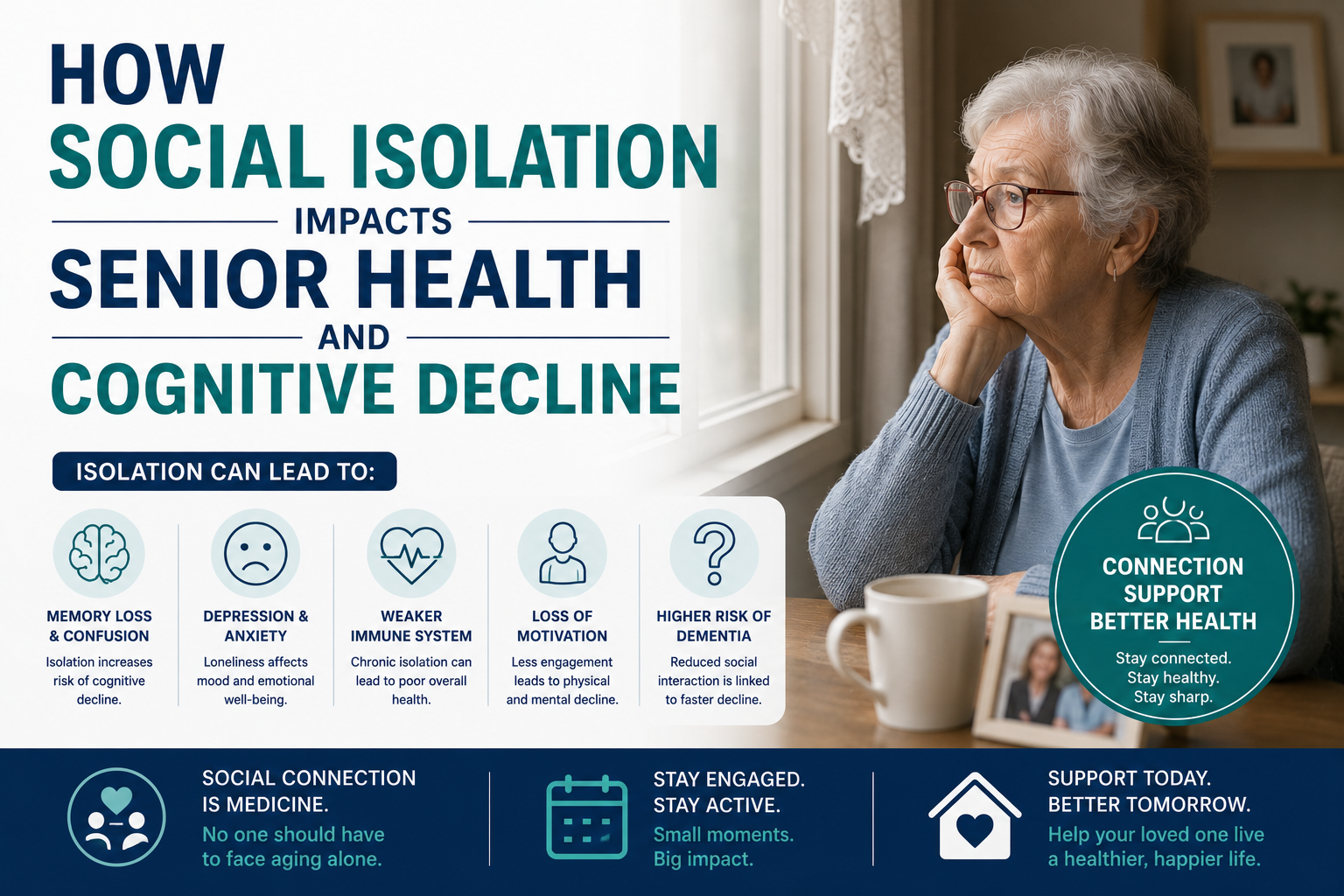
Research continues to show that socially isolated seniors often experience poorer health outcomes than those who maintain strong social connections.
Possible physical effects include:
• Higher blood pressure
• Increased cardiovascular risk
• Weakened immune response
• Reduced physical activity
• Poor sleep quality
• Increased inflammation
Social isolation can also influence daily habits.
Seniors who spend most of their time alone may become less motivated to:
• Exercise
• Prepare healthy meals
• Attend appointments
• Follow medication schedules
• Participate in activities
Over time, these behavioral changes can contribute to declining health.
The Relationship Between Isolation And Cognitive Decline
One of the most concerning effects of social isolation involves cognitive health.
The brain benefits from regular stimulation.
Every conversation requires attention, memory, language processing, and critical thinking.
Social interaction encourages mental engagement in ways that passive activities often cannot.
When social activity decreases significantly, cognitive stimulation may also decline.
Studies have linked social isolation to:
• Faster memory decline
• Reduced cognitive performance
• Increased dementia risk
• Difficulty with executive functioning
• Reduced problem-solving ability
Although isolation does not directly cause dementia, it may contribute to factors associated with cognitive decline.
Maintaining meaningful social interaction is often considered an important part of supporting brain health throughout aging.
Emotional Effects Of Loneliness
The emotional impact of isolation can be profound.
Many seniors experience feelings such as:
• Sadness
• Anxiety
• Hopelessness
• Frustration
• Loss of purpose
These emotions may gradually affect daily functioning.
Some older adults withdraw further from social opportunities because they feel disconnected or discouraged.
This can create a cycle where isolation leads to loneliness, which then increases further isolation.
Breaking this cycle often requires intentional support and engagement.
Why Retirement Can Increase Isolation
Retirement represents a major life transition.
For decades, many individuals spend a significant portion of their day interacting with coworkers, clients, and community members.
After retirement, those regular interactions often disappear.
While retirement can provide freedom and flexibility, it can also reduce social structure.
Without intentional efforts to remain engaged, seniors may gradually experience:
• Reduced social contact
• Fewer daily conversations
• Less mental stimulation
• Increased feelings of loneliness
Establishing new routines and activities often becomes essential for maintaining emotional well-being.
How Mobility Challenges Contribute To Isolation
Physical limitations are another common contributor to social isolation.
As mobility declines, activities that were once simple may become difficult.
Challenges may include:
• Driving limitations
• Walking difficulties
• Chronic pain
• Vision impairment
• Balance concerns
As a result, seniors may stop attending:
• Community events
• Religious services
• Family gatherings
• Social clubs
• Recreational activities
Professional support can help address these barriers and encourage continued engagement.
The Hidden Impact Of Losing A Spouse Or Close Friends
Many older adults experience significant personal losses.
The death of a spouse, sibling, or longtime friend can dramatically alter social networks.
These losses often affect:
• Emotional support systems
• Daily routines
• Social opportunities
• Sense of identity
Grief can increase the risk of isolation if individuals withdraw from relationships and activities.
Family members should remain attentive during these periods and encourage healthy social connections whenever possible.
Signs That A Senior May Be Experiencing Social Isolation
Isolation is not always obvious.
Some seniors may not openly discuss feelings of loneliness.
Family members should watch for signs such as:
• Spending most days alone
• Loss of interest in hobbies
• Increased television watching
• Avoiding phone calls
• Declining participation in activities
• Reduced communication
• Mood changes
• Increased forgetfulness
Recognizing these signs early can help families intervene before isolation begins affecting overall health.
Why Social Engagement Supports Healthy Aging
Healthy aging involves more than managing physical health.
It also includes maintaining emotional and cognitive well-being.
Social engagement often encourages seniors to:
• Stay active
• Remain mentally stimulated
• Follow routines
• Maintain relationships
• Participate in meaningful activities
These benefits contribute to a stronger sense of purpose and improved quality of life.
For many older adults, staying connected to others remains one of the most important factors in successful aging.
How Companionship Care Helps Reduce Social Isolation
One of the most effective ways to combat loneliness among older adults is through companionship care.
While many people associate caregiving primarily with physical assistance, companionship plays an equally important role.
Companion caregivers provide:
• Conversation
• Emotional support
• Shared activities
• Social engagement
• Encouragement
• Routine interaction
These daily interactions can have a meaningful impact on a senior’s overall well-being.
For someone who spends most of the day alone, simply having another person to talk with can improve mood and increase feelings of connection.
Companionship care is often one of the most valuable yet underestimated forms of support available to seniors.
The Connection Between Mental Stimulation And Brain Health
The human brain thrives on activity.
Just like muscles become weaker without exercise, cognitive abilities may decline when the brain receives less stimulation.
Social interaction naturally exercises many important cognitive functions.
During conversations, seniors continuously engage skills such as:
• Memory recall
• Listening
• Problem solving
• Language processing
• Decision making
• Emotional interpretation
These activities help keep the brain active and engaged.
Regular interaction may support cognitive function and contribute to healthier aging.
This is one reason healthcare professionals increasingly emphasize social engagement as part of overall wellness.
Why Isolation Often Leads To Self-Neglect
As loneliness increases, many seniors begin paying less attention to important daily habits.
Without social interaction and routine accountability, some older adults may gradually neglect their own needs.
Examples may include:
• Skipping meals
• Missing medications
• Ignoring medical concerns
• Reducing personal hygiene
• Avoiding physical activity
• Neglecting household responsibilities
These behaviors can contribute to declining health and reduced quality of life.
Family members often notice changes only after problems become more severe.
Professional caregivers can help identify these patterns early and provide support before they escalate.
How Home Care Encourages Social Engagement
Many people assume home care focuses only on physical assistance.
In reality, caregivers often play a significant role in helping seniors remain socially connected.
Home care services may support:
• Family visits
• Community activities
• Religious participation
• Recreational programs
• Transportation assistance
• Social outings
Caregivers frequently encourage seniors to maintain relationships and participate in activities that bring them joy and fulfillment.
This support can help prevent isolation from becoming a long-term issue.
The Impact Of Isolation On Family Relationships
Social isolation affects not only seniors but also their families.
Adult children often become concerned when they notice a parent spending more time alone.
Many experience:
• Worry
• Guilt
• Stress
• Uncertainty
Family members may feel torn between personal responsibilities and the desire to provide more support.
Professional home care can help bridge this gap.
By providing regular companionship and monitoring, caregivers offer reassurance that a loved one is receiving consistent social interaction and attention.
This often reduces stress for family members while improving quality of life for the senior.
Technology Helps, But It Cannot Replace Human Connection
Technology has created many opportunities for communication.
Video calls.
Text messages.
Social media.
Virtual events.
These tools can certainly help older adults stay connected.
However, technology cannot completely replace face-to-face interaction.
Human connection involves:
• Physical presence
• Shared experiences
• Emotional cues
• Personal engagement
• Meaningful conversation
While technology can supplement social interaction, genuine relationships remain essential for emotional well-being.
A balanced approach often works best.
Why Routine And Structure Matter
Many seniors benefit from having a predictable daily routine.
Routine provides:
• Stability
• Purpose
• Motivation
• Organization
• Social opportunities
Without structure, days may begin to feel repetitive and isolating.
Companion caregivers often help create positive routines that encourage activity and engagement.
Simple activities such as:
• Morning walks
• Shared meals
• Games
• Reading
• Community visits
can significantly improve daily life.
Routine often becomes an important foundation for both emotional and cognitive health.
Building A Strong Support System
Healthy aging rarely happens in isolation.
The most successful aging experiences often involve a strong support network.
This network may include:
• Family members
• Friends
• Neighbors
• Healthcare professionals
• Caregivers
• Community organizations
Each relationship contributes to a senior’s sense of belonging and security.
When support systems remain active, seniors are more likely to stay engaged, confident, and connected.
Families should view social well-being as an important part of overall healthcare.
Practical Ways Families Can Reduce Isolation
There are many simple steps families can take to support social engagement.
Examples include:
Encourage Regular Communication
• Phone calls
• Video chats
• Family visits
Promote Community Participation
• Senior centers
• Volunteer opportunities
• Clubs and groups
• Religious organizations
Support Physical Activity
• Walking groups
• Exercise programs
• Outdoor activities
Consider Professional Companionship Care
• Regular visits
• Social interaction
• Transportation support
• Activity participation
Small actions often make a significant difference over time.
Frequently Asked Questions
What is the difference between loneliness and social isolation?
Social isolation refers to limited contact with others, while loneliness is the emotional feeling of being disconnected or lacking meaningful relationships.
Can social isolation affect physical health?
Yes. Research has linked social isolation to increased health risks including reduced physical activity, cardiovascular concerns, poor sleep, and weakened immune function.
Does loneliness increase the risk of cognitive decline?
Studies suggest that social isolation and loneliness may contribute to faster cognitive decline and increased dementia risk.
How does companionship care help seniors?
Companionship care provides social interaction, emotional support, conversation, and engagement that can improve overall well-being.
What are common signs of isolation?
Signs may include social withdrawal, reduced communication, mood changes, loss of interest in activities, and increased time spent alone.
Can home care reduce loneliness?
Yes. Professional caregivers often provide companionship and help seniors remain connected to family, friends, and community activities.
Why is social engagement important for brain health?
Social interaction stimulates memory, language processing, problem solving, and other cognitive functions that help keep the brain active.
Does technology solve loneliness?
Technology can help maintain communication, but it cannot fully replace meaningful in-person human interaction.
Who is most at risk for social isolation?
Seniors experiencing mobility limitations, retirement, loss of a spouse, chronic illness, or transportation challenges may face higher risks.
When should families seek additional support?
Families should consider support when isolation begins affecting emotional health, daily functioning, or overall quality of life.
Conclusion
Social isolation is far more than a social issue.
It is a significant health concern that can affect physical well-being, emotional health, cognitive function, and overall quality of life.
As people age, factors such as retirement, mobility challenges, health conditions, and personal loss can gradually reduce social engagement.
Without intervention, isolation may contribute to declining health and increased risks for depression, cognitive decline, and self-neglect.
The encouraging news is that meaningful social connections can make a powerful difference.
Through family involvement, community engagement, companionship care, and professional home care services, seniors can maintain stronger relationships, greater emotional well-being, and a higher quality of life.
Healthy aging is not only about medical care.
It is also about connection, purpose, and belonging.
By recognizing the importance of social engagement and addressing isolation early, families can help their loved ones age with dignity, confidence, and fulfillment.