Quick Answer
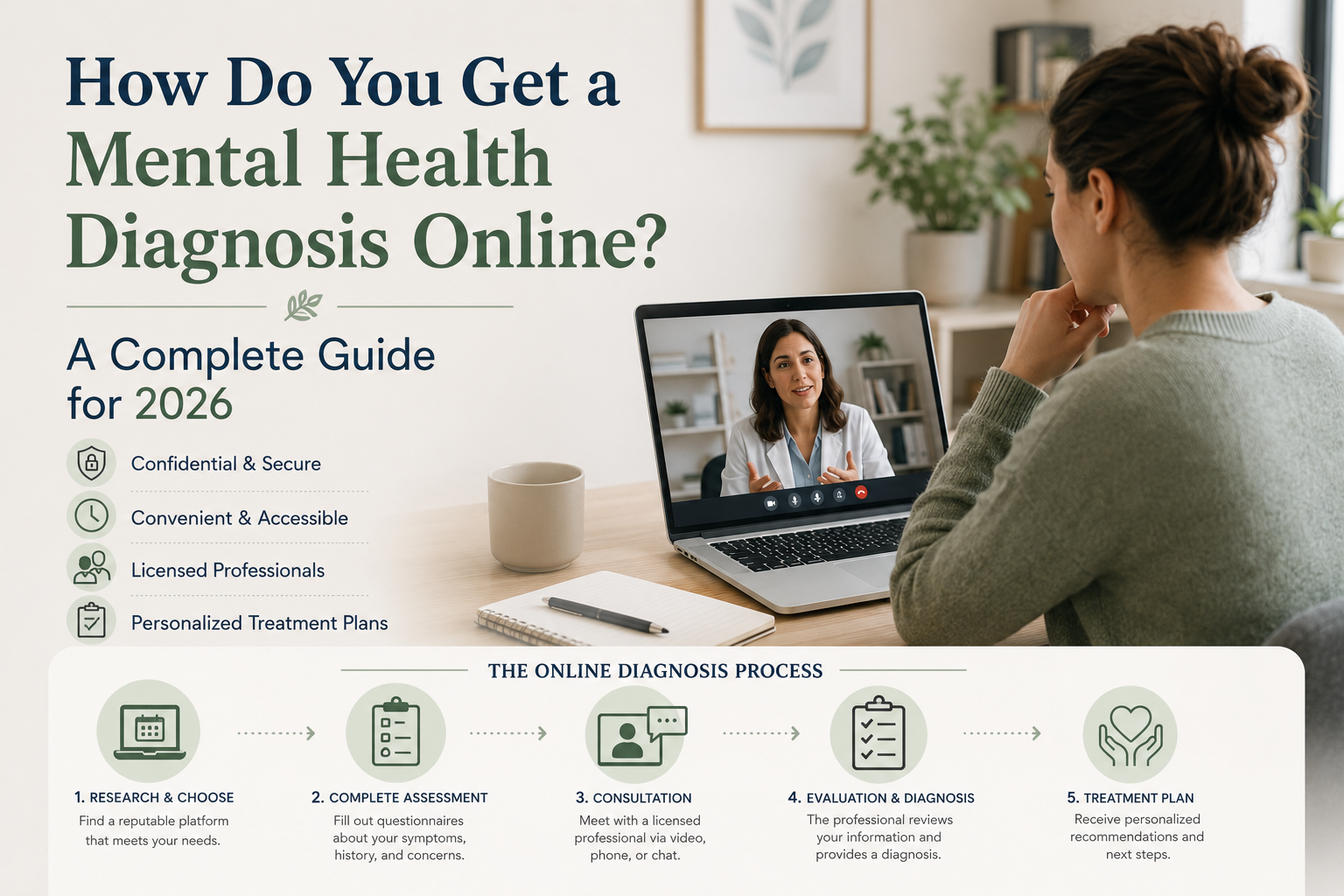
Yes, many mental health conditions can be evaluated and diagnosed through telehealth appointments. During an online mental health assessment, a licensed provider reviews your symptoms, medical history, mental health history, current challenges, and treatment goals. Depending on the information gathered, a diagnosis may be made during the initial evaluation or after additional assessment. Online mental health care allows patients to receive professional support, treatment recommendations, therapy referrals, and medication management without needing to visit a clinic in person.
Quick FAQs
Can mental health conditions be diagnosed online?
Yes. Many mental health conditions can be assessed through secure telehealth appointments with qualified mental health providers.
Is an online mental health diagnosis legitimate?
A diagnosis made through a licensed healthcare provider using an appropriate clinical evaluation is generally considered legitimate regardless of whether the appointment occurs in person or online.
What conditions can be diagnosed online?
Conditions commonly evaluated through telehealth include anxiety disorders, depression, ADHD, PTSD, panic disorder, mood disorders, obsessive-compulsive disorder, and other mental health concerns.
How long does an online mental health evaluation take?
Most initial evaluations last between 45 and 90 minutes depending on symptoms and clinical complexity.
Will I receive treatment after my diagnosis?
Treatment recommendations may include therapy, medication management, behavioral strategies, lifestyle changes, follow-up care, or a combination of approaches.
Why More People Are Seeking Mental Health Diagnoses Online
Just a few years ago, many people assumed mental health care required multiple in-person office visits. Today, telehealth has transformed how individuals access support, making evaluations, treatment planning, and follow-up care more convenient than ever before.
People are increasingly turning to online mental health services because they want easier access to care. Some live in areas with limited mental health resources. Others have demanding schedules, transportation challenges, physical limitations, childcare responsibilities, or simply prefer the comfort and privacy of receiving care from home.
As telehealth has become more common, one question continues to appear in search engines, AI assistants, and healthcare discussions:
“Can I actually get diagnosed online?”
For many patients, the answer is yes.
Understanding how online diagnosis works can help individuals make informed decisions about seeking care and reduce uncertainty about the process.
What Is an Online Mental Health Diagnosis?
An online mental health diagnosis is a clinical assessment conducted through a secure telehealth platform rather than in a traditional office setting.
The process is designed to accomplish many of the same goals as an in-person evaluation. A provider gathers information about symptoms, emotional health, daily functioning, medical history, previous treatment experiences, and personal circumstances.
The technology used to conduct the appointment changes, but the purpose remains the same: understanding what a person is experiencing and determining whether their symptoms meet diagnostic criteria for a mental health condition.
A diagnosis is never based on a single symptom or a short questionnaire alone. Mental health providers consider a variety of factors before making clinical decisions.
What Happens During an Online Mental Health Evaluation?
Many first-time patients imagine an online diagnosis involves answering a few questions and immediately receiving a label.
In reality, the process is much more comprehensive.
Most evaluations begin with a conversation about what prompted you to seek care. Your provider will want to understand what symptoms you are experiencing, how long they have been present, how severe they are, and how they affect your daily life.
You may discuss concerns such as anxiety, depression, panic attacks, ADHD symptoms, mood changes, difficulty concentrating, sleep problems, stress, trauma, emotional exhaustion, relationship challenges, or other mental health concerns.
Providers often explore how symptoms impact work performance, academic responsibilities, family life, social relationships, motivation, energy levels, and overall well-being.
The goal is to understand the complete picture rather than focusing on a single complaint.
Why Providers Ask About Medical History
Many people are surprised when a mental health evaluation includes questions about physical health.
Mental and physical health influence one another in important ways. Certain medical conditions can contribute to symptoms that resemble mental health disorders. Likewise, some medications, sleep disorders, hormonal conditions, neurological issues, and chronic illnesses can affect mood, concentration, energy, and emotional well-being.
By reviewing medical history, providers can make more accurate assessments and avoid overlooking factors that may be contributing to symptoms.
A comprehensive evaluation looks beyond mental health alone and considers the broader context of a person’s overall health.
Can Anxiety Be Diagnosed Online?
Anxiety disorders are among the most commonly evaluated conditions through telehealth.
Individuals experiencing excessive worry, panic attacks, racing thoughts, physical tension, avoidance behaviors, sleep disruption, or persistent feelings of nervousness often seek online evaluations to better understand what they are experiencing.
A provider will typically assess the frequency, severity, and impact of symptoms while also exploring potential contributing factors. The goal is not simply to identify anxiety but to understand how it affects daily life and whether another condition may also be involved.
For many patients, telehealth provides an effective way to begin addressing anxiety without the added stress of traveling to an office.
Can Depression Be Diagnosed Online?
Depression is another condition that is frequently evaluated through virtual appointments.
Symptoms such as persistent sadness, loss of interest in activities, low energy, changes in appetite, difficulty concentrating, feelings of hopelessness, and sleep disturbances can often be assessed effectively through telehealth.
Providers evaluate how symptoms affect functioning and quality of life while considering factors such as physical health, stress levels, life events, and previous treatment experiences.
A thoughtful evaluation helps determine whether symptoms are consistent with depression or whether additional factors should be considered.
Can ADHD Be Diagnosed Online?
ADHD is one of the most searched mental health topics today, particularly among adults who are beginning to recognize symptoms they may have experienced for years.
Telehealth evaluations often include discussions about attention difficulties, organization challenges, impulsivity, forgetfulness, time management struggles, academic history, work performance, and childhood experiences.
Because ADHD symptoms can overlap with anxiety, depression, stress, sleep problems, and other conditions, providers typically conduct thorough assessments before reaching conclusions.
Accurate diagnosis requires more than identifying concentration difficulties alone.
Can PTSD and Trauma-Related Conditions Be Evaluated Online?
Many individuals who have experienced traumatic events find telehealth especially appealing because it allows them to participate in evaluations from a familiar and comfortable environment.
Providers may discuss past experiences, current symptoms, emotional responses, sleep patterns, intrusive thoughts, avoidance behaviors, and other trauma-related concerns.
These conversations are approached carefully and at a pace that feels appropriate for the patient.
For many individuals, online care can provide a valuable entry point into trauma-informed treatment.
Is an Online Diagnosis as Accurate as an In-Person Diagnosis?
This is one of the most important questions patients ask.
The accuracy of a diagnosis depends primarily on the quality of the evaluation rather than the location where it occurs.
When conducted appropriately, telehealth evaluations can provide providers with the information needed to assess symptoms, identify patterns, and develop treatment recommendations.
In some situations, additional testing, assessments, or in-person services may still be recommended. However, many mental health concerns can be effectively evaluated through secure virtual appointments.
The focus should always be on receiving a comprehensive assessment from a qualified provider rather than whether the appointment takes place online or in person.
What Happens After You Receive a Diagnosis?
Receiving a diagnosis is not the end of the process. It is often the beginning.
Once a provider has a clearer understanding of what you are experiencing, treatment recommendations can be developed based on your specific needs.
Depending on the situation, recommendations may include therapy, medication management, behavioral interventions, lifestyle modifications, stress reduction strategies, additional evaluations, or ongoing follow-up care.
The goal is not simply to assign a diagnosis. The goal is to help patients move toward meaningful improvement and long-term wellness.
Common Misconceptions About Online Mental Health Diagnosis
One common misconception is that online evaluations are less thorough than in-person appointments. In reality, many telehealth assessments involve the same types of clinical conversations used during traditional office visits.
Another misconception is that everyone receives a diagnosis immediately. Some individuals require additional evaluation before a provider can confidently identify a condition.
Many people also believe they must already know what condition they have before scheduling an appointment. This is not true. Understanding symptoms and identifying possible diagnoses is part of the provider’s role.
Perhaps the biggest misconception is that seeking help online is somehow less legitimate than seeking help in person. Modern telehealth services have become an important part of healthcare and continue to help millions of people access care more conveniently.
Why Trust Sunny Skies Healthcare?
At Sunny Skies Healthcare, we believe mental health care should be accessible, personalized, and compassionate. Our team works closely with patients to understand their symptoms, concerns, and goals while developing treatment plans that reflect their individual needs.
Whether you are seeking answers about anxiety, depression, ADHD, trauma-related concerns, mood disorders, or other mental health challenges, our focus is on helping you gain clarity and move forward with confidence.
Through secure telehealth services and patient-centered care, we strive to make the process of seeking mental health support as comfortable and effective as possible.
Frequently Asked Questions
Requirements vary depending on your healthcare plan and location, but many patients can schedule an evaluation directly.
Many providers offer ongoing treatment, follow-up appointments, and medication management through telehealth when appropriate.
Feeling nervous is normal. Most providers work to create a comfortable and supportive environment where patients can speak openly.
Choose a quiet location, ensure a reliable internet connection, and be prepared to discuss your symptoms, medical history, and treatment goals.
You do not need to know what condition you may have before scheduling an evaluation. Helping patients understand their symptoms is part of the assessment process.
Licensed providers use secure platforms designed to protect patient privacy and confidentiality.
Conclusion
Online mental health diagnosis has made professional mental health care more accessible than ever before. Through secure telehealth appointments, individuals can receive comprehensive evaluations, treatment recommendations, and ongoing support without leaving home. While the process may feel unfamiliar at first, the goal remains the same as any traditional mental health evaluation: understanding your symptoms, identifying the factors affecting your well-being, and creating a path toward meaningful improvement. If you’ve been wondering whether an online mental health evaluation could help you find answers, could now be the right time to take that first step?