Mental health is influenced by much more than a single event or diagnosis. While genetics, life experiences, and medical conditions all play important roles, the habits we practice every day can also have a meaningful impact on our emotional well-being.
The way we sleep, manage stress, stay active, build relationships, and structure our daily routines all contribute to how we feel mentally and emotionally. These everyday choices may seem small on their own, but over time they help shape our resilience, energy levels, ability to cope with challenges, and overall quality of life.
Many people focus on improving their physical health by eating well or exercising regularly. Emotional wellness deserves the same level of attention. Developing healthy lifestyle habits cannot replace professional mental health treatment when it is needed, but these habits often work alongside therapy, counseling, and other treatments to support long-term recovery and well-being.
Understanding how lifestyle influences mental health allows individuals to make informed choices that support both their emotional and physical health.
Quick Answer
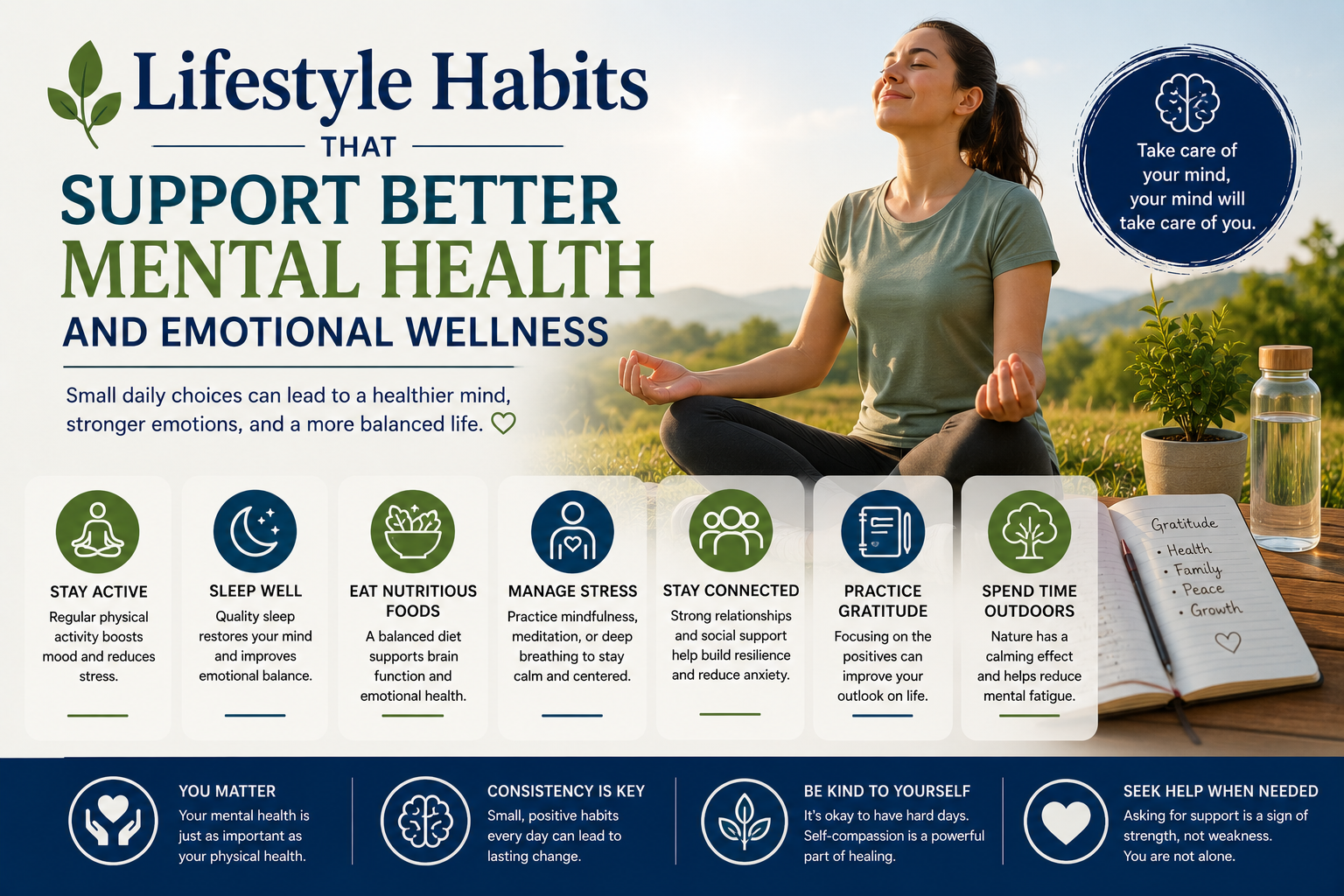
Healthy lifestyle habits create a strong foundation for emotional wellness. Consistent sleep, regular physical activity, healthy nutrition, stress management, supportive relationships, and structured daily routines all contribute to better mental health. While these habits are not substitutes for professional treatment, they can help improve resilience, reduce stress, and support overall emotional well-being.
Frequently Asked Questions
Can lifestyle habits really affect mental health?
Yes. Daily habits influence how the brain and body respond to stress, regulate emotions, maintain energy, and recover from challenges. Small, consistent improvements often produce meaningful long-term benefits.
Can healthy habits replace therapy or professional treatment?
No. Lifestyle changes are valuable, but they should not replace professional care for conditions such as anxiety, depression, OCD, or other behavioral health concerns. They work best as part of a comprehensive approach to mental wellness.
Which lifestyle habits have the biggest impact on mental health?
Sleep, physical activity, stress management, balanced nutrition, meaningful social connections, and consistent daily routines are among the habits most closely linked to emotional well-being.
How long does it take for healthy habits to make a difference?
Every individual is different. Some people notice improvements within a few weeks, while others experience gradual changes over several months. Consistency is generally more important than perfection.
Why Lifestyle Habits Matter
Mental health is rarely influenced by one single factor. Instead, emotional wellness develops through the combined effects of our daily behaviors, relationships, environment, physical health, and life experiences.
Healthy habits create stability. They help regulate the body’s natural rhythms, improve resilience during stressful periods, and provide routines that support both emotional and physical health.
Even small changes can become significant when practiced consistently over time.
| Healthy Lifestyle Habit | How It Supports Mental Health |
| Quality sleep | Supports emotional regulation and cognitive function. |
| Regular movement | Helps improve mood and reduce stress. |
| Balanced nutrition | Provides energy and supports overall brain health. |
| Stress management | Encourages healthier emotional responses. |
| Social connection | Reduces feelings of isolation and provides emotional support. |
| Consistent routines | Creates structure and stability throughout the day. |
Rather than focusing on dramatic lifestyle changes, many mental health professionals encourage individuals to build sustainable habits gradually.
The Connection Between Physical and Mental Health
Physical health and emotional health are closely connected. Changes in one area often influence the other.
For example, poor sleep may contribute to increased stress, while chronic stress can affect physical health by reducing energy, disrupting sleep, or making it more difficult to stay active. Likewise, prolonged emotional distress may influence motivation, eating habits, and overall physical well-being.
Understanding this connection encourages a more balanced approach to health rather than treating physical and mental wellness as separate concerns.
| Physical Health Factor | Possible Impact on Emotional Wellness |
| Poor sleep | Increased irritability, reduced concentration, higher stress levels. |
| Limited physical activity | Lower energy, reduced motivation, and changes in mood. |
| Chronic stress | Emotional fatigue and difficulty coping with daily challenges. |
| Poor nutrition | Reduced energy and overall well-being. |
| Ongoing mental health concerns | Changes in motivation, physical activity, and daily routines. |
When physical and emotional health are supported together, individuals often experience greater overall well-being.
Why Quality Sleep Remains One of the Most Important Habits
Among all lifestyle habits, sleep has one of the greatest influences on emotional wellness.
During sleep, the brain processes information, regulates emotions, strengthens memory, and restores cognitive function. Without enough restorative sleep, these natural recovery processes become less effective, making it more difficult to manage stress, maintain concentration, and respond calmly to everyday situations.
Healthy sleep habits support much more than feeling rested. They contribute to emotional resilience, clearer thinking, improved decision-making, and healthier daily functioning.
| Healthy Sleep Habit | Why It Matters |
| Maintain a regular bedtime | Helps regulate the body’s internal clock. |
| Reduce screen time before sleep | Supports easier transition into restful sleep. |
| Create a comfortable sleep environment | Encourages deeper and more consistent sleep. |
| Follow a consistent wake-up time | Helps maintain healthy daily routines. |
Sleep and mental health influence one another continuously. Improving one often creates positive changes in the other.
The Role of Physical Activity in Emotional Wellness
Physical activity supports much more than cardiovascular health or muscle strength.
Regular movement encourages the release of natural chemicals that help improve mood, reduce stress, and increase energy levels. Exercise also provides an opportunity to step away from daily pressures while supporting better sleep and improved concentration.
It is important to remember that movement does not need to involve intense workouts. Walking, stretching, yoga, cycling, gardening, or other enjoyable activities can all contribute to emotional well-being.
| Type of Activity | Potential Mental Health Benefits |
| Walking | Supports stress reduction and mental clarity. |
| Stretching or yoga | Encourages relaxation and flexibility. |
| Recreational sports | Combines physical activity with social connection. |
| Strength training | May improve confidence and energy levels. |
| Daily movement | Supports consistent emotional and physical wellness. |
The goal is not perfection or athletic performance. Building a routine that is enjoyable and sustainable often produces the greatest long-term benefits.
Why Small Steps Often Lead to Lasting Change
Improving mental health does not require changing every part of your life overnight. In fact, trying to transform multiple habits at once can often feel overwhelming, making it difficult to stay consistent.
Long-term emotional wellness is usually built through small, realistic changes that gradually become part of everyday life. One healthy habit often leads to another, creating positive momentum over time.
Rather than focusing on perfection, it is often more helpful to ask, “What is one small change I can make today?”
| Small Lifestyle Change | Long-Term Benefit |
| Going to bed 30 minutes earlier | Supports healthier sleep patterns. |
| Taking a short walk each day | Improves physical activity and reduces stress. |
| Spending time with supportive people | Strengthens emotional resilience. |
| Scheduling regular breaks | Helps prevent mental exhaustion. |
| Practicing relaxation techniques | Supports healthier responses to stress. |
These habits may appear simple, but when repeated consistently they often contribute to meaningful improvements in emotional well-being.
Developing Long-Term Mental Wellness
Mental wellness is not something that is achieved once and then forgotten. Like physical health, emotional well-being requires ongoing care and attention throughout different stages of life.
There will naturally be periods that feel easier than others. Work responsibilities, family changes, financial pressures, illness, or unexpected life events can all influence emotional health. Developing healthy lifestyle habits helps create a stronger foundation that makes these challenges easier to manage.
Long-term mental wellness is often supported by several habits working together rather than relying on a single solution.
| Pillar of Mental Wellness | Why It Matters |
| Healthy daily routines | Creates structure and stability. |
| Emotional awareness | Helps recognize challenges early. |
| Stress management | Reduces the emotional impact of daily pressures. |
| Supportive relationships | Encourages connection and reduces isolation. |
| Professional care when needed | Provides guidance during more difficult periods. |
The goal is not to eliminate stress completely. Instead, it is to develop habits that help you recover, adapt, and continue moving forward.
The Importance of Self-Awareness
Self-awareness is one of the most valuable skills for maintaining emotional wellness.
When individuals become more aware of their thoughts, emotions, and daily habits, they are often better able to recognize changes before they become more serious. This awareness creates opportunities to make healthier decisions earlier rather than waiting until emotional challenges become overwhelming.
Paying attention to small changes can make a significant difference over time.
| Area to Monitor | Why It Is Important |
| Mood | Recognizing emotional changes early. |
| Energy levels | Identifying physical or emotional fatigue. |
| Stress levels | Understanding when additional support may be helpful. |
| Sleep quality | Monitoring one of the strongest indicators of emotional health. |
| Daily motivation | Noticing changes in interest or productivity. |
Developing self-awareness is not about judging yourself. It is about understanding your own patterns and responding with care and compassion.
Learning Healthy Ways to Cope With Stress
Life will always include challenges. While it is impossible to remove every stressful situation, it is possible to develop healthier ways of responding to them.
Healthy coping strategies help reduce emotional pressure while improving resilience during difficult periods.
Different strategies work for different people, which is why it is important to discover approaches that fit your lifestyle and personal needs.
| Healthy Coping Strategy | How It Supports Emotional Wellness |
| Regular physical activity | Helps reduce stress and improve mood. |
| Relaxation techniques | Encourages both physical and mental recovery. |
| Talking with trusted people | Provides emotional support and perspective. |
| Journaling or reflection | Helps organize thoughts and emotions. |
| Professional counseling | Offers personalized guidance and evidence-based support. |
Healthy coping skills become stronger through regular practice rather than waiting until stress becomes overwhelming.
The Value of Professional Mental Health Support
There is a common misconception that professional mental health care is only necessary during severe emotional crises.
In reality, many people benefit from speaking with a mental health professional long before symptoms become overwhelming. Early support can help individuals better understand their emotions, develop healthy coping skills, and prevent smaller concerns from becoming more disruptive.
Professional care may be helpful for a variety of situations.
| Concern | How Professional Support Can Help |
| Anxiety | Learning strategies to manage excessive worry and stress. |
| Depression | Developing personalized treatment plans and emotional support. |
| OCD | Understanding intrusive thoughts and evidence-based treatment options. |
| Sleep difficulties | Identifying factors affecting emotional and physical recovery. |
| Chronic stress | Building healthier coping strategies and resilience. |
| General emotional wellness | Supporting long-term mental health and personal growth. |
Seeking support should be viewed as an investment in your health rather than a last resort.
How Mental Health Influences Everyday Life
Mental health affects much more than emotions. It influences how people think, communicate, work, build relationships, and make decisions every day.
When emotional wellness begins to decline, even routine responsibilities can become more difficult to manage.
| Area of Daily Life | Possible Impact of Poor Mental Health |
| Work or school | Reduced concentration and productivity. |
| Relationships | Greater misunderstandings and emotional strain. |
| Physical health | Lower energy levels and changes in daily habits. |
| Personal goals | Reduced motivation and difficulty maintaining routines. |
| Overall quality of life | Less enjoyment in everyday activities. |
Supporting emotional wellness often creates positive changes across many areas of life rather than improving only one specific concern.
Why Consistency Creates Lasting Results
One healthy decision rarely changes everything overnight.
The greatest improvements in emotional wellness usually come from repeating small positive habits over weeks, months, and years. Consistency allows healthy routines to become part of everyday life rather than temporary efforts.
| Habit | Long-Term Benefit |
| Consistent sleep schedule | Better emotional regulation and energy. |
| Regular movement | Improved mood and stress management. |
| Balanced daily routine | Greater stability and focus. |
| Self-care practices | Better emotional recovery. |
| Attending therapy when appropriate | Continued personal growth and emotional resilience. |
Progress is rarely perfect, and setbacks are a normal part of building healthier habits. What matters most is returning to those habits consistently over time.
Recognizing When Additional Support May Be Needed
Healthy lifestyle habits are powerful tools, but they are not always enough on their own.
If emotional challenges begin affecting daily life, work, relationships, or overall well-being, professional support may provide the guidance needed to move forward.
Some signs that additional support may be beneficial include:
| Possible Sign | Why It Should Not Be Ignored |
| Persistent anxiety | Ongoing worry that interferes with everyday life. |
| Symptoms of depression | Lasting sadness, low motivation, or loss of interest. |
| Chronic sleep difficulties | Sleep problems affecting emotional health. |
| OCD symptoms | Intrusive thoughts or repetitive behaviors becoming difficult to manage. |
| Emotional distress | Feeling overwhelmed for an extended period. |
Seeking help early often makes treatment more effective and supports better long-term outcomes.
Building a Strong Foundation for Emotional Wellness
Emotional wellness develops through many small choices made consistently over time.
Healthy sleep, regular physical activity, supportive relationships, balanced daily routines, effective stress management, and professional care when needed all work together to create a stronger foundation for mental health.
Rather than searching for one perfect solution, it is often more helpful to focus on building habits that support long-term emotional balance.
| Foundation for Mental Wellness | Why It Matters |
| Healthy sleep | Supports emotional regulation and recovery. |
| Physical activity | Improves mood and overall well-being. |
| Positive relationships | Provides encouragement and emotional support. |
| Stress management | Helps individuals respond more effectively to challenges. |
| Professional mental health care | Offers guidance when additional support is needed. |
Mental Health Is an Investment in Your Future
Supporting your mental health is one of the most valuable investments you can make—not only for today but for the years ahead.
Healthy lifestyle habits strengthen resilience, improve relationships, increase productivity, and support a greater sense of balance throughout life. Although progress may not always happen quickly, consistent effort often leads to meaningful and lasting change.
At Sunny Skies Healthcare, we believe emotional wellness is built through a combination of healthy daily habits, compassionate support, and personalized mental health care. Whether you are working to improve your lifestyle, manage ongoing stress, or address concerns such as anxiety, depression, OCD, or sleep difficulties, taking the first step toward better mental health is always a step worth taking.
Frequently Asked Questions
Can lifestyle habits really improve mental health?
Healthy lifestyle habits can make a meaningful difference in emotional well-being. Consistent sleep, regular physical activity, balanced nutrition, healthy stress management, and supportive relationships all contribute to better mental health. While these habits may not eliminate mental health conditions on their own, they often complement professional treatment and help individuals feel more resilient in everyday life.
Is professional mental health treatment still important?
Yes. Lifestyle changes are an important part of maintaining emotional wellness, but they should not replace professional care when symptoms become persistent or begin affecting daily life. Mental health professionals can provide personalized treatment plans, therapy, medication management when appropriate, and evidence-based strategies that support long-term recovery.
Why is sleep so important for mental health?
Sleep allows the brain to recover, process emotions, strengthen memory, and regulate stress. When sleep is consistently disrupted, many people experience increased irritability, difficulty concentrating, reduced energy, and greater emotional sensitivity. Improving sleep quality often becomes one of the first steps toward improving overall mental wellness.
Can regular exercise support emotional wellness?
Yes. Physical activity benefits both the body and the mind. Regular movement may help improve mood, reduce stress, increase energy levels, and support healthier sleep patterns. Exercise does not need to be intense to be effective. Walking, stretching, cycling, yoga, or other enjoyable activities can all contribute to better emotional well-being when practiced consistently.
Why are supportive relationships important for mental health?
Strong relationships provide encouragement, understanding, and emotional support during both everyday challenges and difficult life situations. Feeling connected to trusted family members, friends, or community groups can reduce feelings of loneliness while helping individuals cope more effectively with stress and emotional difficulties.
How does ongoing stress affect mental health?
Stress is a normal part of life, but chronic or unmanaged stress can begin affecting both emotional and physical health. It may contribute to anxiety, sleep difficulties, mood changes, fatigue, and reduced concentration. Learning healthy coping strategies and recognizing stress early can help prevent it from having a greater impact on overall well-being.
What does emotional resilience mean?
Emotional resilience refers to the ability to adapt to challenges, recover from setbacks, and continue moving forward during difficult times. Resilience does not mean avoiding stress or never experiencing emotional struggles. Instead, it involves developing healthy habits, supportive relationships, and coping skills that help individuals respond to life’s challenges more effectively.
When should someone consider seeking professional support?
Professional support may be beneficial when emotional symptoms continue for several weeks, interfere with work, school, relationships, or daily responsibilities, or begin affecting overall quality of life. Seeking help early often leads to better outcomes and provides individuals with the tools needed to manage challenges before they become more severe.
Can small lifestyle changes really make a difference?
Absolutely. Many lasting improvements begin with small, consistent actions rather than dramatic changes. Going to bed at the same time each night, taking a short daily walk, spending more time with supportive people, or practicing relaxation techniques can gradually create meaningful improvements in emotional health over time.
Why is mental wellness important for overall health?
Mental wellness influences nearly every aspect of daily life, including relationships, work performance, decision-making, physical health, motivation, and overall quality of life. When emotional well-being is supported, individuals often experience greater resilience, improved focus, healthier relationships, and a stronger sense of balance in their personal and professional lives.
Conclusion
Mental health is shaped by many interconnected factors rather than one single habit or life experience. Quality sleep, regular physical activity, balanced nutrition, effective stress management, meaningful social connections, and consistent daily routines all work together to support emotional wellness. While these lifestyle habits cannot replace professional treatment when it is needed, they provide a strong foundation for better mental health and long-term well-being.
It is also important to remember that meaningful progress rarely happens overnight. Lasting change is often built through small, realistic improvements practiced consistently over time. A healthier sleep schedule, regular movement, stronger relationships, or learning healthier ways to manage stress may seem like simple steps, but together they can have a lasting impact on emotional resilience and overall quality of life.
Everyone’s mental health journey is different. Some individuals may benefit from lifestyle improvements alone, while others may also require professional guidance to address concerns such as anxiety, depression, OCD, chronic stress, or sleep difficulties. There is no single path that works for everyone, which is why a personalized approach to mental wellness is so important.
At Sunny Skies Healthcare, we believe mental wellness is an ongoing journey rather than a destination. Our compassionate team is committed to helping individuals better understand their emotional health, develop healthy coping strategies, and access personalized care when additional support is needed. By combining healthy lifestyle habits with evidence-based mental health care, individuals can build a stronger