Quick Answer
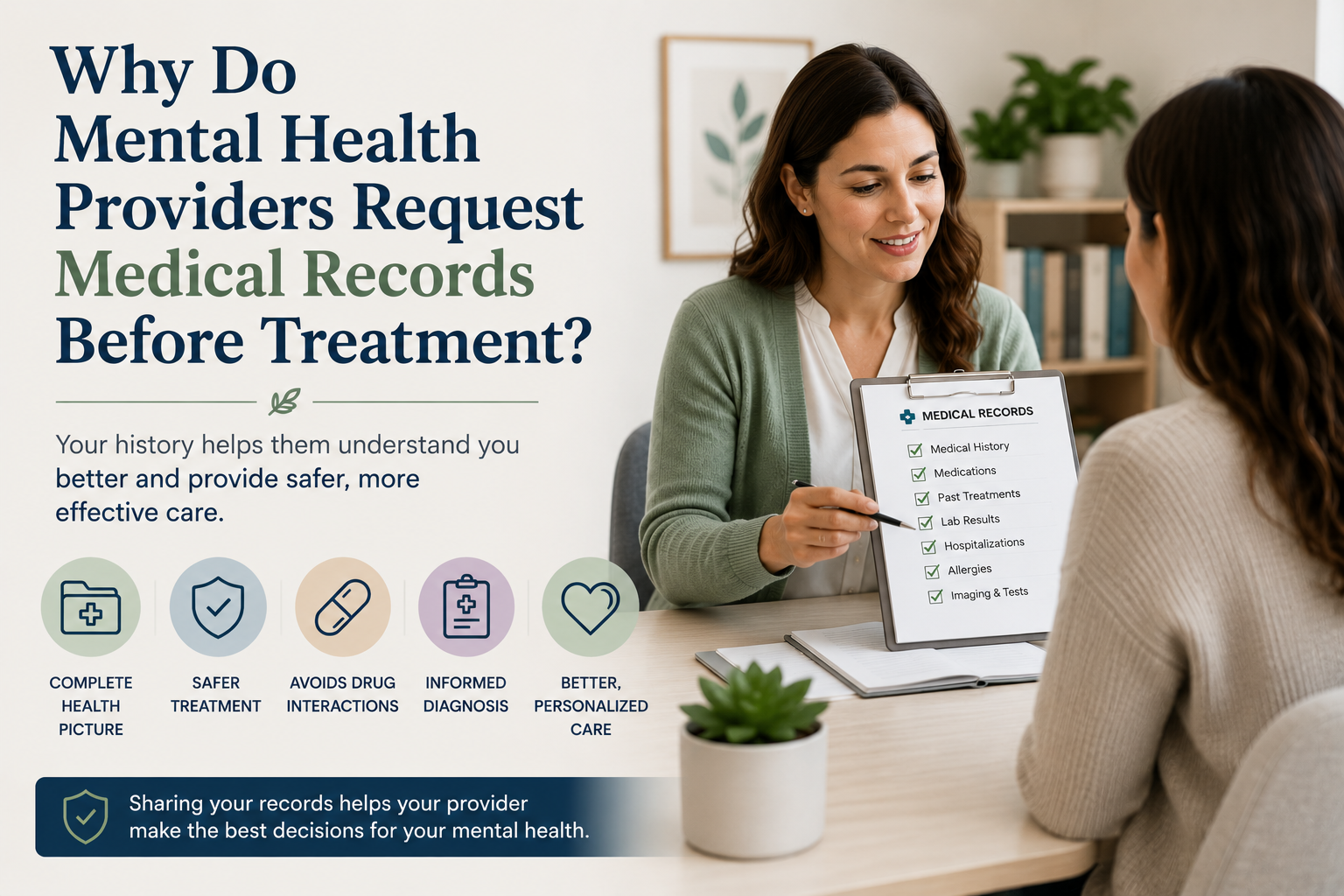
Mental health providers often request medical records before treatment because previous healthcare information can help them better understand your history, symptoms, diagnoses, medications, and past treatment experiences. Access to relevant records allows providers to make more informed decisions, avoid unnecessary repetition, identify treatments that have or have not worked in the past, and create a more personalized treatment plan. Medical records are only requested with appropriate patient authorization and are handled according to privacy laws designed to protect confidential health information.
Quick FAQs
Why does my mental health provider want my medical records?
Medical records help providers understand your health history, previous diagnoses, medication use, and past treatment experiences so they can make informed treatment decisions.
Do I have to give permission before records are shared?
Yes. In most situations, healthcare providers require your written authorization before requesting records from another provider.
What is a HIPAA authorization form?
A HIPAA authorization form allows a healthcare provider to request or receive specific health information from another healthcare provider or facility.
What types of records may be requested?
Depending on your care needs, records may include treatment notes, medication history, previous evaluations, hospital records, therapy records, lab results, or other relevant healthcare information.
Are my medical records kept private?
Healthcare providers are required to follow privacy laws and confidentiality standards designed to protect patient information.
Why Patients Are Often Surprised When Records Are Requested
Many people expect their first mental health appointment to focus entirely on current symptoms. They may be prepared to discuss anxiety, depression, ADHD, stress, trauma, mood changes, or other concerns. What often catches them off guard is being asked about previous healthcare providers or being asked to sign forms that allow medical records to be requested.
This sometimes creates confusion.
Patients may wonder why records are needed when they are already willing to explain what they are experiencing. Others worry that records from years ago may no longer be relevant. Some are concerned about privacy and whether their information will remain protected.
These concerns are understandable, especially for individuals who have never participated in mental health treatment before. However, medical records often provide valuable information that helps providers deliver safer, more effective, and more personalized care.
Understanding why records are requested can make the process feel far less intimidating.
Why Mental Health Treatment Requires a Complete Picture
Mental health symptoms rarely exist in isolation.
Anxiety, depression, ADHD, trauma-related conditions, mood disorders, sleep disturbances, stress, physical health conditions, and medication effects often influence one another in complex ways. What appears to be one issue on the surface may have multiple contributing factors beneath it.
A provider meeting a patient for the first time has only a limited view of their health history. Even during a thorough evaluation, there may be important details that are difficult to remember, explain, or fully understand in a single appointment.
Medical records help fill in those gaps.
They provide historical information that allows providers to see patterns over time rather than relying entirely on a snapshot of what is happening today. This broader perspective often improves decision-making and helps create more effective treatment plans.
What Information Can Medical Records Provide?
Medical records often contain details that are highly relevant to mental health treatment.
Previous evaluations may reveal diagnoses that were identified years earlier. Medication records may show treatments that were effective, medications that caused side effects, or therapies that produced meaningful improvement.
Hospital records can provide insight into significant health events. Therapy records may help providers understand treatment goals, challenges, and progress. Laboratory results may identify physical health concerns that could influence emotional well-being.
In many situations, records help providers understand the journey a patient has already taken rather than starting from the beginning every time they seek care.
This continuity can improve efficiency and reduce unnecessary repetition.
Why Medication History Matters
One of the most valuable reasons providers request records is to review medication history.
Mental health treatment often involves understanding what has been tried in the past and how the body responded. Some medications may have been highly effective. Others may have caused side effects or failed to produce meaningful improvement.
Without access to previous records, providers may have to rely entirely on memory, which is not always accurate or complete.
A detailed medication history can help avoid repeating unsuccessful treatments while identifying options that may have been beneficial previously.
This information can be especially important for individuals who have received care from multiple providers over several years.
The Connection Between Physical Health and Mental Health
Many people think of mental health and physical health as separate issues. In reality, they are closely connected.
Certain medical conditions can contribute to symptoms that resemble anxiety, depression, attention difficulties, irritability, fatigue, or mood changes. Sleep disorders, thyroid conditions, hormonal imbalances, neurological conditions, chronic pain, nutritional deficiencies, and other health concerns may influence emotional well-being.
Medical records often help providers identify these connections.
Understanding a patient’s overall health history allows providers to consider both physical and psychological factors when developing treatment recommendations.
This comprehensive approach often leads to more accurate assessments and more effective care.
Why Providers Sometimes Request Records From Multiple Sources
Patients occasionally wonder why records are requested from more than one provider.
The reason is simple: healthcare information is often spread across different locations.
A primary care physician may have one set of records. A therapist may have another. A hospital may have additional information. Specialists may have documentation related to specific conditions or treatments.
Each source may contain information that contributes to a more complete understanding of a patient’s health history.
The goal is not to collect unnecessary information. The goal is to gather the information needed to support thoughtful clinical decision-making.
Providers generally focus on records that are relevant to current treatment needs.
What Is a HIPAA Authorization Form?
One of the most common questions patients ask is, “What exactly am I signing?”
A HIPAA authorization form is a document that gives healthcare providers permission to request or receive specific health information from another provider, clinic, hospital, therapist, or healthcare facility.
The form typically identifies who may share information, who may receive it, what information may be disclosed, and the purpose of the request.
Patients maintain control over whether authorization is provided.
Healthcare providers cannot simply collect records from other organizations whenever they choose. Appropriate consent and legal requirements must be followed.
The authorization process helps balance access to necessary healthcare information with patient privacy protections.
Are Mental Health Records Protected?
Privacy is one of the biggest concerns patients have when discussing medical records.
The good news is that healthcare providers are required to follow privacy laws designed to protect confidential patient information.
Mental health records are generally treated with the same seriousness and confidentiality as other healthcare information. Providers implement safeguards intended to protect records from unauthorized access while ensuring information can be used appropriately to support patient care.
Patients should feel comfortable asking questions about how information is stored, shared, and protected.
Transparency is an important part of building trust between patients and providers.
What Happens if You Do Not Have Previous Records?
Not every patient has medical records available.
Some individuals have never received mental health treatment before. Others may have changed providers multiple times, lost access to records, or simply be unsure where information is located.
A lack of records does not prevent treatment.
Mental health providers conduct evaluations based on the information available and work with patients to understand their symptoms, experiences, and goals. Records can be helpful, but they are not always required.
When records are unavailable, providers simply gather information through other clinical methods.
How Medical Records Improve Personalized Care
The best mental health treatment plans are individualized.
Two people with similar symptoms may require very different approaches based on their medical history, treatment experiences, personal circumstances, and goals.
Medical records provide context that helps providers understand those differences.
They reveal information that may otherwise take months to uncover through ongoing appointments alone. This can lead to more informed recommendations, more efficient treatment planning, and a better overall patient experience.
Rather than viewing records as paperwork, it can be helpful to view them as another tool that helps providers understand your story.
Common Misconceptions About Medical Record Requests
One common misconception is that providers request records because they do not trust what patients tell them. In reality, records are intended to complement patient conversations, not replace them.
Another misconception is that providers automatically receive access to all healthcare information. In most situations, authorization is required before records can be shared.
Some people also assume records are requested for administrative reasons alone. While documentation may have practical benefits, the primary purpose is improving clinical understanding and supporting patient care.
Finally, many individuals worry that providers will collect excessive information. Ethical healthcare providers generally focus on obtaining records that are relevant to treatment rather than gathering information unnecessarily.
Why Trust Sunny Skies Healthcare?
At Sunny Skies Healthcare, we believe informed treatment begins with understanding the whole person. When appropriate, reviewing relevant medical records can help our providers gain valuable insight into a patient’s health history, previous treatment experiences, and individual needs.
Our team is committed to protecting patient privacy while using available information responsibly to support thoughtful, personalized care. Whether you are seeking treatment for anxiety, depression, ADHD, trauma-related concerns, mood disorders, or other mental health challenges, we strive to create a treatment experience built on trust, transparency, and compassion.
Frequently Asked Questions
In many situations, patients can specify what information may be disclosed through the authorization process.
Timeframes vary depending on the provider or facility responding to the request.
Yes. Providers can evaluate and treat patients even when previous records cannot be obtained.
Patients may have the ability to revoke authorization according to applicable regulations and provider policies.
Not necessarily. The type of information requested depends on the purpose of the request and applicable privacy requirements.
Healthcare organizations generally require proper authorization before releasing protected health information.
Conclusion
When mental health providers request medical records, the goal is not to create extra paperwork or invade privacy. The goal is to gain a deeper understanding of a patient’s health history so treatment decisions can be made with greater confidence and accuracy. Previous diagnoses, medication history, therapy records, hospital documentation, and other healthcare information often provide valuable context that supports more personalized care. By combining current evaluations with relevant historical information, providers can create treatment plans that are informed, thoughtful, and tailored to individual needs. If medical records could help your provider better understand your story, might sharing that information be one of the most valuable steps in your care journey?